

Godfather of AI Warns of Mass Unemployment: Gates, Musk, Jensen, etc. echoed

The debate over the future of work is no longer just a Silicon Valley thought experiment, it’s becoming a central question for governments, workers and families. And Geoffrey Hinton, the pioneering computer scientist known as the “Godfather of AI,” believes the world is underestimating just how disruptive artificial intelligence may be.
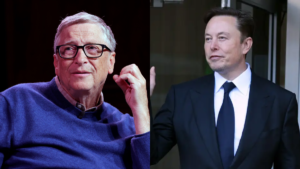
Hinton’s warning aligns with some of tech’s most influential voices. Bill Gates predicts humans may soon be unnecessary for most things; while Elon Musk insists that within two decades, work may become optional. Nvidia’s Jensen Huang imagines a shorter workweek, as machines take on more routine tasks.
But Hinton says these predictions may only hint at something far larger, a transformation of the global economy that could leave millions without work; and nations scrambling to manage the fallout.
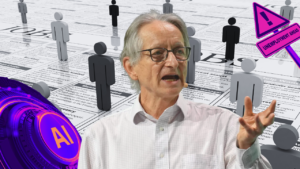
Speaking at Georgetown University alongside US Sen. Bernie Sanders, Hinton didn’t mince words. “It seems very likely to a large number of people that we will get massive unemployment caused by AI” – he said, noting that major tech companies are investing about a trillion dollars in data centers and chips in anticipation of exactly that.
The business incentives, he added, are unmistakable. “One of the main sources of money is going to be by selling people AI that will do the work of workers much cheaper. These guys are really betting on AI replacing a lot of workers”. A political reckoning has just begun.
Hinton’s critique goes beyond economics. He believes Big Tech is prioritizing short-term profit over human welfare, shaping a future where efficiency is prized above stability. That political tension is already visible. Regulators are demanding slower development, labor unions are preparing for job losses, and lawmakers are beginning to treat AI like a national priority rather than a tech trend.
Sanders believe the stakes are intensely human. His office warns that nearly 100 million US jobs could be eliminated or dramatically altered by automation, affecting not only low-wage workers but also accountants, nurses and software developers. He framed the issue not just as economic, but existential: “Work…is an integral part of being human. What happens when that vital aspect of human existence is removed from our lives?” The social dimension is bubbling-in the fear of lost opportunities in the nearest future, bagging a foggy upcoming.
Hinton acknowledges that AI will also create new forms of work. The passionate concern is scale. Will the new jobs be enough and accessible to ordinary people?
Meanwhile, the psychology of work looms large. Communities built around factories, service industries, and offices may face identity crises as much as financial ones. The shift touches family stability, education, mental health and social cohesion.



Hinton argues the uncertainty itself is dangerous. “Trying to predict the future…is like driving in fog. We can see clearly for a year or two, but 10 years out, we have no idea what’s going to happen” – he said. So, prepare for the upheaval.
What is clear is that AI isn’t going away. Experts say the most resilient workers will be those who treat AI as a tool. Learning to supervise, collaborate with, or build upon the technology rather than compete directly with it.
Whether that transition becomes a moment of shared prosperity or a crisis of mass exclusion will depend on choices made today. How governments will regulate it; how companies will deploy AI; and how societies will adapt it.
In the meantime, Hinton’s message is not one of doom but of urgency. AI may unlock extraordinary benefits, from cheaper services to new forms of creativity and care. But without political leadership and public engagement, the human cost could be immense.
As he and Sanders warn, the era of artificial intelligence is not simply a technological revolution, but a social one; and the world is only beginning to grasp its consequences.