
Greenland in the Reticle of World Powers, as Trump’s Revival of an Old Idea Forces Europe to Drop Its Gentle Diplomacy
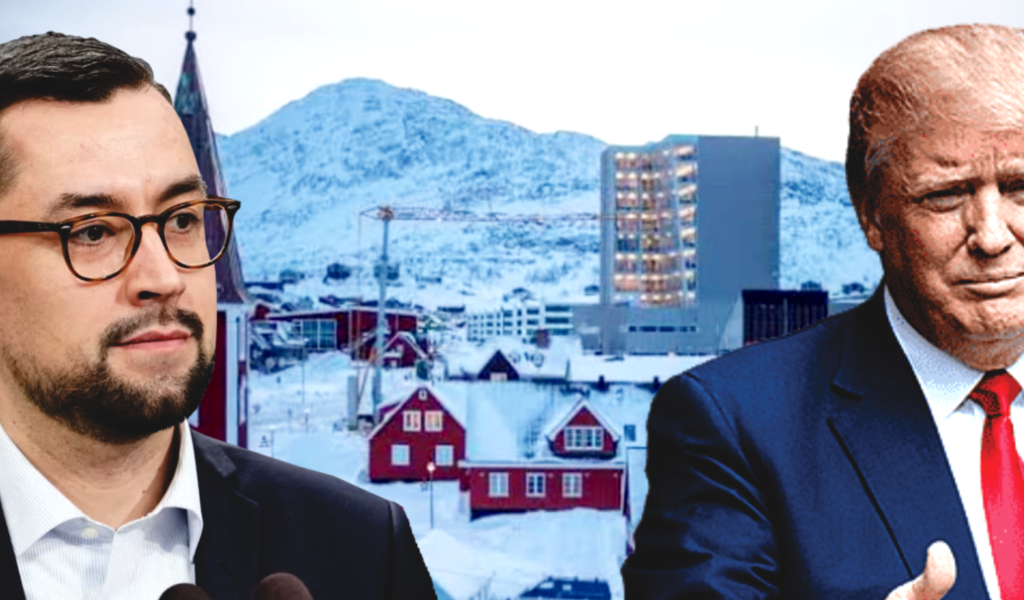
When President Donald Trump again raised the prospect of the United States acquiring Greenland, this time framing it as a matter of national security and hinting at economic punishment for those who resist, the reaction across Europe was swift and unusually blunt. What had once been dismissed as an eccentric notion from Trump’s first term is now being treated as a serious geopolitical challenge, one that touches nerves far beyond the icy Arctic island itself.
At the center of the confrontation is Greenland, a vast mineral-rich territory with a small population of about 56,000 people, most of them are Inuit, Indigenous peoples of the Arctic regions of Greenland, Canada and Alaska; and the land is with a complicated political status. Greenland governs itself in most domestic matters but remains part of the Kingdom of Denmark, which oversees defense and foreign policy. In decades, this arrangement has rested on a quiet consensus of Greenland’s strategic importance to NATO and the United States, especially through the long-standing American military presence at Pituffik Space Base (formerly Thule Air Base), and it did not require a change in sovereignty. Yet, Trump’s renewed push has shattered that calm. Making anxiety in the Greenland, and a silently-blaring alarm in Europe’s corridors of power.
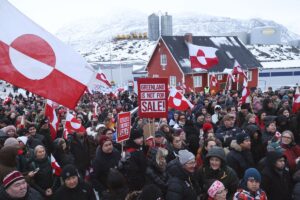
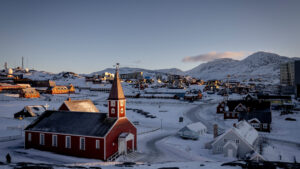
In Nuuk, Greenland’s capital, Trump’s comments have been met with unease rather than intrigue. Local leaders, who have spent years carefully expanding self-rule while debating eventual independence, say the idea of being “acquired” by a foreign power, runs directly against the principle of self-determination. A Greenlandic lawmaker said privately that their space is not a piece of land to be traded. “We are a people, with a culture and a future, we are trying to shape ourselves”.
Families in Greenland, many of whom rely on fishing, hunting and a growing but still fragile tourism sector, worry that great-power rivalry could disrupt daily life. There is also concern that renewed militarization of the Arctic could damage the environment in a region already on the front lines of climate change. Melting ice has opened new shipping routes and exposed rare earth minerals, drawing global interest, but also raising fears of exploitation without local consent.

Across Europe, Trump’s suggestion that allies could face punitive taxes or tariffs on exports to the United States if they do not support that Denmark abandon control over Greenland, has triggered something close to outrage. German and French officials have publicly rejected what they describe as economic blackmail. Germany’s finance minister warned that Europe must be ready for significant fallout if Washington chooses confrontation over cooperation. This has become a journey from soft diplomacy to open resistance.
European leaders have relied on a softly-softly approach with Trump for some years now, with careful language, private negotiations and a reluctance to escalate disagreements in public. Greenland may mark the breaking point. Behind closed doors in Brussels, EU officials are discussing retaliatory measures that would have been unthinkable just a few years ago. These include tariffs on US goods, tighter scrutiny of American companies operating in Europe, or even limits on access to the EU’s vast single market. Such measures could affect billions of euros in trade.
The European Union is the world’s largest trading bloc. And officials are keenly aware of their leverage. Many believe that Trump’s threats is carried out, it would also hurt US consumers through higher prices and strained supply chains. “This is not a one-way street; if the US escalates, Europe has tools to respond”- one senior EU diplomat said.
Still, the shift in tone reflects more than just economics. There is a growing sense in European capitals that yielding to the pressure over Greenland could set a dangerous precedent, where territorial arrangements and sovereignty are reshaped by threats rather than law or consent. As it is now Washington’s hard line in a followership-response to the “Trumps-Doctrine”.
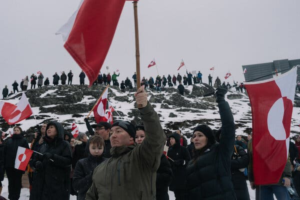
However, the Trump administration appears indifferent by European objections. US officials have doubled down on the argument that Greenland is a critical strategic asset, pointing to its location between North America and Europe; and its role in missile defense, space surveillance, Arctic security, etc. The US Treasury Secretary has warned European governments against retaliation, indicating that Washington is prepared for a trade confrontation if necessary.
From the administration’s perspective, the Arctic is no longer a peripheral concern. Russia and China have both expanded their presence in the region, investing in infrastructure, research and military capabilities. In this context, Trump’s associates argue that the US control or at least unquestioned dominance in Greenland is a matter of national defense. Critics counter that this framing ignores existing realities. The US already enjoys extensive military access in Greenland under agreements with Denmark, without owning the territory. They argue that Trump’s rhetoric risks undermining alliances at a time when unity is essential, particularly with the war in Ukraine still unresolved. Here, is the European dilemma lingering.
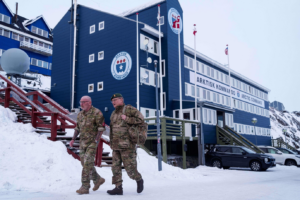
Tension lies at the heart of Europe’s dilemma. Confronting the US too forcefully could damage a transatlantic relationship that remains vital for European security, intelligence sharing and support for Ukraine. Yet backing down could weaken Europe’s credibility and embolden further pressure from Washington. The United Kingdom, no longer an EU member but still deeply tied to both sides, is walking a careful line. London has reaffirmed its support for the Danish and Greenlandic sovereignty, while emphasizing the importance of maintaining close defense and intelligence ties with the US. British officials see themselves as potential mediators, though their influence may be limited.
Meanwhile, France and Germany, are urging a coordinated European response rather than a patchwork of national reactions. Because, if Europe is divided on this matter, it will be picked off piece-by-piece in the cause of the fight, beyond politics, business, its permeating culture; and it will even be highly against the future of the Arctic, as presumed by a French official.
The dispute also has significant business implications. European economies are already under strain from inflation, energy transitions and geopolitical uncertainty; and rely heavily on exports to the US. A trade war sparked by Greenland could ripple through industries, from automobiles to agriculture, etc.
On the other side of the picture, the stakes are existential for the Greenland itself. The island sits at the intersection of global ambitions of strategic, economic and environmental essence. Its leaders want investment, infrastructure, jobs, but on the terms that respect local culture and decision-making. Being reduced to a bargaining chip between superpowers threatens that vision. There is also a cultural dimension often lost in the captions. Greenlandic society is deeply rooted in community, land and tradition sociocultural dynamics. Many residents fear that increased foreign interest, whether American, European, or Chinese, could erode these foundations if not carefully managed. Above all, this could be viewed by many hypothesis as a test of the transatlantic order.
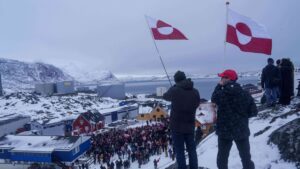
Ultimately, the confrontation over Greenland is about more than one territory. It is a test of how power is exercised in the 21st century, either through cooperation or coercion, law or leverage. Europe’s abandonment of its cautious approach, states a growing willingness to defend its principles, even at the risk of friction with its closest ally.
Whether Trump will reconsider his stance remains unclear. What is clear is that Greenland, which was overtime been seen as remote and peripheral land, has become a focal point in a broader world’s political titans struggle over sovereignty, security and the future of the transatlantic relationship.