
Historic War Generals Whose Battles Changed the Course of Civilization
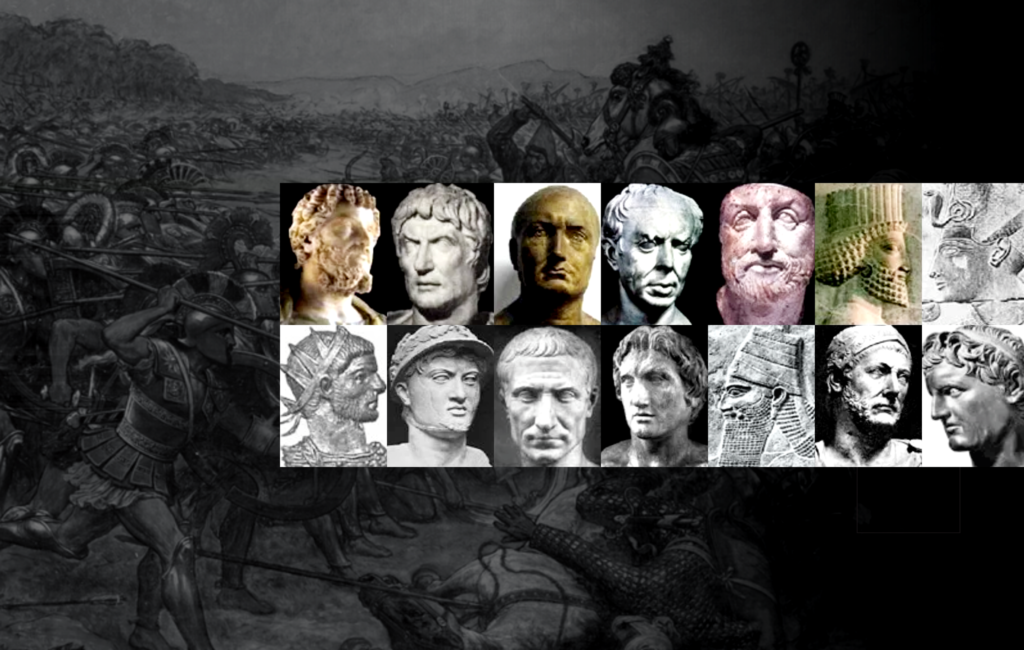
Throughout history, a handful of military commanders have altered the course of civilization. Their victories did more than win battles. They redrew borders, toppled empires, created nations, and reshaped everyday life for millions of people.
From the deserts of the Middle East to the battlefields of Europe and Asia, these seven generals stand out for the lasting global impact of their campaigns. But, behind the legends of strategy and battlefield brilliance lies a deeper story: the way war transformed families, economies, cultures, politics, and social structures across entire societies.
 1. Khalid ibn al-Walid: Few military leaders influenced the early medieval world as profoundly as Khalid ibn al-Walid. A commander during the early Islamic conquests of the 7th century, Khalid helped lead Muslim armies to victories against the powerful Byzantine and Sasanian empires. His triumph at the Battle of Yarmouk helped secure Syria for the rapidly expanding Islamic state. These victories accelerated the spread of Islam and Arabic culture across the Middle East, North Africa, and parts of Europe. For families and communities, the conquests brought dramatic change. New religious institutions emerged, trade routes expanded across continents, and Arabic became the dominant language across vast regions. Cities such as Damascus and Baghdad became centers of commerce and scholarship, transforming everyday cultural and economic life. Politically, Khalid’s campaigns helped establish the early Islamic caliphate, one of the most influential political systems of the medieval era.
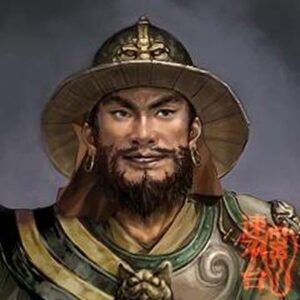 2. Subutai: Subutai, the greatest strategist of the Mongol Empire, played a central role in creating the largest contiguous land empire in history. Serving under Genghis Khan, Subutai orchestrated campaigns that stretched from China to Eastern Europe. His decisive victory at the Battle of Mohi demonstrated the Mongols’ devastating tactical mobility and intelligence gathering. The Mongol expansions devastated many regions but also created the Pax Mongolica, a period of relative stability across Eurasia. For traders and merchants, this meant safer trade routes along the Silk Road. Families migrated across continents, goods and ideas flowed between East and West, and technologies, from papermaking to gunpowder, spreading across cultures. At the same time, the invasions caused immense destruction and displacement, reshaping demographic patterns across Eurasia.
 3. Han Xin: During the collapse of the Qin dynasty, China descended into civil war. It was the brilliant strategies of Han Xin that helped Liu Bang defeat rival warlord Xiang Yu. Han Xin’s decisive victory at the Battle of Gaixia unified China under the Han Dynasty. This reunification had deep social consequences. Stable governance encouraged agricultural production, trade, and population growth. The Han era also cemented Confucian ideals that would shape Chinese family structures, education, and governance for centuries. Ironically, Han Xin himself later fell victim to palace politics and was executed on suspicion of rebellion, reminding that the military success did not guarantee political survival.
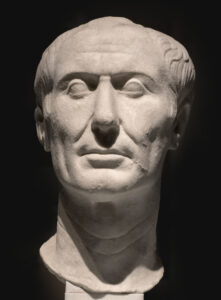 4. Julius Caesar: Few figures shaped Western history more than Julius Caesar. His conquest of Gaul during the Gallic Wars expanded Roman power across modern-day France and Belgium. Caesar’s strategic brilliance at the Siege of Alesia crushed Gallic resistance and opened Western Europe to Roman administration, roads, law, and culture. But Caesar’s influence went far beyond military victory. His decision to cross the Rubicon River triggered a civil war that ended the Roman Republic and paved the way for imperial rule. Roman families experienced sweeping changes as provincial populations were integrated into Roman society. Latin language, Roman law, and urban infrastructure spread across Europe — foundations that would influence Western civilization for centuries.
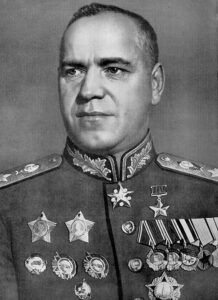 5. Georgy Zhukov: In the 20th century, Soviet general Georgy Zhukov emerged as one of the most important military leaders of World War II. Zhukov played key roles in defending Moscow, planning the Soviet counterattack at the Battle of Stalingrad, and helping win the massive Battle of Kursk. These victories changed the political map of the 20th century. The defeat of Nazi Germany led to the rise of the Soviet Union as a global superpower and shaped the geopolitical tensions of the Cold War. The human cost, however, was immense. Millions of families across Europe and the Soviet Union lost loved ones, entire cities were destroyed, and societies were forced to rebuild from devastation.
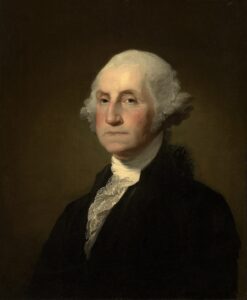 6. George Washington: George Washington’s leadership during the American Revolutionary War transformed a colonial rebellion into the birth of a new nation. Despite early setbacks, Washington’s resilience kept the revolutionary cause alive. His famous winter crossing of the Delaware River and eventual victory at the Siege of Yorktown secured independence from Britain. For colonial families, independence meant the creation of a new political identity and democratic experiment. Washington’s later role as the first U.S. president helped establish traditions of peaceful power transfer and civilian control over the military.
 7. Napoleon Bonaparte: Napoleon Bonaparte rose from revolutionary officer to emperor, dominating European politics during the Napoleonic Wars. His stunning victory at the Battle of Austerlitz is often regarded as one of the greatest tactical achievements in military history. Napoleon’s rule spread revolutionary ideas such as legal equality, meritocracy, and secular governance across Europe through reforms like the Napoleonic Code. However, his campaigns also devastated economies, displaced populations, and forced millions of men into military service. The nationalist movements triggered by his wars would eventually contribute to later conflicts, including World War I.
The legacies of these generals go farther than battlefield, their strategies and conquests. Their actions reshaped the lives of ordinary people, for example: Families were displaced or strengthened by new national identities: Cultures blended as empires expanded and ideas crossed borders; Businesses and Trade flourished or collapsed depending on political stability; Political Systems evolved from republics to empires and modern states; and Social Structures shifted as new laws, religions and economic systems took root. History often remembers these generals, but their real impact lies in the societies transformed by the wars they fought.