

Libya’s Green Sahara Remains Bearing DNA from a Mysterious Lineage of Over 7000Years, Discovered
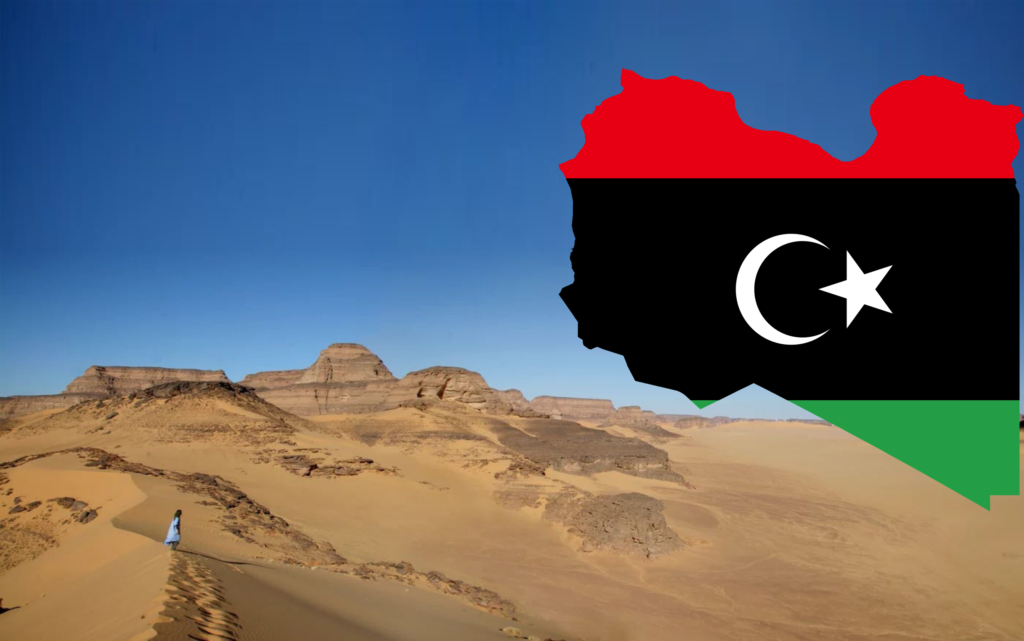
Scientists studying 7,000-year-old mummies from southwestern Libya have uncovered evidence of a previously unknown branch of humanity that lived, thrived and ultimately vanished without leaving a clear genetic legacy in today’s populations. The discovery, which is a breakthrough in ancient DNA, reshapes how scholars understand African history, human migration and the deep cultural roots of the Sahara.
The naturally mummified remains of women, were found at Takarkori, a rock shelter that once was within the Green Sahara in a period when the region was lush, wet and habitable. Genetic analysis revealed that these ancient Saharans belonged to a mysterious lineage, a population so distinct that it does not closely match sub-Saharan African, or Near Eastern, or European groups. Researchers estimated that this lineage split from other modern human ancestors roughly 50,000 years ago and then remained isolated for millennia. These are families and human identity lost to time.
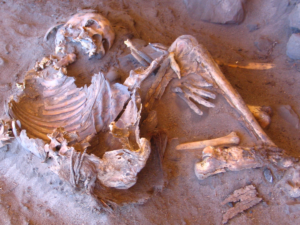
To most families living in the Green Sahara, isolation was not necessarily a sign of stagnation. Instead, it suggests close-knit communities with deep internal bonds of shared ancestry, traditions and identities that endured for thousands of years. Yet the discovery also carries a quiet human tragedy. This entire branch of humanity disappeared in time. Their descendants did not significantly contribute to modern populations. Meaning family lines that once flourished ended completely, leaving no living heirs to remember their names or stories. You would call it a culture without migration.
One of the most striking findings is the gap between genes and culture. Despite their genetic isolation, the Takarkori people practiced herding, a lifestyle often associated with large-scale population movements. Instead of arriving with migrating herders, pastoralism appears to have spread through cultural exchange of practices shared across communities without mass migration.
This challenges long-held assumptions about how innovation spreads. It suggests that ancient Africans were connected through networks of trade, learning and social interaction, even when they remained genetically distinct. Culture, not bloodlines, was the bridge, if you would rethink African history and migration.
Morally and academically, the discovery forces a rethink of dominant narratives that often simplify African prehistory. Rather than a single cradle feeding outward migrations, ancient Africa emerges as a mosaic of diverse, sometimes isolated populations. This complexity complicates earlier models that framed the Sahara mainly as a barrier. Instead, during its green phases, it functioned as a living landscape where unique human groups evolved side by side.
The implications extend beyond science. With regards to some African societies today, the findings reinforce the continent’s diverse heritage, countering outdated views that reduce African history to a narrow set of migration stories. It highlights Africa as humanity’s origin, and a place where multiple human experiments unfolded. While some are still preserved, others are fading away.
X-raying a mild view of the business, society and the value of the past in this discovery regard, there are modern echoes within its scenario that will evolve to stay; as archaeological endeavours are increasingly linked to cultural tourism, heritage preservation and international research fundings. In this respect, Libya’s Takarkori site, though located in a politically fragile region, has recently shown how ancient history can become a shared global asset that demands protection amid conflict and climate threats.
On the other phase, the discovery invites reflection on identity socially. The ancient Saharans could have exchanged ideas, early technologies and ways of life, which could be deduced to resonate to today’s global existence, as a silent legacy from a green Sahara.
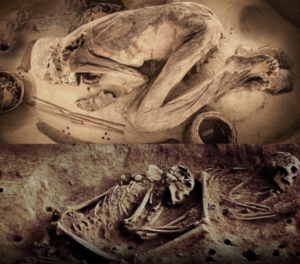
Ultimately, the Takarkori mummies remind us that human history is not a straight line of progress and survival. It could also be a story of lost people who lived rich-complex lives and then vanished. Meaning, the Green Sahara that was once teeming with life, was a cradle for distinct human evolution. Its silent legacy now challenges scientists/societies to rethink human evolution.