

Nigeria Positions Lithium and other Critical Minerals as Strategic Assets in Clean Energy Transition at Abu Dhabi Summit
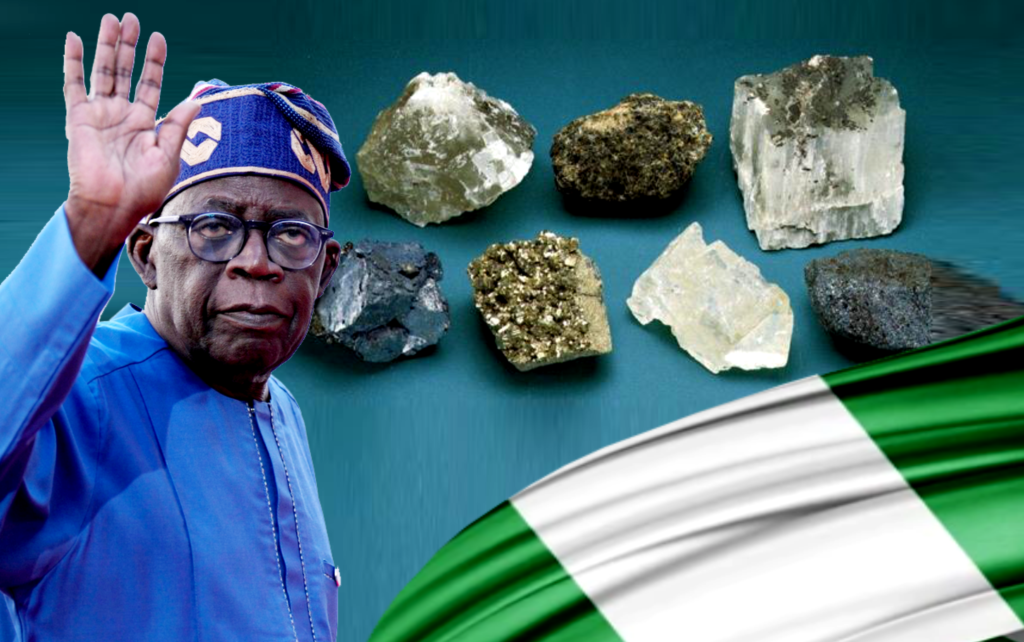
President Bola Ahmed Tinubu has placed Nigeria’s lithium and other critical minerals at the heart of the country’s clean energy ambitions, telling global leaders and investors in Abu Dhabi that the resources could be transformative for battery manufacturing, energy storage and power capacity.
Speaking at the 2026 Sustainability Week in Abu Dhabi, Tinubu framed Nigeria’s mineral endowment as both an economic opportunity and a strategic lever in the global transition away from fossil fuels. “Nigeria is also prioritizing critical minerals for a clean energy future”, he said, pointing in particular to lithium reserves that he described as having “transformative potential” for battery production and energy systems.
The remarks come as governments and manufacturers worldwide race to secure reliable supplies of lithium and other rare earth minerals essential for electric vehicles, renewable power storage and grid stability. For Nigeria, Africa’s largest oil producer, the emphasis signals a deliberate attempt to rebalance its economy and reposition itself within emerging clean energy supply chains.
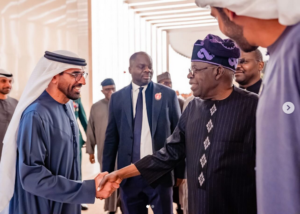
Tinubu outlined Nigeria’s Energy Transition Plan (ETP) as the policy backbone of this shift, describing it as a framework that links energy access, climate goals, industrial growth and social development. While the plan has been publicly discussed since his administration took office, the Abu Dhabi address sought to reassure international partners that implementation has moved beyond paper commitments.
He cited pilot projects already underway, including electric mobility initiatives and national energy efficiency programmes designed to cut emissions, lower costs and stimulate industrial activity. These pilots, the president suggested, are intended to demonstrate Nigeria’s capacity to absorb investment and scale new technologies across a large, fast-growing economy.

Beyond policy and technology, Tinubu’s pitch carried a clear economic message: Nigeria wants to move up the value chain. Rather than exporting raw minerals, his administration is courting partnerships that include local processing, manufacturing and skills development. “Not just extraction of minerals, but local processing and value addition,” he said, arguing that this approach would create jobs and strengthen domestic industrial capacity.
That call reflects a broader debate within Nigeria about resource governance. Past reliance on crude oil exports has left the country vulnerable to price shocks, environmental damage and community tensions in producing regions. By stressing value addition, the government appears to be responding to long-standing criticisms that natural resource wealth has too often failed to translate into broad-based prosperity.
The stakes are high for families and communities in mineral-rich areas. Lithium mining, if poorly regulated, could repeat patterns seen in oil-producing regions, where environmental degradation and limited local benefits fuel social unrest. Analysts note that the success of Nigeria’s critical minerals strategy will depend not only on attracting investors but also on enforcing environmental standards, ensuring community consultation and delivering visible local gains such as jobs, infrastructure and social services.
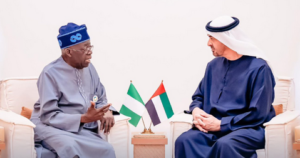
Tinubu’s emphasis on lithium also serves to diversify Nigeria’s diplomatic and economic partnerships politically. As global competition for critical minerals intensifies, countries with significant reserves gain leverage in negotiations with manufacturers, development banks and foreign governments. Nigeria’s pitch in Abu Dhabi was notably diplomatic, balancing openness to business with an assertion of national priorities.
“Nigeria is heading to do business with you”, Tinubu told investors, describing an environment that is “easy in, easy out”, while reiterating the demand for value addition. The language reflects an effort to reassure international partners wary of regulatory uncertainty, while gesturing a more assertive stance on industrial policy.
The social implications are equally significant. If managed effectively, a lithium-driven industrial push could support Nigeria’s youth population through new skills, training and employment in mining, processing and manufacturing. If mismanaged, it risks deepening inequality and regional disparities.
Tinubu’s comments in Abu Dhabi therefore mark more than a promotional pitch. They underscore a strategic crossroads for Nigeria: whether its critical minerals become another chapter in a history of extractive dependence, or a foundation for a more diversified, cleaner and inclusive economy.
As global demand for lithium accelerates, the choices made now on regulation, partnerships and community engagement, will shape how far Nigeria’s clean energy promise translates into tangible benefits at home.