

Nigeria and the World in Brief Perspective, as Borrowing Pressures Edge Markets Higher and Global Shifts Shape 2026 Outlook

Nigeria’s financial markets inched forward in midweek trading, posting modest gains that masked deeper structural tensions at home and growing uncertainty abroad. The NGX All-Share Index rose 0.01 per cent to 166,267.60 points, adding ₦6.88 billion to investor wealth and lifting total market capitalisation to ₦106.44 trillion. In the currency market, Bureau de Change rates were unchanged at ₦1,480 to the US dollar, underscoring a fragile but steady equilibrium.
On the surface, the numbers suggest calm. However, beneath them lies a complex interplay of policy choices, household pressures and shifting global alliances that will define Nigeria’s economic trajectory in 2026. A peep into the perspective of borrowing, liquidity and the squeeze on the private sector.
This week’s financial market calendar is dominated by sovereign borrowing and selective equity capital raises, reflecting the Federal Government’s growing reliance on domestic debt. From ₦2.34 trillion in 2021/2022, domestic borrowing surged to ₦7.0 trillion in 2023, ₦6.06 trillion in 2024 and is projected at ₦13.08 trillion in 2025; a 459 percent increase in four years.

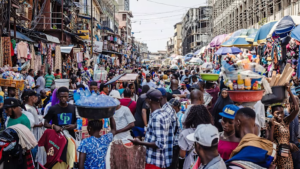
What was once a textbook debate about crowding-out has become an experiential reality for businesses and families. Analysts say aggressive government issuance is absorbing liquidity that would otherwise flow to private firms, raising borrowing costs for manufacturers, SMEs and households. Some banks argue the process may also crowd-in investment by extending markets; but on factory floors and trading hubs, the more immediate effect is tighter credit and delayed expansion plans.
This tension featured prominently at the World Economic Forum in Davos, where Nigeria’s Finance Minister – Wale Edun, signaled a desire to borrow less and focus more on domestic revenue mobilisation. “The issue now is to focus on revenue”, he said; hinting at policy adjustments that could ease pressure on local capital markets if followed through.
Nonetheless, on the reserves, rates and portfolio choices, there are pockets of strength. Nigeria’s gross external reserves rose by $834.2 million month-on-month, closing 2025 at $45.5 billion, according to Central Bank data. The buffer provides some reassurance to importers and investors, even as global capital remains skittish.
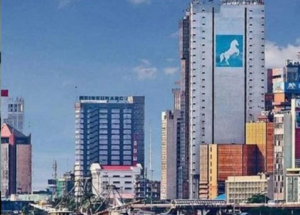

In the fixed income market, yields on Treasury Bills hovering around 21 per cent are reshaping portfolio strategies. Analysts increasingly recommend locking in high TB rates while deferring equity exposure until clearer monetary signals emerge, potentially in the second quarter of 2026. For pension funds and retail savers alike, the choice is no longer theoretical: it is about protecting purchasing power in an economy still wrestling with inflation and FX adjustments.
Corporate earnings tell a similar story of adaptation, in view of the corporate performance and the energy transition. Geregu Power Plc. reported strong revenue growth in FY 2025, cushioning earnings despite structural challenges in Nigeria’s power sector. Inflation moderated to 15.15 per cent by year-end, helped by FX reforms, but energy supply remains a binding constraint on productivity and household welfare.
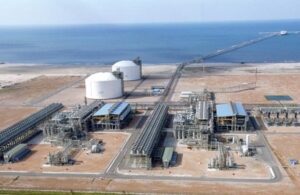
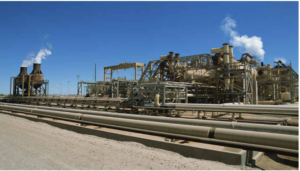
Against this backdrop, infrastructure investments are gaining urgency. China-backed commitments worth an estimated $24.6 billion to the Ogidigben Gas Revolution Industrial Park have positioned Nigeria as the top Belt and Road beneficiary in Africa. Separately, CCECC’s winning bid for a 7MW floating solar project at the University of Lagos points to a gradual, if uneven, diversification of the energy mix.
Internationally, on global fault lines and commodity repricing, markets are being driven as much by geopolitics as by fundamentals. Wall Street rallied on news of a framework deal on Greenland and the avoidance of new US tariffs on Europe, while gold surged past $4,800 an ounce on renewed trade war fears, with some analysts speculating about a path toward $7,000.
These shifts matter for Nigeria. Higher gold prices intersect with Africa’s evolving commodity routes, highlighted by Saudi Arabia’s opening of a new gold market that challenges Dubai’s long-standing dominance and offers Sudan an alternative export channel. As for oil, traders are already repositioning, hauling millions of barrels of Venezuelan crude amid changing US policies and changes that ripple through global energy pricing.

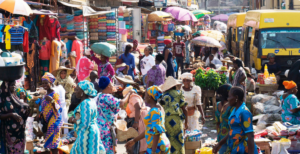
At the Grassroots and for the ordinary Nigerians, the stakes are tangible. Digital payment fraud fell sharply in 2025, offering some relief to consumers, while regulators have stepped up enforcement against non-compliant digital lenders. Yet, rising port tariffs, legal disputes in the oil sector, and unresolved questions about federalism continue to shape the cost of living and the ease of doing business.
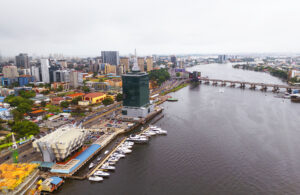
As globalism frays and countries retreat into strategic autonomy, Nigeria finds itself balancing opportunity and constraint. The slight uptick in equities this week may be small, but it reflects a market and a society, testing its footing in a world where capital is cautious, politics is fragmented and policy credibility matters more than ever.