
Titans of Influence by Creativity: Some of the World’s Richest Content Creators

Money might not literally make the world go round, but in the digital age, it certainly spins the wheels of influence, culture, and commerce. From viral videos to entrepreneurial empires, content creators have transformed what was once considered a side hustle into a career that shapes industries, trends and even social norms. Across the globe, a selected group of creators have amassed wealth that rivals traditional celebrities, but their impact extends far beyond bank balances.
Content creation today is a complex ecosystem. Platforms like YouTube, TikTok, podcasting, etc., have become fertile ground not only for entertainment but also for strategic business ventures. Many creators now leverage their fame to invest in startups, launch consumer brands, and expand their reach into global markets. As the lines between creator, entrepreneur and influencer blur, these individuals increasingly wield cultural, economic and even political power.
At the top of this digital hierarchy is Jimmy Donaldson, better known as MrBeast. Famous for his high-budget stunts, viral philanthropic challenges and innovative brand ventures, including Feastables and MrBeast Burger. Donaldson has redefined what a content creator can achieve. Reports place his annual earnings in the tens of millions, and his net worth now edges toward $1 billion, marking him as the first individual content creator to achieve such a milestone in 2025. Farther than numbers, MrBeast’s influence touches multiple layers of society. His philanthropy inspires grassroots activism, while his business ventures highlight the potential for creators to rival established corporations in both strategy and reach.
 Other notable figures such as Dhar Mann and Steven Bartlett illustrate the diversity of the creator economy. Mann’s inspirational storytelling has fostered communities around positivity and self-improvement. While Bartlett, a British entrepreneur and media personality, bridges the worlds of social influence and traditional business. Their success features a growing trend that creators are no longer confined to entertainment but are reshaping business practices, media ownership and audience engagement strategies.
This shift has social and cultural implications as well. Families of top creators often become part of the public narrative, navigating both newfound wealth and scrutiny. Communities, especially in regions where creators originate, may experience economic ripple effects from tourism boosts to local entrepreneurship inspired by success stories. Politically, creators’ global reach allows them to influence discourse on social issues. Though it also raises questions about regulation, taxation and accountability in the digital economy.
By 2026, the ranking of the richest content creators reflects not just financial achievement but also the strategic evolution of personal branding and enterprise. Those who dominate the list have successfully transitioned from social media stars to multi-industry entrepreneurs, combining entertainment with sustainable business models that extend their influence far beyond their screens.

The world’s wealthiest content creators in 2025-2026 have demonstrate a new paradigm: creativity is no longer a personal outlet but a powerful vehicle for economic growth, cultural impact and global connectivity. Whether through viral content, product innovation, or social influence, these individuals are shaping a future where digital presence translates directly into tangible power and societal impact.
The following are some of the richest content creators in the world based on 2025-2026 earnings and estimated net worths:
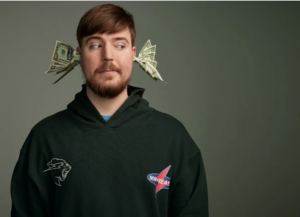 MrBeast: is widely regarded as one of the most influential digital creators in the world, but his dominance reflects more than popularity alone. With a reported following exceeding 500 million across platforms and roughly 380 million YouTube subscribers, his reach rivals that of major media companies. His videos, built around extreme endurance tests and large-scale recreations such as Squid Game, routinely attract around 100 million views, demonstrating a formula that prioritizes spectacle, scale, and algorithmic appeal. Beyond content, MrBeast has leveraged attention into a diversified business model, including merchandise and Feastables, positioning himself less as a YouTuber and more as a media entrepreneur. While his estimated annual revenue of over $600 million underscores remarkable commercial success, it also raises questions about sustainability, creative repetition, and the increasing corporatization of online entertainment.
 Dhar Mann: Dhar Mann is a prominent digital creator known for producing short-form, moral-driven videos that address issues such as bullying, racism, and social inequality. With an audience of roughly 120 million followers across social media and nearly 25 million subscribers on his main YouTube channel, his content has achieved wide visibility, particularly among younger viewers. However, while his videos are praised for promoting positive messages, they are often criticized for relying on simplified narratives, predictable plot twists, and exaggerated moral lessons that can reduce complex social issues to easily digestible conclusions. Beyond content creation, Dhar Mann has expanded into entrepreneurship through ventures such as the 5th Quarter Agency and the beauty brand LiveGlam, reflecting a strategic approach to monetizing influence. His estimated annual revenue of around $45 million highlights commercial success, but it also invites debate about the balance between social impact, authenticity, and the commodification of morality in digital storytelling.

 Charli D’Amelio: Charli D’Amelio’s rise on TikTok began with short, accessible dance videos, but her success extends far beyond viral choreography. With over 200 million followers across platforms and about 157 million on TikTok, she has transformed personal popularity into a scalable digital brand. From a business perspective, her partnerships with major skincare companies such as Garnier and CeraVe show strategic brand alignment, leveraging her “relatable” image to reach Gen Z consumers. Her appearance in & Juliet on Broadway also signals an effort to diversify her career and reduce reliance on social media alone. However, her success highlights a broader influencer-economy reality: visibility, rather than artistic innovation, often drives value. While her estimated net worth of around $45 million reflects effective monetization, it also raises questions about the sustainability of influencer fame and the heavy dependence on platform algorithms and brand sponsorships to maintain long-term relevance.
 Matt Rife: Stand-up comedian Matt Rife’s career reflects the growing convergence of comedy, social media, and digital entrepreneurship. His rapid rise, fueled by sharp crowd-work clips and an unapologetically edgy style, has attracted more than 33 million followers across platforms, positioning him as a high-visibility entertainment brand rather than just a touring comic. From a business standpoint, his Netflix specials Matt Rife: Natural Selection and Matt Rife: Lucid – A Crowdwork Special function as premium distribution channels, legitimizing his online popularity while expanding his audience beyond social media algorithms. The release of his memoir, Your Mom’s Gonna Love Me, further diversifies his revenue streams and reinforces personal branding.
Critically, however, Rife’s success underscores how virality and controversy can outweigh traditional comedic craft in the current attention economy. His estimated annual earnings of around $50 million demonstrate exceptional monetization, yet they also highlight a model heavily dependent on constant visibility and audience engagement. As with many creator-driven businesses, the long-term challenge lies in sustaining relevance as online trends shift and audience expectations evolve.
 Mark Rober: Mark Rober’s massive social media presence is not just a byproduct of his former career as a NASA engineer, but the result of a carefully constructed content and business strategy. With roughly 66 million YouTube subscribers, Rober has positioned himself as a bridge between complex science and mass entertainment, using high-production experiments, ranging from building a personal satellite to stress-testing Tesla’s Autopilot, to make STEM accessible and viral. Critically, while his content often simplifies scientific concepts for broad appeal, this simplification is part of a deliberate branding choice that prioritizes engagement and shareability over academic depth. From a business perspective, Rober operates more like a media entrepreneur than a traditional educator: his videos function as premium intellectual property that attract brand partnerships, sponsorships, merchandise sales, and large-scale initiatives like science-focused subscription boxes. His estimated annual earnings of $25 million underscore how educational content, when packaged with spectacle and narrative, can compete commercially with mainstream entertainment while shaping a profitable personal brand rooted in credibility and trust.
 Ryan Kaji: Ryan Kaji’s rise through Ryan’s World represents one of the most commercially successful examples of child-led digital media, but it also invites a critical examination of scale, governance, and sustainability. What began as simple, kid-friendly unboxing and educational videos has evolved into a highly structured content operation with 39 million subscribers, carefully calibrated to appeal to both children and parents. While the on-screen tone emphasizes innocence and relatability, the channel itself functions as a sophisticated brand machine driven largely by family management and corporate partnerships rather than spontaneous creativity.
From a business perspective, Ryan’s value lies less in content innovation and more in brand extensibility. Licensing deals with Walmart, Target, and Nickelodeon, alongside a dedicated TV series, have transformed Ryan’s World into a multi-platform intellectual property comparable to legacy children’s franchises. This diversification reduces reliance on YouTube’s volatile algorithm and advertising model, signaling strong strategic foresight. However, the scale of commercialization also raises questions about longevity, audience aging, and ethical considerations around labor, consent, and brand pressure on a minor. With an estimated net worth of $100 million at just 13, Ryan Kaji’s success illustrates both the immense financial potential of the creator economy and its unresolved tensions when childhood, entertainment, and corporate strategy intersect.
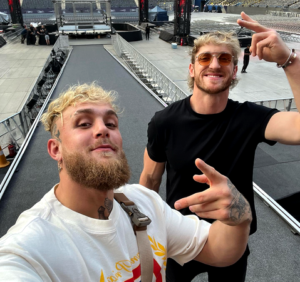
 The Paul brothers: Jake and Logan Paul’s success in the creator economy is inseparable from both their viral appeal and their repeated controversies, which have functioned as accelerants rather than obstacles to growth. Known initially for pranks, challenges, and high-energy vlogs, the brothers leveraged outrage, spectacle, and constant reinvention to dominate attention on YouTube and beyond. With a combined followers exceeding 100 million across platforms, their rise highlights how visibility, regardless of sentiment, can be monetized in the digital attention economy.
From a business standpoint, the Paul brothers have evolved from content creators into diversified brand operators. Their empire, valued at over $250 million, is built on strategic expansion beyond social media advertising into sports entertainment, consumer products, and partnerships. Logan’s multimillion-dollar WWE deal and ventures in sports drinks and apparel, alongside Jake’s pivot into boxing and pay-per-view events, demonstrate a calculated shift toward ownership-driven revenue streams. While their brands remain polarizing and dependent on hype cycles, their ability to convert controversy into leverage, negotiate major deals and continuously repackage their personas, underlines a sharp understanding of modern media economics where controversy fuels reach, and reach fuels enterprise.
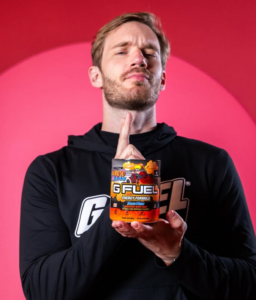 PewDiePie: PewDiePie’s dominance in the early 2010s positions him as a foundational figure in the modern creator economy, but his success is best understood through both cultural impact and business adaptation. Rising to prominence through gaming livestreams, reaction videos, pranks, and comedic sketches, he capitalized on YouTube’s algorithmic preference for personality-driven content at a time when the platform was still shaping its identity. While his career has been marked by periodic controversies that tested brand relationships, they also reinforced his centrality to internet culture and sustained audience attention.
From a business perspective, PewDiePie transitioned early from creator to brand, monetizing his influence through diversified revenue streams including merchandise, publishing deals, and selective partnerships rather than overreliance on traditional advertising. His estimated net worth of over $50 million reflects not just viral popularity, but long-term audience loyalty and strategic independence, particularly as he reduced upload frequency while maintaining relevance. Critically, PewDiePie’s trajectory illustrates the maturation of the creator economy: early movers who secured scale and ownership were able to outgrow platform dependency, turning personal identity into durable intellectual property rather than a short-lived digital trend.
 Mark ‘Markiplier’ Fischbach: The social media figure first gained visibility as a YouTuber, producing unboxing videos, product reviews, and light-hearted comedy sketches. While this content initially followed a well-established influencer formula, its consistent engagement strategy and audience-centric appeal enabled him to build a fan base numbering in the millions. Over time, he leveraged this digital visibility as a form of brand equity, expanding beyond short-form content into directing, writing and filmmaking, attempts that motion a deliberate transition from influencer to media entrepreneur.
From a business perspective, his career reflects effective diversification and monetization of personal branding. Revenue streams now extend beyond platform advertising to include creative production, partnerships, and intellectual property development. His philanthropic livestreams, which have raised millions of dollars, further enhance his public image while reinforcing audience trust and long-term loyalty. With an estimated net worth exceeding $45 million, his trajectory illustrates how strategic content evolution, brand positioning, and social impact can be combined to build a sustainable and scalable digital media enterprise.
 Khaby Lame: Khaby Lame’s reaction videos and viral memes have not only captured widespread attention but have also demonstrated a keen understanding of digital content consumption. His minimalist, wordless humor resonates across cultures, making his content highly shareable and algorithmically favored on platforms like TikTok, where he currently holds the title of the most followed creator with over 162 million followers. Beyond mere popularity, Khaby has leveraged his online influence into strategic brand partnerships with companies such as Hugo Boss, Sony Pictures, Walmart, Mr. Pink, and Fortnite. These collaborations reflect a sophisticated monetization strategy that aligns his personal brand with both global and mainstream markets. Collectively, these ventures contribute to his estimated net worth of $20 million, highlighting the lucrative intersection of social media virality and business acumen.
 Ninja: Considered one of the most prominent figures in online gaming, Ninja has cultivated a massive following of over 23 million fans through livestreaming on social media platforms. While his gaming skills have earned him recognition, his career exemplifies the intersection of digital influence and entrepreneurship. Beyond gameplay, Ninja has strategically monetized his personal brand, amassing an estimated $30 million through a combination of brand sponsorships, collaborations with other content creators, and launching his own management company. However, his success also raises questions about the sustainability of influencer-driven revenue streams and the challenges of maintaining relevance in the fast-evolving gaming and streaming industry. From a business standpoint, Ninja demonstrates how personal branding can transform digital talent into diversified income streams, but it also underscores the high dependency on public visibility and platform dynamics.
 Emma Chamberlain: Emma Chamberlain has redefined the vlogging landscape through her distinct content creation and editing style, characterized by raw authenticity, rapid cuts, and self-deprecating humor. Her videos span a wide spectrum of topics, including cooking, fashion, mental health, and personal finance, allowing her to cultivate a deeply engaged audience. With over 12 million loyal followers, Chamberlain has not only built a personal brand but also positioned herself as a highly valuable influencer in the luxury and lifestyle sectors.
From a business perspective, her partnerships with global brands such as Levi’s, Lancôme, Cartier, and Louis Vuitton demonstrate her ability to translate digital influence into commercial success, leveraging her relatability and trendsetting persona to enhance brand equity. Her hosting role on the Met Gala red carpet for Vogue further solidifies her crossover appeal from digital content creator to mainstream media personality. Financially, her estimated net worth of $20 million underscores the profitability of strategic personal branding, influencer marketing, and diversified revenue streams in today’s creator economy.
Critically, Chamberlain’s success illustrates a shift in media consumption, where authenticity and community engagement increasingly outweigh traditional production polish. Brands aligning with her must consider both the creative freedom she demands and the significant cultural capital she brings to campaigns, highlighting the evolving dynamics between influencers and corporate partnerships.
 Marques Brownlee: Marques Brownlee, widely known as MKBHD, has established himself as one of social media’s leading tech influencers, commanding nearly 20 million subscribers on YouTube. His content spans product reviews of smartphones, electric vehicles, AI applications, and other viral gadgets, often praised for its clarity, technical insight, and perceived objectivity. From a business standpoint, Brownlee has leveraged his personal brand into multiple revenue streams: he has launched his own product company, engaged in strategic partnerships with major tech brands, and holds a board and creative advisory role at Ridge, a company specializing in tech accessories. Analysts estimate his net worth at around $10 million, reflecting not just content monetization but his ability to translate audience influence into entrepreneurial ventures. While widely respected, some critics’ note that as influencer marketing increasingly intersects with product endorsements, maintaining editorial independence remains a nuanced challenge.
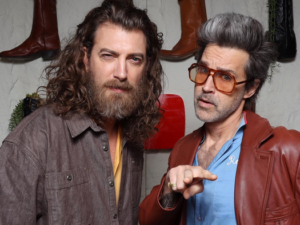 Rhet & Link: Creators of the widely recognized YouTube channel Good Mythical Morning, Rhett McLaughlin and Link Neal have transformed from entertainers into influential digital entrepreneurs, amassing nearly 20 million subscribers. While they are celebrated for their playful content, ranging from unconventional food tastings and comedic sketches to original music and inventive experiments, their success reflects a strategic understanding of audience engagement and brand building. Asides entertainment, the duo has leveraged their platform for professional opportunities, including roles as web correspondents for the Sundance Film Festival and producing commercials for small businesses, often pro bono, which demonstrates both community engagement and savvy marketing exposure. Through their company, Mythical Entertainment, they have expanded into multiple media ventures, signaling a deliberate diversification of revenue streams and intellectual property. Their reported net worth of approximately $32 million underscores the commercial potential of digital content when combined with entrepreneurial foresight, though critics note that much of their appeal remains niche and heavily reliant on personality-driven engagement rather than scalable business innovation.