
PRECIS: Democracy in Africa and the Agenda 2063 Ambitious Vision, Meets Political Reality and Persistent Barriers
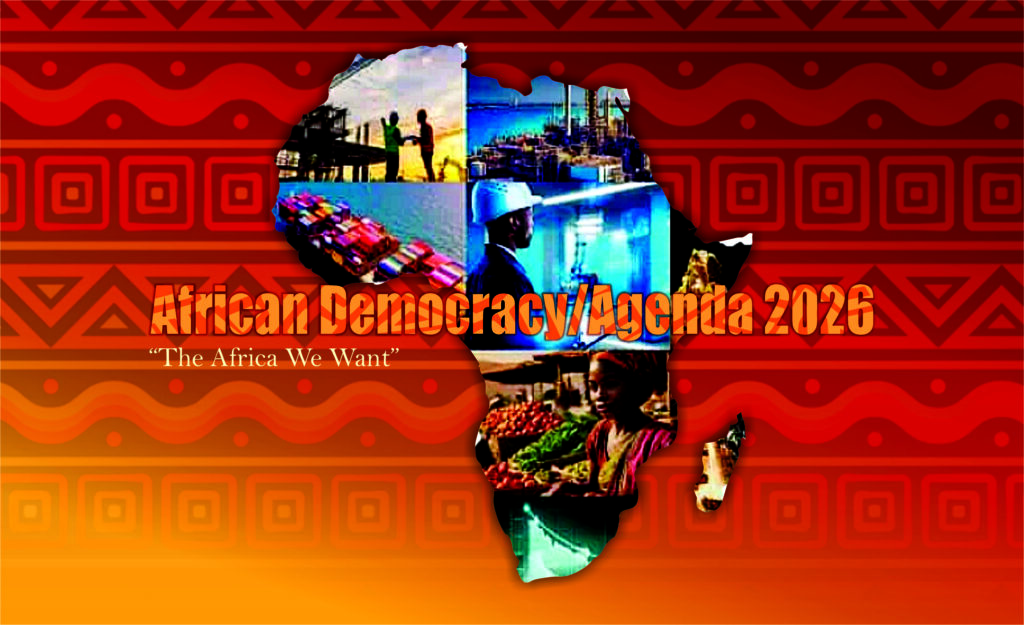
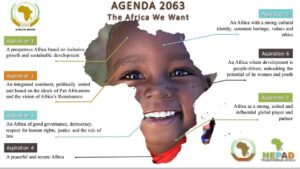
When African leaders adopted Agenda 2063 in 2013, the promise was bold: a continent defined by good governance, democracy, human rights and the rule of law within a generation. A decade later, new evidence suggests that while Africans continue to believe in democracy, their practical experiences tell a more complicated story, one that transcends constitutions and election cycles into homes, markets, classrooms, SMEs, ventures, community halls, etc.
A recent study examining Africa’s democratic trajectory through the lens of Agenda 2063 paints a sobering picture. Drawing on Afrobarometer public opinion surveys, expert assessments from the Varieties of Democracy (V-Dem) project, and the Ibrahim Index of African Governance, the research finds a growing gap between the demand for democracy and its actual supply. In simple terms, Africans want democracy, but many feel they are not getting it. Therefore, democracy is on the kitchen table, presumably.
Democracy is not an abstract ideal for families across the continent. It shows up in different scenarios like, whether parents/adults trust that their votes matter; whether young people feel heard by local authorities; and whether communities believe the law applies equally to everyone. Afrobarometer data reveal that trust in electoral commissions and confidence in free and fair elections have declined over the past decade. Only about four in ten citizens now believe elections truly reflect the will of the people.
This erosion of trust sustains real human consequences. When elections are seen as unfair, political disputes often spill into the streets, disrupting schooling, livelihoods, businesses, sociocultural/family life. In fragile economies, post-election instability can wipe out years of small business progress overnight, pushing households back into poverty.
Culturally, Africa’s democratic story is deeply shaped by history. Colonial borders, ethnic divisions, social/peer pressures and the politicization of religion, continue to influence how power is contested and exercised. In many countries, politics still follow ethnic or regional lines, weakening national unity and democratic accountability. Traditional authorities and informal networks often fill gaps left by weak institutions; sometimes stabilizing communities, but at other times reinforcing exclusion.
The study finds that citizen participation, especially at local levels, has increased in some areas, reflecting a strong grassroots appetite for engagement. Civil society organizations remain active, yet the space for them to operate freely is shrinking in many countries. Restrictions on protests, media and associations, limit how citizens can organize and express dissent, narrowing democracy’s cultural and social foundations. Many of these instances also feature on the negative cost-implication of business, caused by weak governance.

In consideration of the presumptuous analysis of some entrepreneurs and investors, it is seen by them that democracy is closely linked to predictability and fairness. The reflective-predictions are, weak checks/balances, limited judicial independence/unequal treatment, manipulative post-election judicial process, etc.; and assuming the law would always create risky business environments, postelection. It is also noted that separation of powers across Africa has declined over the past decade, concentrating authority in the executive branch, according to the statistics.
This concentration of power discourages investment, fuels corruption and undermines job creation, especially for young people. Small and medium-sized enterprises, are particularly vulnerable even when trying to access licenses, credit, or contracts. The whole process often depends more on political connections than transparent rules.
Politics, coups and continental credibility: the study highlights a worrying trend politically, featuring a democratic backsliding alongside a rise in unconstitutional changes of government. Since Agenda 2063 was adopted, at least a dozen African countries have experienced coups or similar disruptions. These events deteriorate continental norms against military takeovers, straining the African Union’s credibility as a guardian of democratic principles.
Thus far, the picture is not uniformly bleak. Countries such as Cabo Verde, Ghana, Namibia and Senegal demonstrate that democratic resilience is possible, with relatively strong institutions, competitive elections and active citizens’ engagement. Their experiences suggest that progress depends less on rhetoric and more on sustained reforms and political will.
Perhaps the most striking finding is the imbalance between demand and supply of democracy. While fewer than one in twenty Africans reject democracy outrightly, about four in ten believe their countries are failing to deliver it. This mismatch risks eroding the social contract. When people stop believing institutions can respond to their needs, apathy or unrest can follow.
Agenda 2063 set ambitious benchmarks, including a goal that at least 70 percent of Africans would view democratic institutions as accountable by the early 2020s. Current performance hovers closer to the mid-40 percent range. At this pace, the records warns that Africa would need to do more than double its annual democratic gains to meet its long-term vision.
The discoveries also point to clear priorities such as strengthen checks and balances, protect civic space, ensure fair access to media, permit freedom of speech and guarantee the independence of electoral bodies. Just as importantly, reforms must connect with everyday realities, showing the impacts of policies homefronts, jobs creation and individual/community trust.
Agenda 2063 remains a powerful statement of African ambition. Whether it becomes a reality or not, will depend not only on governments and regional bodies, but on sustained pressure from citizens, civil societies and investors/businesses, demanding that democracy work beyond being in law books, to becoming daily life experiences.