

Re-centering African Leadership as a Missing Pillar of Sustainable Development
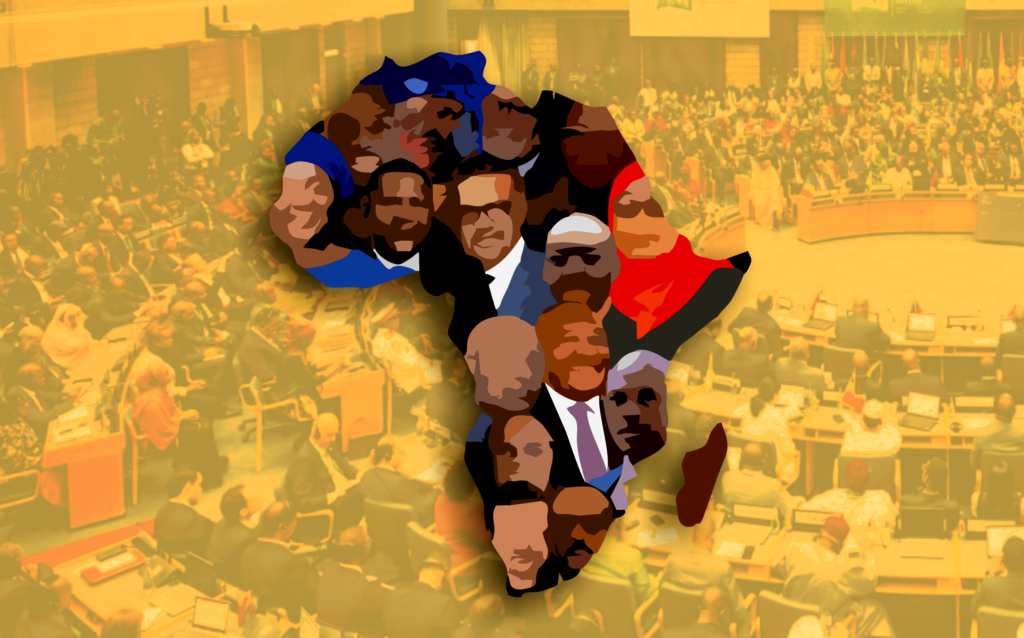
Predating the present day Africa, sustainable development in Africa has been framed around a familiar triad – economic growth, social inclusion and environmental protection. Yet, across the continent, unfinished projects, policy reversals, and fragile institutions point to a deeper gap that researchers, community leaders and policy analysts increasingly describe as a missing pillar. At its core is leadership status, which defines development priorities, where decisions are made and whose knowledge counts.
As global institutions renew commitments to the Sustainable Development Goals (SDGs) and Africa advances its own long-term blueprint under the African Union’s Agenda 2063, a growing body of evidence suggests that progress will remain uneven unless African leadership is fully centered in owning to her responsibilities ethically, culturally, politically and practically, at every level of development planning and execution.
Away from the three pillars earlier mentioned, the dominant sustainability model, shaped largely in Western policy circles, has struggled to deliver durable outcomes in African contexts. Economies may grow on paper, but benefits often fail to reach communities. Social programs are often launched with fanfare, only to stall when funding cycles end. Environmental initiatives falter when local land-use realities are ignored.


Analysts argue that the problem is not the absence of ideas or funding, but the absence of leadership grounded in the African living realities. This missing pillar is often described as a cultural, ethical and political dimension that recognizes indigenous governance traditions, collective responsibility and moral accountability. Rather than emphasizing a single charismatic figure, scholars increasingly call for what they describe as “diffuse and collective leadership”; systems in which authority is shared across institutions, communities and generations. Such leadership prioritizes long-term outcomes over short-term political wins and stewardship over extraction. Yet, leadership/culture hampers the aspect of human dimension.
At the human level, leadership determines whether development feels imposed or owned. Across rural and urban communities, residents frequently report being consulted only after key decisions have already been made. Projects designed without meaningful local input, whether roads, dams, or agricultural schemes, they often fail to reflect cultural practices, land relationships, or social structures. Traditional African philosophies such as Ubuntu, which emphasize shared humanity, reciprocity and care for the collective, offer an alternative framework. Leaders who draw from these values often describe a stronger sense of purpose and responsibility, not only to voters or donors, but to future generations. Also, grassroots organizers note that when communities are treated as partners rather than beneficiaries, outcomes improve. Schools are maintained, infrastructure is protected and environmental initiatives gain local guardians. Leadership in this sense, becomes less about authority and more about trust.
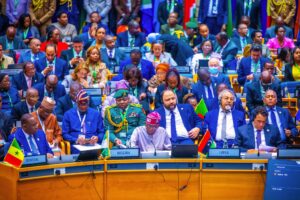
On the part of business, investments and local ownership, the leadership gap also carries economic consequences. International investors regularly cite governance risks as a barrier to long-term investment in Africa. At the same time, African entrepreneurs and professionals argue that capital often arrives with conditions that sideline local expertise. A striking example is where development conversations take place. High-level discussions about African elections, climate finance, or infrastructure investment are frequently held in Western World capitals. African experts travel thousands of miles, adding to carbon emissions to pitch opportunities in their own countries. Meanwhile, investors miss the chance to engage directly with local markets, workers and environments if the pitching-journey was often the opposite.
Business leaders on the continent argue that relocating these conversations to African capitals would change power dynamics. It would ground investment decisions in reality, strengthen accountability and signal confidence in local leadership. More importantly, it would allow African professionals to lead negotiations rather than respond to pre-set agendas. What about the question of political power and persistent challenges? Another aspects of a postcolonial procession.
Re-centering leadership does not mean ignoring Africa’s governance challenges. Corruption, weak institutions, political short-termism remain significant obstacles. In many countries, electoral cycles incentivize visible but unsustainable projects, and long-term investments in systems like education, climate resilience, or institutional reform, etc. are delayed.
Capacity gaps also persist. Leadership training often emphasizes technical skills without equal attention to ethics, systems thinking, design thinking or environmental stewardship. Post-colonial structures characterized by dependency on external financing and policy prescriptions, continue to limit policy autonomy. Nonetheless, some critics caution against framing these challenges as uniquely African. They point instead to historical power imbalances that shaped institutions to serve extraction rather than accountability. Without addressing this legacy, they argue that reform efforts risk repeating the same patterns under new labels.

On another facet, the climate crisis has sharpened these debates in regard to climate, colonial legacies and knowledge gaps. Africa contributes the least to global emissions yet bears disproportionate impacts, even from desertification and flooding to food insecurity. Canvassers have traced many environmental vulnerabilities to colonial-era land use policies and post-independence interventions that sidelined indigenous knowledge. Top-down environmental solutions, often designed far from the communities they affect, have sometimes accelerated degradation rather than prevented it. By contrast, local land management practices, refined over generations, have shown resilience and adaptability.
Climate justice advocates argue that centering African leadership is not symbolic, it is practical. Policies designed and led by those who understand local ecosystems are more likely to succeed, endure and protect livelihoods.
At the moment, a growing momentum is building for a shift. Across the continent, youth movements, women’s groups, local governments, professional networks, etc. are demanding greater inclusion in decision-making. Calls to “decolonize development” are increasingly translated into concrete demands such as local procurement, indigenous knowledge integration, transparent governance and leadership pipelines that reflect society.

Reforms aimed at strengthening accountability, rule of law and institutional independence are also gaining traction. While progress is uneven, some experts note that where leadership reforms take root, development outcomes tend to follow. This is a start-off foundation, not an add-on.
As Africa navigates economic transformation, democratic consolidation and climate adaptation, leadership is emerging not as an optional component of development, but as its foundation. Without African-led decision-making, sustainability risks remaining theoretical, well-funded, well-intentioned and ultimately fragile.
Re-centering African leadership means relocating power as well as conversations back home. It means trusting local expertise, investing in ethical governance and recognizing that sustainable development is as much about how decisions are made, as well as what decisions are made.
As for Africa, the path forward may not lie in reinventing development frameworks, but in restoring leadership to its rightful place at the center of these transactions/conversations.