
Readaptability and Genetic Reorder of Cattle that Survived 130 Years on Amsterdam Island
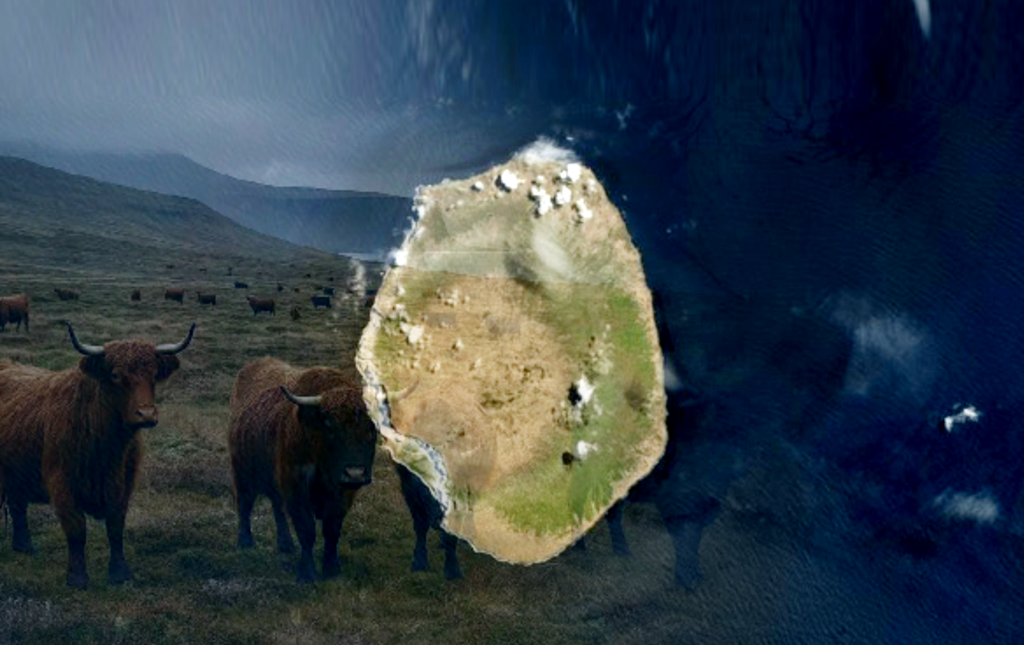
In 1871, a small group of domestic cattle was left behind on a windswept volcanic outpost in the southern Indian Ocean. There were no barns, no herders, no permanent freshwater streams, only relentless wind, steep cliffs and coarse grasses. Against the odds, the animals survived. Within decades, their numbers swelled to nearly 2000.
In 130 years the cows of Amsterdam Island lived without human care, becoming one of the most unusual examples of feral adaptation in modern history. Then, in 2010 they disappeared in the name of ecological restoration. Their story is not just a biological curiosity. It is a case study on how humans often try to shape, disrupt and attempt to repair remote ecosystems with difficult ethical trade-offs. This time around, it was hung on a remote island, and onto a harsh beginning.
Amsterdam Island lies roughly 4400 kilometers southeast of Madagascar and forms part of the French Southern and Antarctic Lands. Treeless, exposed, it is battered year-round by strong winds and frequent rain. Permanent freshwater sources are scarce. When cattle were reportedly abandoned there in the late 19th century, possibly by passing sailors or settlers, survival seemed unlikely. By the time a scientific base was established in 1949, the herd had already entrenched itself across the landscape.
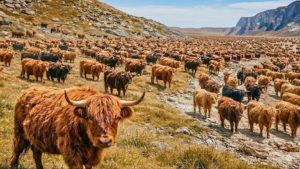
Genetic samples collected during expeditions in 1992 and 2006 revealed something striking. The cattle did not dramatically shrunk in size, as it sometimes happens in isolated environments. Instead, researchers believe their adaptations were more behavioral and physiological, increased strength, altered grazing patterns and social structures suited to a poor-resource environment. In essence, these domesticated animals had become wild again. To some observers, the herd represented nature’s stubborn capacity to adapt. One field researcher noted that “It was an extraordinary situation. These were animals once dependent on humans, surviving entirely on their own in subantarctic conditions”.
Moreso, in this case, resistance to an unknown ecosystem at an early stage to readaptability of a new phase of life, can showcase multiple consequences for all. Because, Amsterdam Island is home to fragile plant species and important seabird breeding grounds. As the cattle population expanded, grazing pressure intensified. Native vegetation was trampled or replaced by invasive grasses. Soil erosion increased. Nesting habitats for birds deteriorated.
By 2006 when the island was incorporated into the French Southern and Antarctic Lands nature reserve, which was later recognized as part of a UNESCO World Heritage listing, the conservation priorities shifted sharply. Authorities classified the cattle as an invasive species threatening endemic biodiversity. So, the decision to remove them was framed as ecological necessity, sponsoring sessional debates of eradication and ethics in some closets. While in 2010 the entire feral herd was culled. In the view of some conservation officials, the course aligned with global restoration strategies of eliminate non-native species to protect vulnerable ecosystems. Similar programs have targeted goats, rabbits and rodents on islands worldwide.
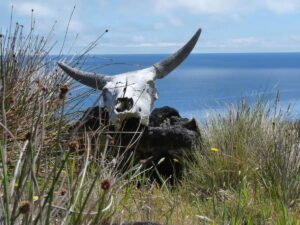
However, a lot of people queried that the wiping-out of a population that had survived independently for more than a century, could erase an unintended but genuine chapter of ecological/historical development. Because, the cattle themselves now, represent a unique genetic and behavioral experiment in isolation.
Some environmental ethicists argue that restoration efforts often draw an arbitrary line in time, privileging a pre-disturbance of the original ecosystem, while discounting the evolutionary changes that was caused by human interference. Others counter that failing to act would have allowed continued degradation of irreplaceable native species. The debate mirrors part of an extensive global tension that is drawn from humans’ disruptive-introduction to ecosystems. So, the loud question is, what exactly are we trying to restore and for whom? Because, these are lessons that should be to learnt from, beyond what has happened on the Island.
The Amsterdam Island cows illuminate pressing questions far from a remote French territory. Around the world there are domestic species escape or are abandonment; from horses in the Americas to pigs and goats on Pacific islands. Some adapt with astonishing speed, others destabilize delicate habitats. Their story emphasizes three intertwined realities: Human decisions echo for generations – as small abandonment in 1871 reshaped an island ecosystem for 130 years; Adaptation does not equal harmony – as survival can coexist with ecological damage; and Conservation is rarely simple – eradication, even for restoration, carries moral weight and political scrutiny.
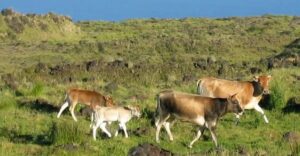
Today, Amsterdam Island’s landscape is recovering, native vegetation slowly reclaiming the ground that was once grazed by abandoned cattle. The herd itself survives only in genetic samples and research papers, showing us reminder of how quickly human actions can create, and then erase entire populations.
In the end, the cows’ century-long survival was both a triumph of resilience and a cautionary tale. They proved that life can adapt in isolation. But they also showed that even in the most remote corners of the planet, no ecosystem is ever truly untouched by human hands.