
Russia/China Expand Partnership in Personalised-Cancer Treatment, Rousing Global Pharma Competition
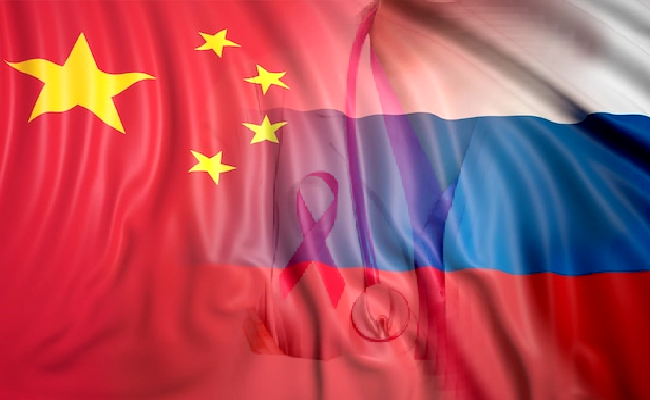
Russia and China are strengthening cooperation in personalised cancer treatment, to reshape clinical care, also the economics and geopolitics of global health.
During a recent working visit to Shanghai, scientists from Sechenov First Moscow State Medical University signed new cooperation agreements with leading Chinese institutions, including Shanghai Sixth People’s Hospital, affiliated with Shanghai Jiao Tong University School of Medicine. The talks centred on personalised anti-cancer vaccines, cell therapy and genome editing, areas where both countries are investing heavily as alternatives to conventional chemotherapy and radiation.
The core of the partnership, is a new generation of immunotherapies designed to train the body’s own immune system to recognise and attack tumours. Unlike traditional cancer treatments that often involve surgery, toxic drugs or repeated radiation, these approaches rely on extracting and reprogramming a patient’s immune cells before reintroducing them to target specific cancer markers.
Chinese regulators are reportedly preparing to review a Russian-developed personalised cancer vaccine, following promising early trial data. While full results have yet to be published in major international journals, researchers say patients have shown stronger immune responses and fewer side effects compared to some standard therapies. To families facing cancer diagnoses, the implications are extremely personal. In many countries, treatment costs can push households into debt, particularly where insurance coverage is limited. If personalised cell therapies is scaled efficiently, it could shorten treatment timelines and reduce hospital stays. Conversely, such therapies are also complex and expensive to produce, which raises the questions about whether they will truly be accessible to low/middle income patients, or remain confined to well-funded urban centres.
Marina Sekacheva, director of Sechenov University’s Institute of Personalised Oncology, said Chinese clinics have already begun producing customised anti-cancer medicines using patients’ immune cells under a state-backed quality control framework. She noted that the infrastructure could allow wider clinical deployment while maintaining safety standards.
The collaboration also includes joint study of a Chinese-developed immuno-oncology drug targeting nasopharyngeal and oesophageal cancers. Diseases that disproportionately affect Asian populations, but are rising as global concerns too. Meanwhile, Sechenov researchers have completed preclinical trials of Russia’s first immunoengineered TCR-T cell therapy for treatment-resistant breast cancer, showing ambitions to compete in the fast-growing global immunotherapy market.
The economic stakes are enormous. The global pharmaceutical sector, valued at an estimated $2.6 trillion, has in a long time, been dominated by Western multinationals that control patents, distribution networks and regulatory pipelines. A successful Russia-China platform for personalised cancer vaccines could diversify supply chains and reduce reliance on US/European drug makers, particularly in emerging markets.
Inspite of this advancement, experts still caution for optimistic-patience. Immunotherapies often require rigorous long-term trials to confirm durability and safety. Genome editing technologies also raise ethical and regulatory concerns, especially regarding off-target genetic effects. Transparency in data sharing and adherence to international clinical standards will be critical if the partnership is to gain global trust.
This cooperation, reflects a broader realignment in science diplomacy, politically. As tensions between Russia and Western nations persist, Moscow has increasingly turned to Asian partners for research collaboration and technology exchange. China has prioritised biotech self-sufficiency as part of its national innovation strategy, on its own part.
However, for patients and clinicians on the ground, the focus remains practical for survival, quality of life and affordability. If personalised-cancer vaccines and cell therapies can move from laboratory-possibilities to community clinics without prohibitive cost, they would mark a turning point in oncology.
Whether this initiative becomes a genuine democratisation of cancer care, or another high-tech breakthrough limited to elite institutions, will utmostly depend on scientific success, policy choices, pricing strategies and international cooperation. What is clear is that the global fight against cancer is entering a new and strategically charged phase, where science, economics and diplomacy interconnect for humanity, globally.