
Scatec’s 120MW Solar Venture in Southern Tunisia, Promotes Energy Transition with Local Economic Incentives
Scatec has secured a 25-year power purchase agreement with Société Tunisienne de l’Electricité et du Gaz to build a 120-megawatt solar power plant in Tataouine, marking a significant step in Tunisia’s push to rebalance its energy mix and reduce reliance on imported electricity.
The project, awarded through a government tender, carries an estimated capital expenditure of €80 million ($95 million). Scatec will initially retain full ownership before bringing in equity partners, while discussions with financial institutions are ongoing for non-recourse debt financing. Financial closure is expected in the first half of 2027. The deal reflects Tunisia’s broader strategy to raise renewables to 35 percent of its energy mix within six years. It is a paradigm-shift that the ministry of energy says could help cut electricity imports from neighbouring countries and stabilize domestic supply. By 2030, some government executives project that solar and wind could generate nearly 4850 megawatts of green electricity nationwide.
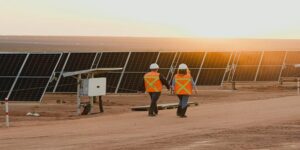
In Tataouine, a southern region associated with high unemployment and outward migration, the project carries local significance and beneficial impact. The project construction is expected to generate temporary jobs, while long-term operations and maintenance roles may offer more stable employment.
As for many families, energy reliability has practical implications; few periods of blackouts, mean more predictable business hours for small shops, better storage for perishable goods and improved study conditions for students. If managed inclusively, even procurement opportunities for local contractors, could also circulate income within the community. But then again, local leaders and civil society groups, will be watching closely to see how land use is handled; and whether employment is provided for the locals; or procurement benefits remain concentrated on outside contractors or are meaningfully shared among the locals in Tataouine.
With respect to the cultural and environmental dimensions, Southern Tunisia’s desert landscapes are traditionally and ecologically sensitive. The renewable energy development, which is widely supported as climate-forward, might often intersects with pastoral traditions and land access patterns. So, transparent consultation with local communities will be key to avoiding friction, and ensuring the project aligns with regional development priorities. The project also points to Tunisia’s ambition to position itself as a renewable energy hub in North Africa, complementing longer-term plans for green hydrogen production in the southeast, including the Gabès Governorate. Therefore, solar expansion in Tataouine could lay groundwork for future clean energy value chains.
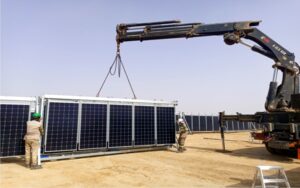
In clear consideration of business and financial implications for Scatec, the Tunisia contract strengthens its footprint in emerging markets, where governments are accelerating energy transitions but still facing financing constraints. By structuring the project with a mix of equity and non-recourse debt, the company limits balance-sheet exposure, while leveraging long-term revenue stability through the PPA.
Scatec will serve as engineering, procurement and construction contractor for roughly 80 percent of the project’s capital expenditure; will also provide asset management and operations services once the plant becomes operational, allowing it to capture value across the project lifecycle. In this stead, attracting foreign renewable developers for Tunisia, will promote confidence to the investors’ market, because of the pressure that public finances are parading currently. The energy ministry earmarked about TD7.1 billion ($2.2 billion) for power sector development in 2025, which accentuated the scale of planned transformation in the Tunisian electricity sector.
Energy independence is increasingly framed as a sovereignty issue, in political and regional context. Tunisia’s reliance on imported electricity, particularly during her peak-time demand, has exposed the country to price volatility and geopolitical alterations. Expanding solar capacity in the south, diversifies supply and reduces vulnerability to external shocks. At the same time, foreign-backed infrastructure projects can be politically sensitive. Government will need to balance national energy security goals, with public scrutiny over contract transparency, pricing terms and long-term tariff impacts on consumers.
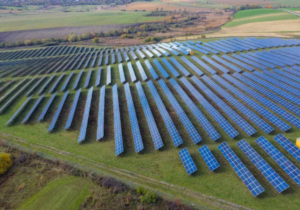
As Tunisia works toward its 2030 renewable targets, the Tataouine plant may serve as a bellwether. If delivered on schedule and integrated smoothly into the national grid, it could build momentum for additional private-sector participation, being included in the country’s anticipated hydrogen ventures.
But, its ultimate success, which will likely be measured in megawatts generation, will also be expected to translate into lower electricity costs and tangible improvements in daily life, for Tunisian households. Because clearly, the 120MW project stands as both an engineering undertaking and a social contract that links international capital, national policy ambitions and the aspirations of a desert-region community seeking durable opportunity, powered by electricity.