
Strait of Hormuz Tensions Renew Global Economic Fears as Iran Defies Trump’s Measured Response
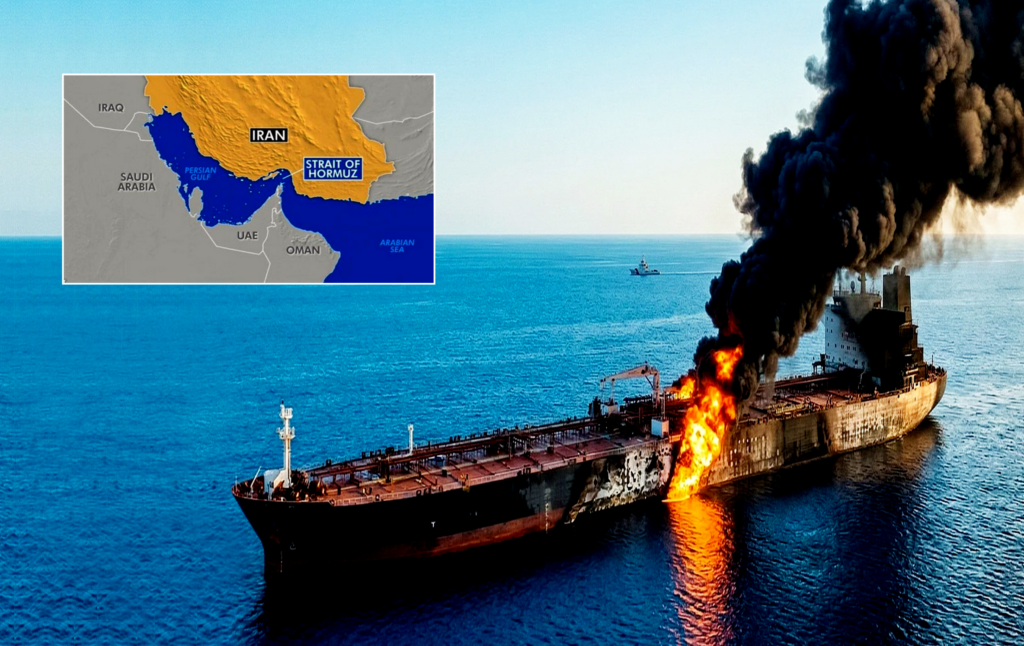
The narrow waters of the Strait of Hormuz once again sit at the center of global economic anxiety, as escalating tensions involving Iran and strong rhetoric from US President Donald Trump, revive fears of disruption to the world’s most vital oil shipping corridor.
Roughly over 20% of the world’s petroleum consumption flows through the Hormuz Strait each day, making the 33-kilometer-wide channel a crucial artery for global energy markets. Any threat to its security can ripple across economies far beyond the Middle East, affecting households, businesses, and diplomatic relations worldwide. The Strait is now a choke-point for global energy.
Energy analysts estimate that between 20 and 21 million barrels of oil and petroleum products transit the strait daily. The route serves as the primary export channel for major Gulf producers including Saudi Arabia, Iraq, Kuwait, United Arab Emirates, and Qatar. To the energy-dependent Asian economies, such as China, India, Japan, etc., the passage represents more than a trade route; it is a lifeline. Any disruption could tighten supply chains almost instantly, sending oil and liquefied natural gas prices soaring.
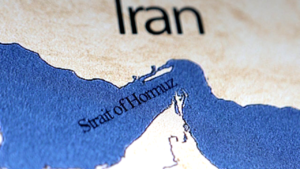
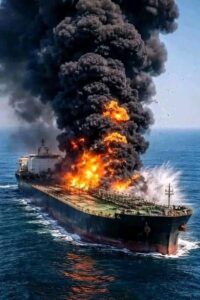
Financial markets tend to react swiftly to even the possibility of instability in the region. Recent tensions have already pushed global benchmark oil prices higher, as traders factor-in the risk that supply could be temporarily restricted. But, in the recent cause of war against Iran, the Hormuz Strait has proved to become Iran’s strategic leverage, considering the recent Iranian drone strikes against shipments in this corridor.
Officials in Iran have long viewed the Strait of Hormuz as a powerful strategic card, in geopolitical disputes. The country’s naval forces regularly patrol the surrounding waters, and have in past confrontations, threatened to close or restrict access to the channel in response to sanctions or military pressure. While a full closure would likely provoke a swift international response, analysts say that the mere suggestion of disruption, can create uncertainty that shakes global markets, which is currently happening, and driving global oil price on a fast rise. Iranian leaders often frame their stance as defensive, arguing that war against Iran, economic pressure and sanctions, leave them little choice but to assert control over waters close to their territory. And indeed, the present Supreme Leader – Mojtaba Khamenei, has shown that force in recent reactive-strives.
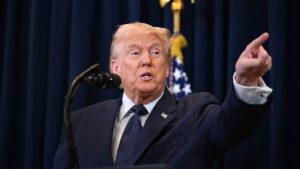
US President Donald Trump has previously taken a confrontational approach toward Tehran, emphasizing the role of the United States Navy in safeguarding international shipping routes. His statements have typically emphasized, the strategic importance of maintaining open maritime lanes and protecting allied Gulf States, as his hardline message.
However, critics warn that strong rhetoric from Washington can escalate tensions, in a region already crowded with military assets. Warships from the United States, Iran and regional powers, routinely operate in close proximity around the Hormuz Strait, creating an environment where a single miscalculation at the moment, could spiral into a broader confrontation, and diverse economics/businesses would receive the fallout painfully.

The consequences of disruption extend well beyond oil producers. Shipping companies face soaring insurance premiums, whenever tensions rise, sometimes making it prohibitively expensive for tankers to pass through the Strait. In extreme cases, vessels delay voyages, or reroute shipments, effectively slowing the flow of energy supplies. Businesses worldwide, from airlines to manufacturing firms, feel the knock-on effects. Higher fuel prices like its rippling across the globe presently, increase transportation costs, raise consumer prices and squeeze the already fragile supply chains. Economists warn that a prolonged shutdown of the Hormuz Strait, could trigger a long insist global economic shock, particularly in developing economies that rely heavily on imported energy, causing a paralytics-socioeconomic/sociocultural impact.
Ahead of the geopolitical calculations, lies an ongoing disruption of visible human dimension. Rising fuel costs often translate into higher food and transportation prices for ordinary citizens, particularly in energy-importing nations. As for workers in shipping and maritime industries, heightened tensions also bring personal risks, as crews navigate waters where military encounters remain a possibility. While for communities in Gulf coastal states, live with the constant presence of naval patrols and the uncertainty of regional conflict, dissettles sociocultural-mindsets. Presently, air-strikes over the Strait Hormuz, based on Iran’s recent drone attacks on ships, global diplomacy is gone under pressure on one hand; while Trump is weighing response from NATO and the Asian geopolitics, on the other.

Despite recurring threats from Iran over the Strait gulf’s corridor, most analysts believe a complete blockade of the Strait of Hormuz remains unlikely. The waterway is too vital to too many countries for any single state to close it, without facing overwhelming international pushback.
Still, the recurring cycle of tension, highlights how fragile the global energy system remains. As long as the world depends heavily on oil, transported through this narrow corridor, the waters of the Strait of Hormuz, will remain one of the most strategically-economical sensitive passages, on Earth.