
Strait of Hormuz Traffic still Choked, as Geopolitical Tensions Reshape Global Shipping
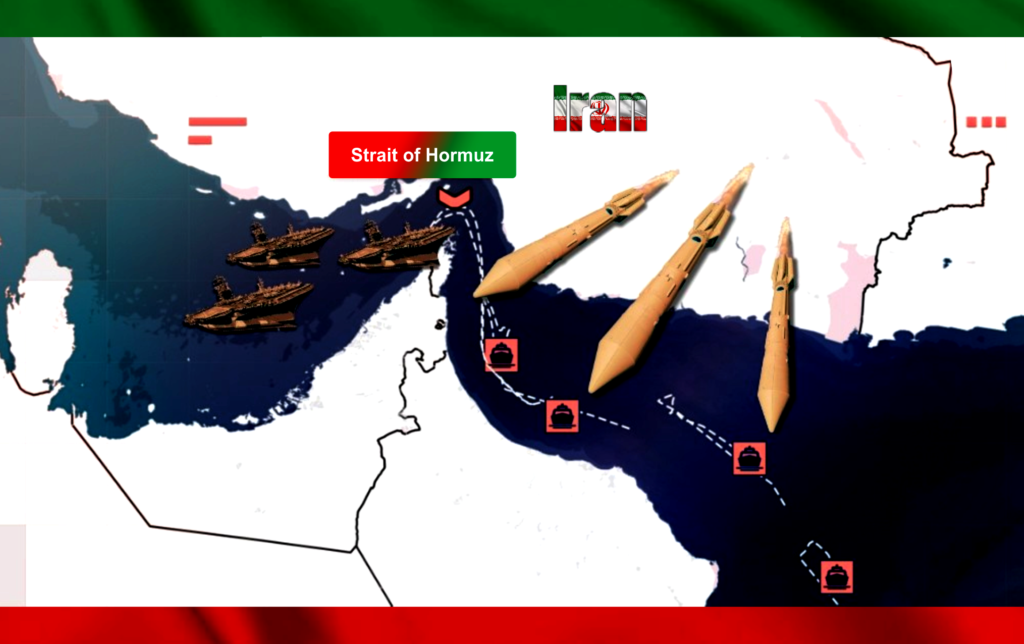
Maritime traffic through the Strait of Hormuz, one of the world’s most critical energy corridors, has slowed to a near standstill in early April 2026, as heightened geopolitical tensions and strict Iranian oversight disrupt global trade flows and energy markets.
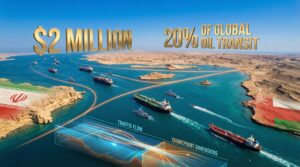
Industry estimates indicate that vessel movement has fallen by as much as 90 to 95 percent compared to pre-crisis levels, leaving the narrow waterway operating at a fraction of its usual capacity. Once a vital artery for roughly a fifth of global oil supply, the Strait is now dominated by a limited number of tankers, many tied to Iranian exports or operating under tightly controlled conditions.
Iran has effectively assumed the role of gatekeeper, vetting ships before allowing passage. Access appears largely restricted to vessels with direct or indirect Iranian links, or those from countries maintaining neutral or cooperative relations, including China, India and Pakistan. Even then, clearance is often contingent on opaque arrangements, including reported cargo agreements or financial terms.
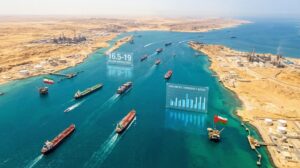
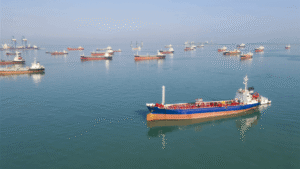
The disruption is reverberating across global businesses. Major container shipping lines have suspended transit through the corridor, forcing companies to reroute cargo, absorb higher costs, or delay shipments altogether. War-risk insurance premiums have surged, reportedly up to 33-times of the standard rates, which is further discouraging commercial operators and tightening supply chains already under strain.
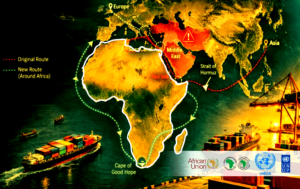
A modest workaround has emerged in the form of a newly active route, an Omani-managed maritime corridor. The Omani-managed maritime corridor is an emerging alternative shipping route along the southern edge of the Strait of Hormuz, close to Oman’s coastline. It is designed to bypass the narrower northern passage, which is under the control of Iran’s Islamic Revolutionary Guard Corps (IRGC). Following an escalation of regional conflict in late February 2026, this southern route has become a critical and relatively safer option for vessels. It is particularly used by Omani-linked ships or those operating under special arrangements, enabling them to exit the Gulf with reduced risk of interference.
By early April 2026, maritime traffic in the Strait of Hormuz had effectively divided into a dual-corridor system. The northern route remains under tight IRGC control, especially near Larak Island, while the southern corridor runs along the Omani coast and offers an alternative passage. Operationally, the southern corridor allows ships to navigate outside Iran’s primary control zone. Its use is supported by ongoing coordination and discussions between Iran and Oman to manage navigation rules and ensure safe passage.
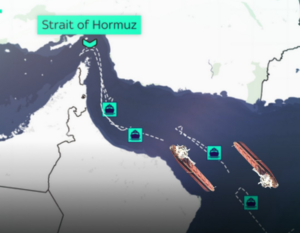
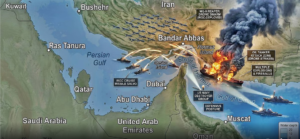
In practice, the corridor has been used by Omani-linked vessels, including liquefied natural gas tankers such as Sohar and very large crude carriers like Habrut and Dhalkut. These ships were able to move cargoes safely after being delayed within the Gulf. The significance of this corridor lies in its role in sustaining supply chains during a period of regional instability. It enables the continued movement of energy exports and other goods while reducing exposure to security risks. This development is reinforced by broader regional dynamics. Oman has increasingly functioned as a safe maritime and logistics hub, with ports such as Salalah, Sohar, and Duqm serving as key alternatives outside high-risk zones. These ports allow vessels to discharge cargo and avoid heavily restricted commercial routes.
At the same time, complementary logistics solutions have emerged. In March 2026, Dubai Customs introduced a Green Corridor initiative, combining sea and land transport. This system allows goods arriving at Omani ports to be transported by road into the UAE, effectively bypassing the Strait of Hormuz altogether. However, this alternative route remains limited in scale and capacity, offering only marginal relief to the backlog of vessels waiting to transit the strait.
Afar from the economic toll, the situation highlights a wider political and social dimensions. Some energy-importing nations face renewed uncertainty over supply security, with potential knock-on effects for fuel prices, socioeconomic-inflation and domestic stability. Countries that are heavily dependent on Gulf oil exports, this constrained access to global markets threatens revenue flows and fiscal planning.
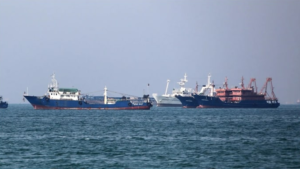
Meanwhile, maritime safety concerns are mounting. Reports of the dark-transits, where vessels disable their tracking systems to avoid detection, highlight the growing risks faced by crews navigating the area. Long waiting times and restricted movement, have also raised humanitarian concerns for seafarers stranded in congested waters.
Despite limited crossings by selected tankers and cargo ships, the Strait of Hormuz remains effectively bottlenecked; its restricted flow is serving as a stark reminder of how geopolitical crises can swiftly disrupt the foundations of global commerce.