

Sudan’s Peace Plan Faces Structural Hurdles Inspite of Diplomatic Momentum
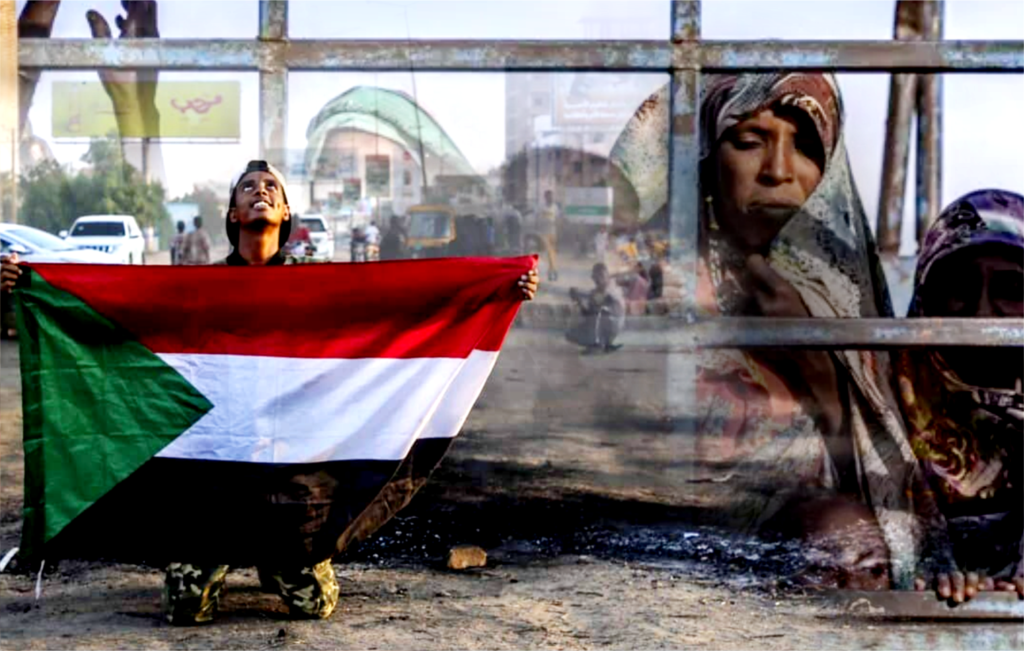
A new peace initiative for Sudan spearheaded by the United States alongside Saudi Arabia, Egypt and the United Arab Emirates, is being positioned as the most comprehensive external effort to halt the country’s devastating civil war. Announced in February 2026 by US President Donald Trump’s adviser on Arab and African Affairs, Massad Boulos, the proposal reportedly received preliminary approval from both Sudan’s Armed Forces (SAF) and the paramilitary Rapid Support Forces (RSF). Yet, despite diplomatic progress, structural political, economic and regional constraints, cast doubt on the short-term viability plans of framework built on ceasefire and reconstruction.
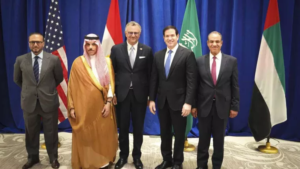
The Quad proposal centres on five pillars; an immediate ceasefire, guaranteed humanitarian access, civilian protection, a transition toward civilian governance; and a reconstruction pathway backed by a pledged US$1.5 billion. Some reports suggest the framework includes coordinated withdrawals from major urban centres. The RSF would pull back from key areas in South Kordofan and near El-Obeid, while army units in Khartoum would be replaced by local police to prepare cities for civilian administration. A United Nations-led mechanism would monitor compliance and secure humanitarian corridors.
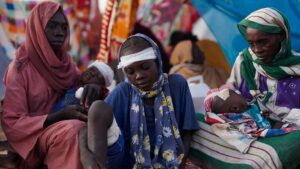
The plan reflects a broader economic stabilisation logic of reduce violence, restore state functionality, reopen trade corridors and lay groundwork for reconstruction financing. Sudan’s war has displaced more than 14 million people, killed tens of thousands and left roughly 21 million facing acute hunger. Infrastructure collapse and territorial fragmentation have paralyzed agricultural production, disrupted cross-border commerce and weakened regional supply chains across the Red Sea and Sahel corridors. Still, ceasefire architecture alone may not address the indepth political economy of the conflict that paints territorial fragmentation and competing governance urge.
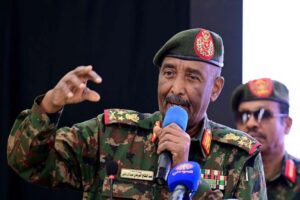
Sudan is now effectively divided. The army controls eastern, northern and central regions, including Khartoum, while the RSF dominates much of western Sudan, particularly Darfur. Active fighting is concentrated in Kordofan, a strategically critical region representing roughly one-fifth of Sudan’s territory.
This fragmentation has produced parallel systems of taxation, resource extraction and local governance. Both parties derive revenue and political leverage from territorial control, limiting incentives for compromise. Reports that the Quad framework would allow the RSF to retain local administrative structures in areas under its control, atleast temporarily to facilitate aid, have triggered strong objections from the army. The SAF leadership believes formalising such arrangements risks legitimizing the RSF as a political actor.
Well, the dispute echoes the unresolved issue that sparked the war in April 2023, of who controls Sudan’s military reform process and the future configuration of the state. Insightfully, this escalation may undermine the diplomacy implored.
Recent battlefield developments suggest neither side is preparing for de-escalation. Clashes have intensified in Kordofan and Blue Nile state, where the Sudan People’s Liberation Movement-North, aligned with the RSF, has launched new offensives. Meanwhile, the army has broken sieges in parts of South Kordofan, altering the military balance. Such fluid frontlines complicate any agreement on withdrawal zones. Because, existing mistrust that is already evident in the collapse of the US-Saudi mediated Jeddah agreement in 2023, has continued to undermine confidence-building measures.
The Quad initiative must also be viewed through a wider geopolitical lens. Regional powers maintain competing interests in Sudan, including access to ports, agricultural land, mineral resources and security influence along the Red Sea corridor. While Quad members publicly endorse a ceasefire, Sudan’s warring parties have historically benefited from varying degrees of external support. As long as both SAF and RSF perceive continued access to regional beneficial backing, the cost of war looks like it is manageably relative than perceiving risks of compromise.
Washington’s evolving approach appears aimed at reshaping these incentives. In December 2025, the US Congress expanded intelligence engagement to monitor and expose external actors supplying arms to Sudan. The monitoring indicates an attempt to dry up the conflict’s logistical supports, while consolidating Western influence, particularly with concerns about Russia’s reported interest in establishing a naval facility in Port Sudan. Egypt’s position may prove pivotal. As fighting edges closer to Blue Nile state, near Ethiopia’s Grand Renaissance Dam, Cairo’s core national security interests are directly implicated. Egypt’s support towards active ceasefire enforcement, could significantly alter the regional calculus, which could hamper on human, cultural and social stakes.
Away from the geopolitics, Sudan’s social fabric continues to unravel. Prolonged displacement has strained host communities across Chad, South Sudan and Egypt. Urban centres such as Khartoum that was once hubs of commerce and cultural exchange, have seen professionals, artists, diverse individuals and entrepreneurs flee abroad, fast-tracking brain drain and weakening civic institutions. Business networks that connected Sudan to the Gulf of African markets have fractured. Informal economies, armed patronage systems have expanded in their place, reshaping social hierarchies and entrenching war-era power structures. Civilian actors remain marginalized politically. Continued militarisation reduces space for democratic forces that led Sudan’s 2019 uprising; raising concerns that even a ceasefire wouldn’t institutionalize military dominance, unless it is accompanied by robust civilian mechanisms inclusion.
A breakthrough with the Quad proposal is not impossible. A non-sustenance of external pressure, particularly on arms flows, could gradually de-escalate warfare, if regional actors align behind a coordinated enforcement strategy. Because both parties may face narrowing options to fire the war.
However, in the near term, the most plausible outcome is a temporary humanitarian pause rather than a comprehensive political settlement. The economic frameworks sustaining the Quad plan, which are reconstruction funding, ceasefire monitoring and transitional governance, are all significant. But without resolving core questions of legitimate military integration and revenue control, structural barriers to peace would remain formidable.
Sudan’s conflict is a struggle over the architecture of the state, control of resources and the country’s geopolitical alignment, transcending just being military contest. Any durable settlement will require recalibrating domestic power balances, and also the regional/international incentives that have sustained the war.