
Sudan’s Conflict Redraws Social Lines, as Women Defy the Norms to Engineer Support-Systems
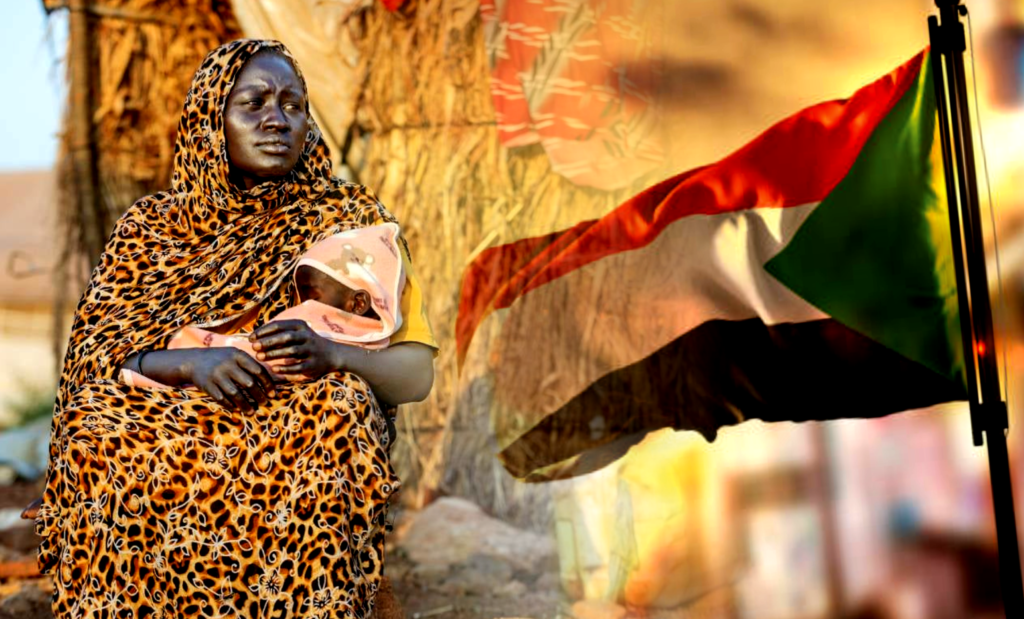
At the displacement camps in Sudan’s, survival has become a daily negotiation with hunger, insecurity and loss. It has also become a catalyst for change. As the war drags on, women who were once confined largely to the private sphere, are stepping into public, political and economic roles that are reshaping community life.
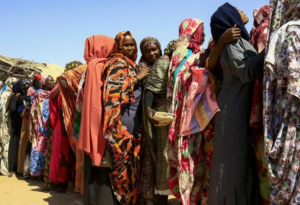
More than 12 million people have been displaced since fighting erupted, and over half are women and children. With men absent because of fighting, injury, detention or flight, women are increasingly the backbone of household survival and camp governance. What began as necessity is quietly altering long-standing gender norms.
Across camps and host communities, displaced women have taken up grueling work traditionally reserved for men. They cut and sell firewood, haul bricks at construction sites, and labor in fields under harsh conditions to earn enough for food. Many now serve as sole breadwinners, navigating unsafe work environments and volatile markets to keep families afloat.
Yet, survival is not only economic. In the vacuum left by a collapsed state, women have helped build new systems of local response. Informal emergency rooms in grassroots committees formed to manage crises, now function as temporary local governments in several areas. Women play leading roles, coordinating food distribution, securing water points, organizing night watches and mediating disputes.
Alongside these mixed-gender committees, women have created their own spaces, which is often called “women’s emergency rooms” to address needs that are frequently overlooked. These groups manage aid for mothers and children, distribute sanitary supplies, and provide basic sexual and reproductive health support at a time when nearly 80 percent of hospitals in conflict zones are inoperable. As for pregnant women, the collapse of healthcare has turned childbirth into a life-threatening ordeal.
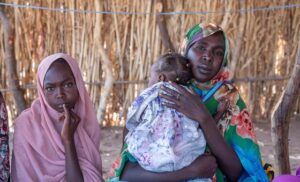
The social impact of women’s organizing is visible in smaller, quieter ways too. In camps, women gather for tea or coffee circles, an informal healing groups where they share experiences, discuss mental health and offer peer support. These gatherings help break the silence around trauma and abuse, especially as reports of gender-based violence have surged. Humanitarian groups warn that the risk of such violence has sharply increased over the past two years, leaving women in a state of constant vulnerability.
Food insecurity has further exposed inequality. As famine conditions spread, women often eat last and least, sacrificing their own meals for children and elders. In response, many are reshaping economic survival through small enterprises: neighborhood bakeries, tailoring cooperatives, food stalls and street vending, particularly in cities like Port Sudan. These efforts provide income, restore dignity and anchor fragile local economies.
Mobility has also become a survival strategy. Despite the risks, women travel between towns to find work, send remittances home, or help relatives relocate to safer areas. Their movement that was once socially constrained, is now essential to family survival.
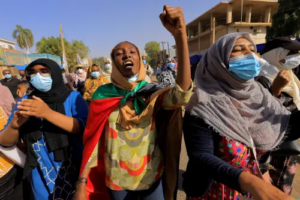
Thus far, women are asserting themselves politically beyond camps and markets. More than 70 women-led entities across Sudan are documenting abuses, advocating for peace and pushing back against their exclusion from formal negotiations. While largely sidelined in official talks, these groups argue that any durable peace must reflect the realities women are managing on the ground.
The war has devastated Sudan’s institutions, education system and social fabric. But it has also exposed who sustains communities when systems fail. Through labor, organizing and activism, Sudanese women are forging resilient networks of mutual aid and informal governance. In doing so, they are not only surviving the conflict but redefining power, participation and possibility in a country struggling to hold together.