
Togo, a West African Nation, Takes a Diplomatic Narrow-Path
As rival powers jostle for influence across West Africa, Togo is staking on strategic ambiguity as a source of strength rather than weakness.
When an attempted military coup in neighbouring Benin collapsed on 7 December, its alleged leader, Lt Col Pascal Tigri, slipped quietly across borders. His presumed route was first into Togo, then onward to a Sahelian capital such as Ouagadougou or Niamey, which was never officially confirmed. Nor was it denied. That silence and the careful calibration behind it, captures the essence of Lomé’s foreign policy under President of the Council Faure Gnassingbé, which depicts the avoidance of public commitments, maximise leverage and keep doors open in every direction.
Togo’s leaders know better than to be seen openly backing a challenge to Benin’s President Patrice Talon, especially when both countries belong to the increasingly fragile Economic Community of West African States (ECOWAS). But Lomé also makes little effort to hide its warm relations with Burkina Faso, Mali and Niger, the three military-led Sahelian states that quit ECOWAS last January and now formed the Alliance of Sahelian States (AES).
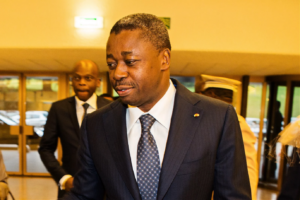
That balancing act is not confined to Africa. In late October, Gnassingbé was welcomed at the Élysée Palace by French President Emmanuel Macron, a reminder of Togo’s long-standing ties with its former colonial power. Less than three weeks later, the Togolese leader was in Moscow for a marked-warmer and more public embrace with President Vladimir Putin.
The Moscow’s visit produced a defence partnership allowing Russian naval vessels to use the port of Lomé, one of West Africa’s best-equipped deepwater harbours and a vital supply gateway for landlocked Sahelian countries. The agreement also covers intelligence-sharing and joint exercises, alongside plans to expand economic cooperation and reopen embassies closed since the 1990s. While Lomé insists it has no intention of hosting Russia’s Africa Corps, the symbolism alone was enough to unsettle Paris.

French officials are acutely aware of what they are losing. Once among France’s most dependable allies, Togo now appears determined to demonstrate that loyalty is negotiable. When the Benin coup attempt unfolded, Macron moved swiftly to underline France’s readiness to provide specialist military support to ECOWAS states defending constitutional order. An implicit contrast with Russia’s readiness to engage with military regimes.
However, with regards to Lomé, the message is that this is not a zero-sum game. Togolese officials frame their outreach to Moscow as diversification rather than defection. They point to a broader regional trend; as Togo and Gabon joined the Commonwealth while remaining active in the Francophonie; Ghana an anglophone Commonwealth mainstay, has since joined the French-speaking bloc. To many West African leaders, being asked to choose a side, feels like an outdated Cold War reflex that ignores local priorities.
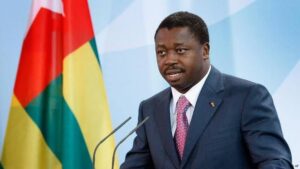
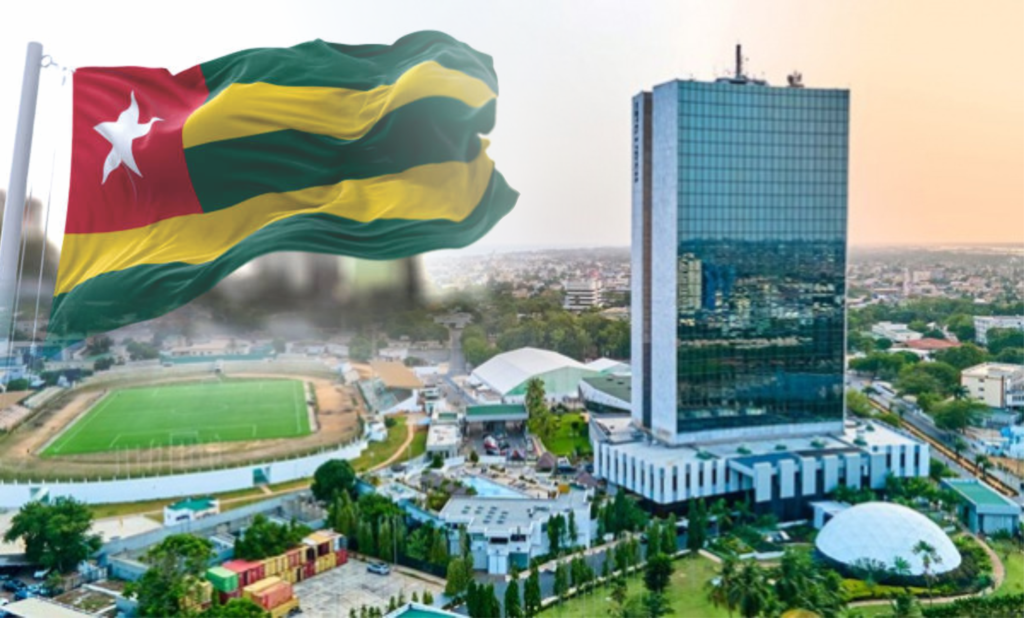
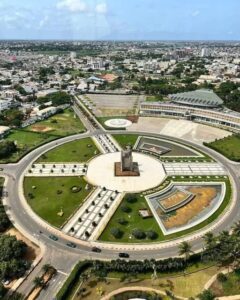
Those priorities are often economic. Lomé’s port is the engine of Togo’s economy, handling some of the largest container ships on the coast and redistributing goods across the region. Its airport links capitals from Dakar to Douala. Banks and regional financial institutions have clustered in the city, helping to diversify an economy whose rural hinterland remains poor.
Geography reinforces Togo’s hedging strategy. The country sits astride the Lagos-Abidjan corridor, a flagship of ECOWAS infrastructure project. At the same time, its economy depends heavily on trade with Sahelian neighbours that now aligned against the ECOWAS bloc. Togo’s foreign minister, Robert Dussey, has even floated the idea of joining the AES. A suggestion that would have been unthinkable a few years ago.
Yet diplomacy abroad is inseparable from politics at home. In 2024, a constitutional overhaul transformed the presidency into a ceremonial role and transferred executive power to a new position of Prime Minister, rebranded as President of the Council, with no term limits. Gnassingbé promptly stepped into that role, extending a family rule that began with his father in 1967 and has already spanned nearly six decades.
The change provoked protests that were swiftly suppressed. Activists, journalists and artists say they have been intimidated; critics such as rapper Aamron and former defence minister Marguerite Gnakadè, have faced threats of prosecution. The government counters that demonstrations turned violent and that social media fake news was being used to destabilize the state. One minister went so far as to describe the encouragement of protests as a form of terrorism.
International scrutiny has followed. In September, the European Parliament called for the unconditional release of political prisoners, including Irish-Togolese dual national Abdoul Aziz Goma, detained since 2018. Lomé responded by insisting on the independence of its judiciary and summoning the EU ambassador for a formal rebuke.
Here, too, foreign policy serves a domestic purpose. By advertising alternative partnerships, particularly with Russia and the Sahelian juntas, Gnassingbé shows to the Western critics that pressure has limits. Togo has options, as the message reverberated.
History suggests those limits are real. Togo has experienced sudden surges of unrest before and the social grievances that fuelled past protests have not disappeared. Families of detainees speak quietly of economic hardship and fear; civil society groups warn that repression risks extending resentment rather than erasing it. Perhaps recognizing this, Gnassingbé struck a softer note in a recent state-of-the-nation address, instructing the justice minister to explore possible prisoner releases. It was a small gesture, but a story-telling one.
Togo’s diplomatic tightrope between France, Russia, ECOWAS and the AES’s reform and repression, has so far kept the regime steady. But the balancing act is as much about managing pressures at home as navigating rivalries abroad.
No amount of international networking can permanently offset domestic discontent. In Lomé, the real test of this multi-directional strategy may yet come from within.