
Which Countries Could Be in Trump’s Sight Next?
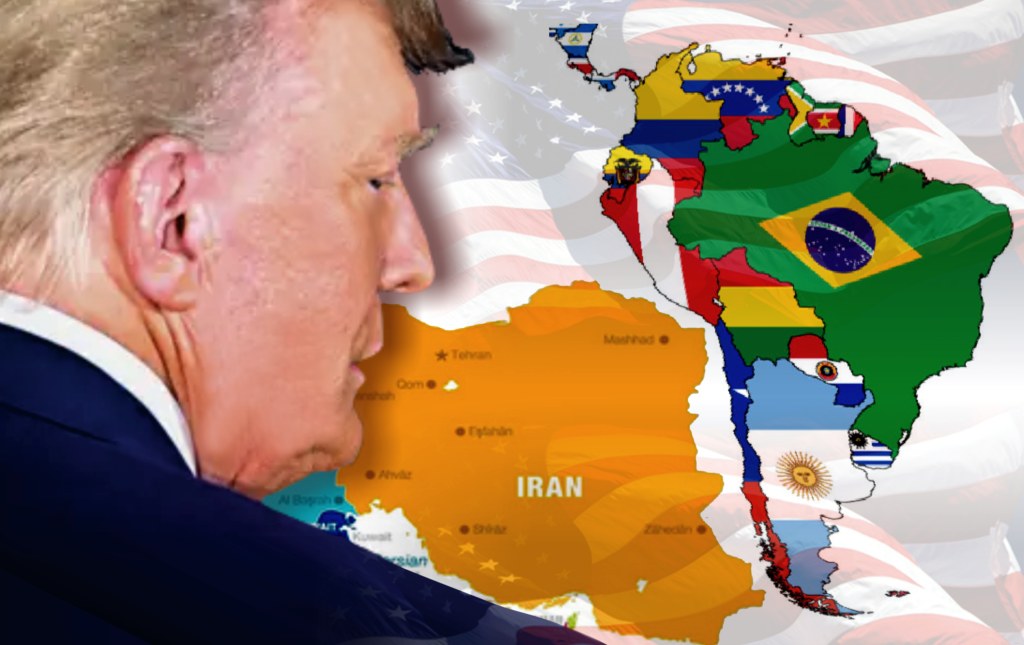
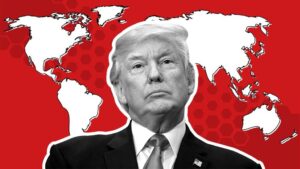
As President Donald Trump treads the paths of his second term, his foreign policy posture is once again drawing sharp global attention that is less for quiet diplomacy than of blunt language, symbolic gestures and the revival of long-dormant ideas about American power. At the center of this approach, is what Trump has branded the “Donroe Doctrine,” a reworking of the 19th-century Monroe Doctrine that shows a renewed US willingness to assert dominance, particularly in the Western Hemisphere.
From Latin America to the Arctic and the Middle East, Trump’s statements and actions are sending ripples far beyond presidential palaces, reaching families, local economies, border communities and civil society groups who often bear the first and heaviest consequences of geopolitical confrontation.
Donald Trump’s remarks about Greenland, the Panama Canal and America’s allies have been widely dismissed as bluster. That would be a mistake. What the president-elect gestured weeks before his inauguration, is not random provocation but a deliberate challenge to the assumptions that have underpinned Western diplomacy for decades, which Britain, EU, Asia and the rest part of the world should not ignore.
Speaking in a past news conference, Trump sketched an uncompromising vision of American power. From the unset, he refused to rule out the use of force or economic pressure to secure control of Greenland and the Panama Canal, two assets he cast as vital to the US security and trade. Also with a random pick from the retrospect of his past yearnings, he warned NATO allies that the price of continued American protection would rise sharply, calling for defence spending to increase to 5 per cent of GDP. Even the language of geographical-rebranding was not spared; as Trump suggested renaming the Gulf of Mexico as the “Gulf of America”; and while he repeatedly referred to Canada as “the 51st state” and its prime minister as a “governor”. Such comments are easy to caricature.
Yet, from the corners, some diplomats and defence officials privately acknowledge that these Trump’s statements in the past, as highlighted in few above, all fit a consistent pattern; which is the assertion of American leverage, the rejection of multilateral restraint and the transactional redefinition of alliances.
On the hand, against the background of Trumps early statements to Britain, NATO, the EU and the world at large, European leaders also pushed back rhetorically. France and Germany insisted that borders must not be removed by force. While France’s foreign minister – Jean-Noël Barrot then warned of a return to “the law of the strongest”. But in all, from that period through now, apart from statements made, Europe did not offer any clarity on how it would respond if Washington chose to apply sustained pressure rather than idle threats.
As for the UK, the implications probably reverberated immediately. In a pointed intervention then, Sebastian Gorka a senior Trump’s adviser, said that any country wishing to be treated as a serious ally of the United States, must demonstrate that commitment in practice. He cited Britain’s refusal to repatriate around 70 Islamic State prisoners and their dependants held overseas, including Shamima Begum, who had been stripped of British citizenship, as evidence of a failure to shoulder responsibilities that Washington expects its partners to carry.
From the start of his second tenure, Trump has been testing how far he can go and how others will respond with his statements and gestures. And on the 25th of December 2025, he displayed a bit of his bluntness in Nigeria by displacing a congregation of terrorist crusade that have been tormenting Christians, Muslims, livelihood, etc. in Nigeria, with a Tomahawk cruise missiles. Then right after, on the 3rd of January, in the wake of the year 2026, he exemplify another side of his numerous candid statements to the world with the exertion of the American power in the South Americas, starting with Venezuela.
Venezuela’s implicative instance towards power, families and general fear: the most dramatic signal came with a US-ordered operation to capture Venezuela’s president and his wife, framed by the White House as an enforcement of hemispheric security. In Caracas, the move has intensified a climate of uncertainty already shaped by years of sanctions, political division and economic hardship.
Farther from the corridors of power, ordinary Venezuelans on the street as vendors, oil workers, families dependent on remittances, etc., would be fearing the implication of further isolation. Community organizers warn that external pressure, while aimed at elites, often tightens the squeeze on food supplies, public services, and migration routes, pushing more families to leave the country in search of stability.
Greenland of strategic ice, local voices: Trump’s renewed interest in acquiring Greenland, justified by concerns over Russian and Chinese naval activity and access to rare earth minerals, has reignited debate over sovereignty in the Arctic. While Greenland’s prime minister firmly rejected the idea, emphasizing international law and dialogue, the conversation has exposed tensions between global security interests and local self-determination.
To the many Greenlandic communities, the issue is not abstract. Mining projects, military installations, and foreign attention raise questions about environmental protection, cultural preservation and who truly benefits from the island’s vast natural wealth. Indigenous leaders have stressed that Greenland is not merely a strategic asset, but a homeland with its own political future.
Colombia, feeling the wave from partner to pressure point: Trump’s sharp criticism of Colombian President Gustavo Petro, accusing him of enabling drug cartels, marks a stark shift in tone toward a long-standing U.S. ally. For decades, Colombia received American aid for counter-narcotics and security programs. Now, the rhetoric of possible U.S. action has unsettled rural communities already navigating fragile peace agreements and the lingering presence of armed groups.
Farmers and local leaders worry that renewed confrontation could undermine grassroots efforts to transition away from coca cultivation, replacing cooperation with suspicion and force.
Iran, receipting warnings beyond the hemisphere: Although Iran lies outside the “Donroe Doctrine,” Trump’s threats of retaliation if protesters are harmed underscore a broader willingness to use force as a deterrent. Following previous strikes on Iranian nuclear facilities and consultations with Israeli leadership, the administration’s posture has heightened anxiety among Iranian civilians, activists, and diaspora communities, who fear escalation will close what little civic space remains.
Mexico’s borders transactions and the symbols sovereignty: Trump’s renewed focus on border security paired with symbolic moves like renaming the Gulf of Mexico to the Gulf of America, has strained relations with Mexico. While framed as a response to drugs and irregular migration, the rhetoric lands hardest in border towns where families, trade, and culture flow across lines on a map.
Mexico’s president has firmly rejected any U.S. military presence on Mexican soil, echoing widespread public sentiment that security cooperation must respect national sovereignty and community stability.
Cuba, waiting for a collapse: On Cuba, Trump has suggested that military intervention is unnecessary, arguing the island is already nearing collapse due to the loss of subsidized Venezuelan oil. To the numerous Cuban families, this analysis feels detached from daily reality: shortages of fuel, food, and medicine continue to define life on the island, while political change remains uncertain.
Secretary of State Marco Rubio, himself the son of Cuban immigrants, has urged observers to take Trump’s words is a seriously reminder that personal histories and diaspora politics still shape US policy choices.
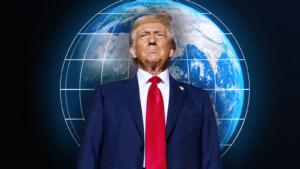
With a doctrine felt from the ground upwards and taken together, Trump’s second-term foreign policy reflects a familiar pattern; assertive declarations from Washington paired with complex, uneven impacts on the ground. While framed as protecting US interests, the “Donroe Doctrine” is being tested not only in diplomatic meetings, but in markets, neighborhoods, and households across multiple regions.
In respect to communities living at the juncture of global power and local survival, the question is no longer just which country might be next, but how weighty the ordinary people’s opinion will be in decisions made from afar, beyond their borders.
Trump’s presidential-body language in this tenure, is unmistakably clear. Presumably, loyalty is measured not by shared values or historic ties, but by compliance with American priorities. Because going forward, guaranteed security, intelligence cooperation and diplomatic goodwill will come with explicit conditions attached.
Trump’s ideas are undeniably disruptive and they carry serious risks for global stability. But to dismiss them as the ravings of a bully, is to miss their purpose. He is reshaping the rules of the international system in plain sight. The question to the world is not whether his dynamic leadership deployments are approved; it is whether the world is prepared for a biosphere where the old certainties no longer apply and the cost of alliance is being recalculated in Washington.