
Why Some Ethiopian Women Change their Ethnic-Identification When Entering Formal Employment
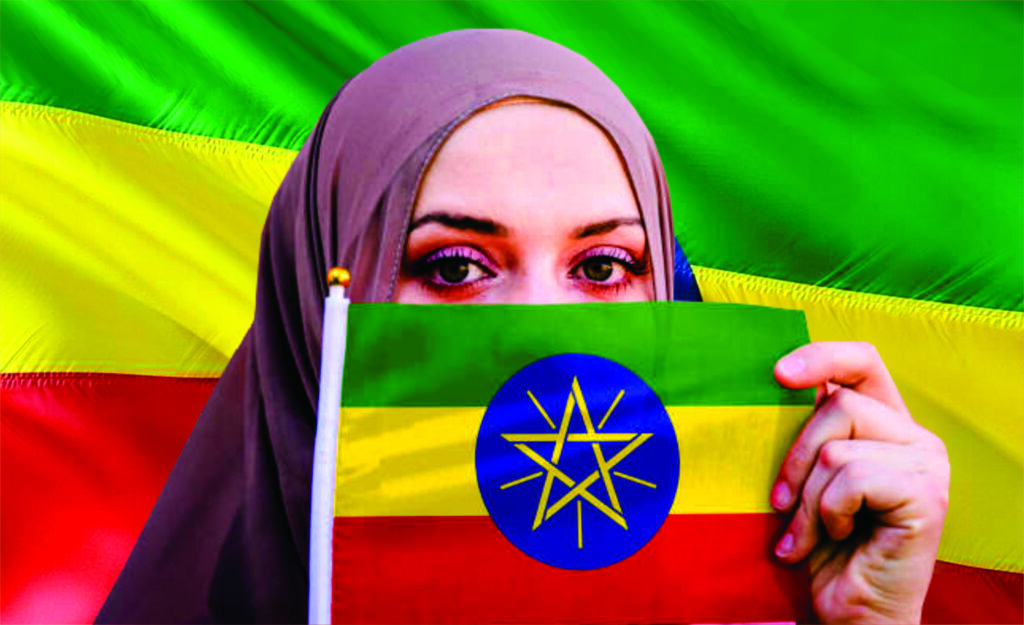
When Ethiopian women step into their first formal jobs, the change is often framed as economic progress for a payslip, new skills; and a foothold in the modern labour market. The less visible is another shift that can accompany employment, one that unfolds on buses, factory gates and crowded streets. To some the women, starting work changes not only their income, but how they describe who they are.
In Ethiopia, where ethnicity shapes politics, access to opportunity and everyday safety, that adjustment can carry high stakes. New research suggests that formal employment itself can prompt women to switch their self-reported ethnic identity, not as an act of reinvention, but as a practical response to risk.
The findings come from a rare field experiment conducted by a team of political scientists and development economists studying labour markets, gender and identity. Working with 27 firms across five regions, the researchers partnered with employers who had more qualified female applicants than available positions. Job offers were allocated by lottery. This created two comparable groups of women who received an offer and women who did not.
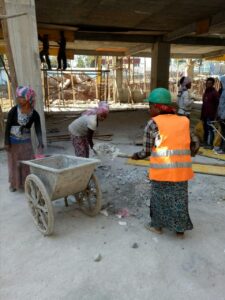
Over roughly three years, the team followed 891 women through repeated surveys, tracking employment status, earnings, working conditions, daily mobility and commuting routes, household dynamics and how participants reported their ethnic identity.
The results were striking. Around 8% of women changed their stated ethnicity at some point during the study. In a context where ethnic identity is socially consequential and typically stable, that is a notable share. Women offered a job were 4.3 percentage points more likely to switch than those who were not. Among women without job offers, about 6% changed their reported ethnicity over time; among those offered jobs, the figure rose to roughly 10%. Accounting for who actually took up work increased the effect further.
On paper, these are modest percentages. In practice, they point to something far larger from the way economic participation can expose women to new vulnerabilities, and how they navigate them.

Formal employment, brings a daily commuting through unfamiliar neighbourhoods and across ethnic fault lines for many of these women. Interviews conducted alongside the surveys, particularly in Dire Dawa and Hawassa, two cities with higher rates of identity-switching, help explain why identity might shift once a job begins.
Women described feeling more exposed on the road than at home. In areas marked by ethnic or ethno-religious tension, being identified with the “wrong” group could invite harassment, suspicion or worse. Several interviewees stressed that their decision to change how they identified was not about abandoning who they were, but about getting to work safely.
Some did not adopt the local majority’s identity. Instead, they switched to a third group perceived as neutral or less involved in local disputes. Whether this was possible depended on language, religion and appearance. Speaking the right language on a bus some women said, could allow them to gain “pass”; and to be read as belonging to a safer category in public spaces.
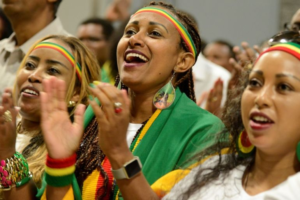
This strategy reflects a grim reality. Ethiopia has experienced repeated waves of violence in recent years; in 2022, the country accounted for more than 40% of conflict-related deaths worldwide. In such an environment, identity becomes less a fixed inheritance than a resource, something managed day by day in response to risk.
Scholars have long acknowledged that ethnic identity can be fluid. Yet, in policy and research, it is often treated as stable, rooted in ancestry. But, this study challenges the assumption by showing how identity can shift in response to economic pressures and changing patterns of transportation, especially for women in this region.
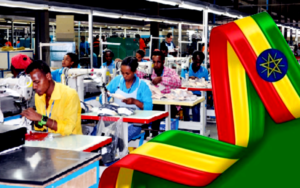
The implications extend beyond Ethiopia. Across Africa, governments are promoting manufacturing as a pathway to growth; and global brands are expanding supply chains in search of lower costs. Ethiopia has invested heavily in industrial parks, promoting factory jobs for young women as a development success story.
However, the research suggests a gap between job creation and worker protection. In newer manufacturing hubs, there are few transport safeguards, limited attention to local conflict dynamics and weak social safety nets. When women feel compelled to adjust their identity to commute safely to low-paid work, something is amiss.

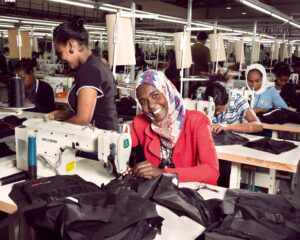
This is not simply a matter of personal adaptation. It raises political questions about whose security is prioritised in economic transitions, and social questions about belonging and dignity. Is changing one’s ethnic label an act of agency, or evidence of pressure in an insecure public sphere?
The women in the study were not passive victims of circumstance. Their decisions reveal careful calculation and strength. Nonetheless, relying on individual strategies to manage structural risk places an unfair burden on those least able to bear it.
A more inclusive approach to industrialisation would start with the realities women face beyond the factory floor; instances like safe and affordable transport, employer-supported commuting options and policies attuned to local social dynamics. It would also require acknowledging that economic growth can reshape identities in ways that are intensely personal and sometimes costly.
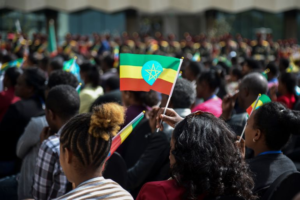

Imagine having to choose which language to speak on a morning bus, or which surname to offer a stranger, simply to avoid trouble on the way to work. Not all women reported experiences this stark. But the fact that such calculations are even necessary underscores the hidden pressures that accompany formal employment in fragile settings.
As Ethiopia and other countries like it pursue growth through jobs creation, this research offers a cautionary note. Progress measured only in employment numbers risks overlooking the realistic experience of workers transiting from base to work-station. In regard to most women’s transit-experience, safety, dignity and identity are negotiated daily, long before the workday begins.