

Arson Attack on UK Prime Minister’s Property, Extends Fears Over Alleged Russian Hybrid Warfare Campaign

The conviction of two men for a series of arson attacks linked to British Prime Minister Keir Starmer has evolved from a criminal investigation into a broader national security concern, raising questions about foreign interference, information warfare, and the growing vulnerability of democratic societies to covert destabilization campaigns.
British investigators and independent researchers are increasingly examining whether the attacks formed part of a wider strategy designed not only to target a senior political figure but also to deepen social divisions, undermine public trust, and test the resilience of British institutions.
At the center of the controversy is Roman Lavrynovych, a 22-year-old Ukrainian national convicted of conspiracy to commit arson after attacks on properties connected to the prime minister. Evidence presented during investigations suggests he was allegedly recruited online and guided by an anonymous handler known only as “EL,” who reportedly offered financial rewards and promises of Russian citizenship in exchange for carrying out increasingly serious acts of vandalism and sabotage.
What initially appeared to be a straightforward criminal case has since revealed links to a complex network of online propaganda, fake activist groups, and coordinated disinformation campaigns. Investigators tracing digital footprints uncovered alleged connections between the mysterious handler and pro-Kremlin online operations that promoted anti-Ukrainian narratives, glorified Russian President Vladimir Putin, and sought to inflame tensions among British communities.
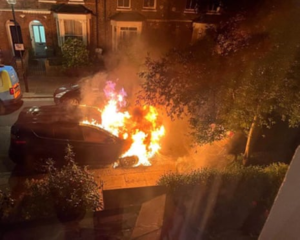
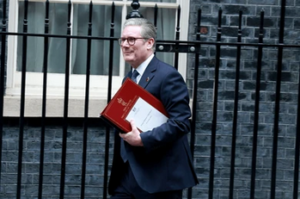
The case has amplified fears about the evolution of “hybrid warfare“, a strategy that combines cyber operations, propaganda, disinformation, sabotage and proxy actors to achieve geopolitical objectives without direct military confrontation. Security experts noted that recent years, have seen a rise in alleged Russian-linked operations across Europe, ranging from cyberattacks and infrastructure sabotage to influence campaigns targeting elections and public opinion. The attack on property associated with a sitting British prime minister represents a particularly sensitive escalation because it touches the symbolic center of government authority.
Former security officials have warned that such operations are often designed less to cause physical damage than to generate psychological impact. By creating uncertainty and fear, they can weaken public confidence in institutions and force governments to divert resources toward domestic security.
The allegations carry significant diplomatic implications, for the already strained relations between London and Moscow. Relations between the United Kingdom and Russia have deteriorated sharply since Russia’s invasion of Ukraine in 2022, with Britain emerging as one of Kyiv’s strongest military and political supporters. Any evidence linking Russian actors to attacks on British soil, would likely reinforce Western concerns about Moscow’s willingness to expand confrontation beyond conventional battlefields.

Russia has firmly denied involvement, rejecting attempts to connect its government or diplomatic personnel to any unlawful activities in Britain. Nevertheless, the allegations are likely to fuel calls among NATO members for stronger counter-disinformation measures and enhanced protection against foreign influence operations.
Analysts argue that such incidents also highlight how modern geopolitical competition increasingly unfolds in digital spaces, where narratives, misinformation, and social tensions can be weaponized as effectively as traditional military tools.
Aside from politics, the case has economic dimensions and security implications. National security threats, even when limited in scale, can influence investor confidence, increase public security expenditures and place additional pressure on law enforcement agencies.
Governments across Europe have already committed billions of pounds to strengthening cyber defenses, protecting critical infrastructure and combating foreign influence campaigns. Cases like the Starmer arson investigation, are likely to intensify demands for further investment in intelligence gathering, digital monitoring, and community resilience programs.
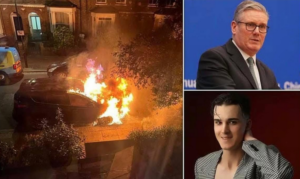
Business leaders and security analysts warn that persistent sabotage threats can also affect broader economic stability by increasing insurance costs, security spending, and concerns about the safety of public infrastructure.
Perhaps the most troubling aspect of the investigation, is the apparent effort to exploit social and cultural divisions within British society. Researchers uncovered evidence linking the alleged network to fake organizations that promoted anti-Muslim messages, encouraged vandalism against mosques and circulated inflammatory content designed to provoke hostility between communities. Other online operations reportedly masqueraded as Islamic activist groups while encouraging provocative acts likely to trigger far-right reactions.
Community leaders say such tactics deliberately target ordinary citizens rather than political elites. By encouraging mistrust between ethnic, religious, and political groups, they risk creating lasting social damage long after any criminal investigation concludes.
Muslim communities that experienced vandalism and hate incidents, linked to these campaigns, have seen that the events have reinforced concerns about online radicalization and coordinated efforts, to manufacture tension in local neighbourhoods.
While geopolitical intrigue dominates features, the human consequences remain significant. Families connected to the targeted properties, experienced fear and uncertainty, while communities exposed to hate-driven provocations faced heightened anxiety and insecurity. It is noted that modern influence operations, often rely on recruiting economically vulnerable individuals, particularly young people seeking work online. Financial incentives can lure recruits into activities whose bigger political consequences, they may not fully understand.

The case therefore serves as a warning about how digital platforms can be exploited, to transform ordinary citizens into unwitting participation in international political conflicts.
As investigations continue, the Starmer arson case illustrates how contemporary conflicts can increasingly blur the boundaries between crime, espionage, propaganda and geopolitics.
Whether definitive proof of state involvement ultimately emerges or not, the affair has highlighted a growing challenge, facing democratic nations that protecting public institutions, while preserving social cohesion in an era where foreign actors can exploit online networks to spread fear, division and instability, is almost inevitable.
The incident underlines that the front lines of modern geopolitical competition, may no longer be confined to battlefields abroad, but gradually run through neighborhoods, social media platforms and the everyday lives of ordinary citizens.
SOURCE: BBC

\