
Yann Vézilier, the French Agent Spy Who Walked Free by Pardoned in Mali
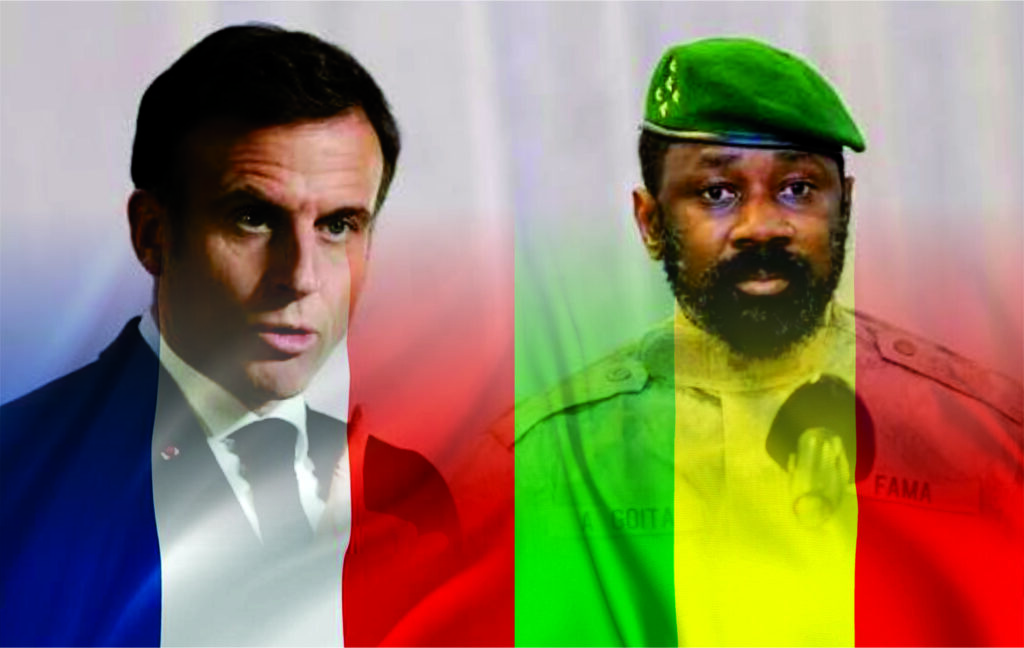
On Thursday, 13 August 2026, Mali’s military junta announced a presidential pardon for Yann Christian Bernard Vézilier, a French national serving a 20-year prison sentence in Bamako after being convicted of involvement in an alleged coup plot.
Signed by transitional President General Assimi Goïta, the decision comes at a time when relations between Paris and Bamako are at one of their lowest points in recent history. It therefore raises a critical question: why would Mali’s military leadership grant clemency to a French intelligence officer it had previously accused of involvement in a coup plot?
The pardon offers a revealing window into the diplomatic calculations unfolding behind the scenes between Bamako and Paris.
The Backdrop: A High-Stakes Espionage Trial
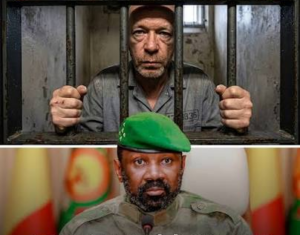
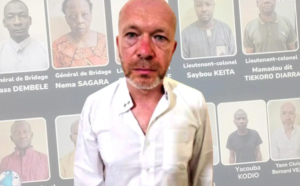
In August 2025, Yann Vézilier was arrested in Bamako alongside ten Malian military officers, including two senior generals, and several civilians. The Malian Security Minister, General Daoud Aly Mohammedine, accused the group of orchestrating a conspiracy to destabilise the institutions of the republic on behalf of French intelligence.
While the French Foreign Ministry initially rejected these accusations, claiming they were unfounded, subsequent investigations and reporting by French media outlets, including Le Monde and France 24, indicated that Yann Vézilier was indeed an accredited officer of the French external intelligence service, the Directorate-General for External Security (DGSE), operating under diplomatic cover at the French Embassy in Bamako.
In June 2026, a Bamako court found Vézilier guilty of endangering state security and sentenced him to 20 years in prison, a fine of 3.6 million FCFA, and a 20-year ban on residency in Mali following his release. His trial was framed by many in Bamako as a symbol of Mali’s fight for national sovereignty against its former colonial ruler.
The precise reasons for the pardon, however, remain unclear; Mali’s official government statement on Facebook was careful to frame the move as a sovereign act of mercy rather than a concession:
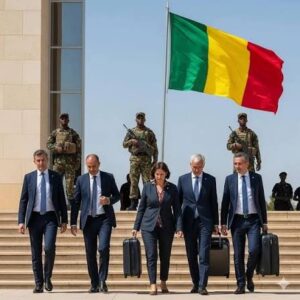
“This act of clemency, which does not call into question the facts established by an adversarial judgement rendered during a trial where all rights of the defence were respected, is accompanied by the immediate removal of the individual from national territory.”
Yet international reporting and diplomatic analysis point to three possible calculations behind the decision:
1. Months of Behind-the-Scenes Diplomatic Negotiations
According to reporting by Le Monde, the pardon appears to have been the result of several months of quiet and intensive diplomatic negotiations between Paris and Bamako rather than an impulsive decision. While France publicly demanded Vézilier’s release under consular immunity and the Vienna Convention, French diplomats worked tirelessly behind the scenes to find a face-saving formula for the Malian junta to release him.
2. A Rare Conciliatory Gesture Amid Geopolitical Isolation
Since General Assimi Goïta seized power in a 2021 coup, Mali has systematically broken its security ties with France, expelled French forces, and enlisted Russian military support in its efforts to confront the country’s Islamist insurgency. However, the broader security situation has remained challenging, with Bamako experiencing partial blockades and several high-profile attacks.
By pardoning Vézilier, the junta has offered France a rare and high-profile conciliatory gesture. Analysts suggest this could represent a strategic thaw in relations. It suggests that, despite the junta’s strong alignment with Russia, Bamako remains willing to engage diplomatically with Western powers when doing so advances its strategic interests.
3. Preserving Sovereign Victory While Resolving a Diplomatic Liability
Keeping a high-profile French intelligence officer in a Bamako prison for 20 years was a double-edged sword for the junta. On one hand, it served as a domestic propaganda tool. On the other hand, it was a persistent diplomatic liability that blocked any potential cooperation or dialogue with Europe. By waiting until after the trial concluded in June 2026, the junta had already achieved its primary objective: demonstrating to its domestic audience that Mali’s judicial system could prosecute and convict a French intelligence officer.: proving to its domestic audience that Mali’s judicial system could successfully try and convict an active French spy. Having established this “sovereign victory,” President Goïta could then afford to adopt a more conciliatory posture, granting clemency while ensuring Vézilier’s immediate removal from Malian territory., granting clemency while immediately deporting Vézilier to ensure he was removed from Malian soil.

The Malian junta has maintained that the legal validity of Vézilier’s conviction remains intact, and tensions are high, especially as Mali continues to align itself closely with Russia and its Sahelian neighbours, Niger and Burkina Faso. So, it is too early to start the talks about a full diplomatic reconciliation.
Nonetheless, the release of Yann Vézilier demonstrates that even in times of extreme geopolitical fracture, backchannel diplomacy between Paris and Bamako is still functioning. For a junta facing an increasingly severe security crisis and political pressure at home, the pardon does not necessarily signal friendship; it signals that even hostile states maintain channels through which interests can be negotiated.