

Nigerians Torn Between Rising Prices and Costly Loans as Inflation Falls, Interest Rates Remain High
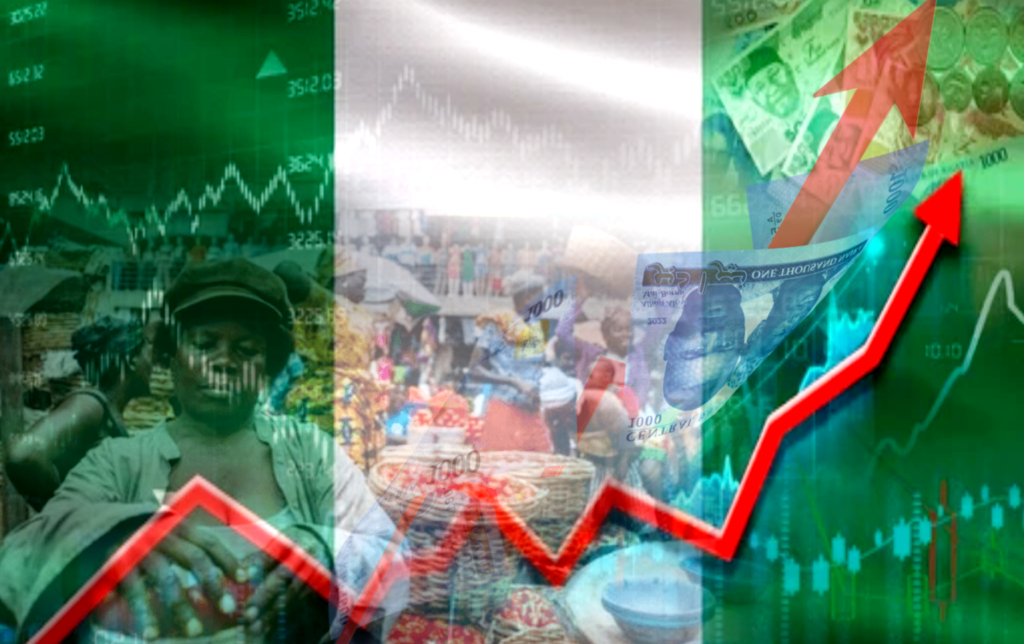
According Central Bank of Nigeria’s (CBN) report, Nigeria’s inflation rate continues its downward trajectory, and Nigerians are finding little relief in their daily lives. While government economic managers celebrate these signs of improving macroeconomic stability, the one-on-one reality shows that many households and small businesses across the nation, are still trapped between persisting high living costs and expensive access to credit.
Recent figures from the Central Bank of Nigeria (CBN) show that inflation declined to 15.9 per cent in May 2026, a significant drop from 22 per cent recorded in September 2025. Yet, for millions of Nigerians, the easing inflation rate, has not translated into cheaper food, transportation, housing, healthcare, or even education. The disconnection between official economic indicators and everyday realities, is progressively more apparent.
Following the CBN’s April 2026 Household Expectations Survey, majority of Nigerians are more concerned about reducing borrowing costs, than bringing inflation down further. The survey found that 60.9 percent of respondents, want interest rates lowered, while 50.8 percent said they would rather have cheaper access to loans, even if inflation rises again. Only 41.1 percent preferred lower inflation at the expense of higher interest rates. The findings reveal the difficult choices confronting ordinary citizens, as government economic managers attempt to steer Africa’s largest economy toward stability.
Nigeria’s inflation landscape changed significantly in 2024, when the National Bureau of Statistics rebased the Consumer Price Index (CPI), replacing the 2009 base year with a more current consumption framework. The adjustment was designed to better capture how Nigerians spend their money today and provide government with more accurate data, for economic planning. Government officials are of the opinion that the rebasing exercise would improve the quality of economic decision-making and strengthen investors’ confidence, by providing a clearer picture of inflationary pressures within the economy.
Following the rebasing, the CBN intensified its inflation-fighting campaign, by raising the Monetary Policy Rate (MPR) throughout 2024 and into 2025. The strategy was aimed at reducing excess liquidity, slowing consumer demand and ultimately bringing price increases under control.
By September 2025, the policy appeared to be producing results. Inflation began to moderate, prompting the apex bank to cut the benchmark interest rate from 27.5 percent to 27 percent, its first rate reduction, after an extended period of monetary tightening. Although modest, the move gestured growing confidence among decision-makers that inflationary pressures were gradually easing. Even so, falling inflation does not mean lower prices.

Economic experts caution that many Nigerians misunderstand what declining inflation actually means. A lower inflation rate does not indicate that prices are falling. Rather, it means prices are increasing at a slower pace. So, households already struggling with elevated food and energy costs, this distinction in understanding, is critical. In other words, a bag of rice, transportation fares, school fees, rent, electricity bill, etc., may continue to rise, even when inflation declines. The only difference is that the rate of increase, becomes less severe. This explains why many Nigerians’ reports, flare little improvement despite the steady decline in official inflation figures, over recent months.
The cost-of-living crisis remains a daily challenge for traders in local markets, transport operators, artisans, salary earners, even government workers, etc. Many continue to spend a larger proportion of their income on basic necessities, leaving little room for savings, investment, or discretionary spending. Thus, high interest rates squeeze citizens, businesses and families.
While higher interest rates are a key tool for fighting inflation, they also carry significant socioeconomic costs. The Monetary Policy Rate serves as the benchmark for commercial lending across the banking system. When the CBN raises rates, commercial banks typically increase the cost of loans for businesses and individuals. To the small/medium-sized enterprises (SMEs), which account for a substantial share of employment in Nigeria, expensive credit can limit expansion plans, reduce hiring and discourage investment in new equipment and production.

Many entrepreneurs report postponing business growth projects, because loan repayment obligations have become increasingly burdensome. The impact extends beyond businesses. Families facing medical emergencies, educational expenses, or housing needs, often depend on credit facilities to bridge financial gaps. As borrowing becomes more expensive, access to these lifelines becomes more difficult. This reality, may help explain why many Nigerians appear willing to tolerate somewhat higher inflation, if it means cheaper access to financing. With this offering, the government faces delicate balancing act.
The survey results highlight a growing policy dilemma, for economic managers. On one hand, the government and the CBN remain committed to restoring price stability, which is essential for long-term economic growth, investors’ confidence and currency stability. Persistent inflation erodes purchasing power, discourages savings and creates uncertainty for businesses.
On the other hand, prolonged high interest rates can suppress economic activity, constrain private-sector growth and expand financial pressures, on households already struggling with high costs of living. The same survey revealed that 66.7 percent of Nigerians believe that further increases in the prices of goods and services, would weaken the economy. This suggests that citizens understand the dangers of inflation, even as they call for lower borrowing costs.
Thus, economic-strategists feel that the challenge is not simply choosing between inflation and interest rates; it is finding a sustainable balance that protects consumers from rising prices, while ensuring that businesses and households can access affordable credit.
Ironically, despite ongoing hardships, some economists view the decline in inflation as an important step towards a larger economic recovery. Lower inflation can help restore confidence, encourage long-term investment and create conditions for future reductions in interest rates. If sustained, the trend could support job creation, improve business planning and enhance economic productivity.
However, the benefits of this recovery will take time to filter through to ordinary Nigerians. Because, most families will only believe that there is an economic recovery, when their incomes begin to rise faster than expenses, when food becomes more affordable; and when access to credit facility, improves. Until then, the gap between positive economic indicators and experiential reality, is likely to remain a defining feature of Nigeria’s economic landscape.
As the government continues its efforts to stabilize the economy, the voices emerging from home-fronts, markets, small/medium businesses, etc., across the country, serve as a reminder that successful economic policy must ultimately be measured by improvements in the daily lives of Nigerian citizens, as it is measured by statistics.
SOURCE: CBN | Dataphyte