
Ebola Crisis, Grim Milestone as Death Toll Surpasses 1000 in DRC’s Fastest-Growing Outbreak

The Democratic Republic of the Congo (DRC) has crossed a tragic threshold in its battle against Ebola, with health authorities confirming that the death toll has now reached 1,033. This current epidemic, caused by the Bundibugyo virus, has seen 2,536 confirmed cases since it was first declared on May 15, 2026, marking it as the fastest-growing fatal surge in the recorded history of the virus.
While some health officials, including Adelard Lufongola of the national Ebola response coordination, note that case notifications have reached a “plateau” in certain areas with a slight downward trend, the World Health Organization (WHO) cautions that it is far too early to declare a peak. The outbreak remains in a phase of sustained transmission with a high level of virus circulation.
The speed of this epidemic is unprecedented. According to the WHO, it took ten months for the 2018–2019 outbreak to reach 2,000 cases; this current crisis hit that mark in just two months. Unlike the more common Zaire strain, there is currently no approved vaccine or treatment for the Bundibugyo strain, placing the entire burden of containment on community engagement and traditional public health measures.
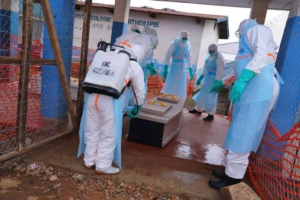
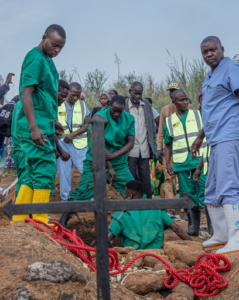
The epicentre remains Ituri Province, which accounts for 2,248 cases and 864 deaths. However, the virus has expanded into four other provinces, including North Kivu, South Kivu, Haut-Uele, and Tshopo.
There is particular concern regarding North Kivu, where the case fatality rate has soared to 56%, reaching as high as 68% in Beni. In contrast, the neighbouring Ituri province has an average fatality rate of 39.9%. Aid organisations like the International Rescue Committee (IRC) warn that overcrowded treatment centres in North Kivu are operating at 128% capacity, forcing many patients to remain at home and risk infecting family members.
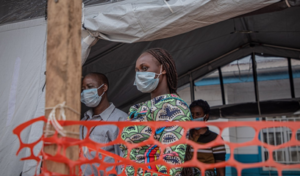
The response is being strangled by a “perfect storm” of challenges:
- Active Insecurity: Ituri has been plagued by armed conflict for over 30 years, with more than 900,000 people living in displacement camps where social distancing is impossible.
- Economic Drivers: The region’s artisanal gold mining attracts a highly mobile workforce that moves frequently across borders, potentially carrying the virus into Uganda and South Sudan.
- Funding Shortfall: A joint $518 million response plan by the WHO and Africa CDC is facing a massive funding gap of over $400 million.
- Healthcare Strain: In some areas, health workers have gone on strike to protest a lack of pay and poor working conditions, further weakening the front-line response.
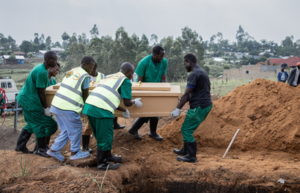
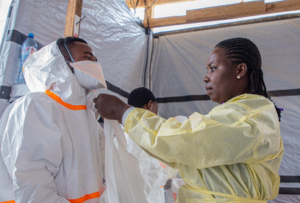
While the situation in the DRC remains dire, neighbouring Uganda offers a roadmap for successful containment. After recording 20 cases (mostly imported from the DRC), Uganda discharged its last patient on July 16 and has begun a 42-day countdown to declare the outbreak over.
Genomic analysis indicates that this 2026 outbreak originated from a novel zoonotic spillover event rather than a continuation of the 2007 or 2012 outbreaks. Researchers have identified several mutations in the virus’s glycoprotein (GP) gene, though there is currently no evidence that these changes have altered the virus’s transmissibility or pathogenicity.
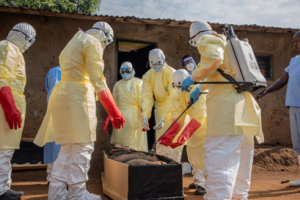
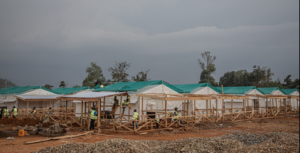
Congolese Prime Minister Judith Suminwa is currently travelling to hotspots in the east to assess the realities on the ground alongside UN and US officials. As the virus reaches major trading centres like Kisangani, which has direct links to the capital, Kinshasa, the window for purely localised containment is rapidly closing.
“We cannot continue responding to the epidemic with the same limited resources while it continues to outpace us” warned Trish Newport of Doctors Without Borders. Without a massive influx of funding and a stabilisation of the security situation, experts fear the outbreak will continue to spiral out of control.