

Fertilizer Scarcity Threatens Africa’s Socioeconomy, Governments and Agrobusiness

Africa’s development finance institutions are placing renewed emphasis on the social and economic consequences of fragile fertilizer supply chains, warning that repeated global shocks can negatively affect farming, homefront welfare, government finances, agribusinesses and local food markets.
This concern formed part of a joint commitment by major multilateral development banks and international financial institutions, including the African Development Bank Group, Asian Development Bank, European Bank for Reconstruction and Development, Inter-American Development Bank, International Fund for Agricultural Development and World Bank Group, to strengthen global fertilizer supply chains and build more capacity in food systems.
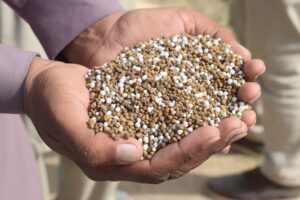
Fertilizer disruptions can translate to inflation in food prices for African families, pull-in weaker household purchasing power and greater pressure on already vulnerable low-income communities. When farmers cannot obtain affordable inputs on time, lower yields can tighten food supplies and push the consequences from rural communities into urban markets.
Governments also can face mounting pressure. Fertilizer shortages and food-price volatility can increase the demand for subsidies, social protection and emergency food interventions, while weakening agricultural productivity and placing additional strain on public budgets.
The impact extends to Africa’s growing agribusiness sector too. MSMEs agro-enterprises depend on predictable supplies, functioning logistics, accessible markets, etc. Disruptions in fertilizer production, storage, transportation or distribution can raise operating costs and dent businesses across the agricultural value chain; from input suppliers/processors, to traders and food manufacturers.
On the wider agro-market level, the institutions see fertilizer resilience as both a socioeconomic issue. They believe a stronger supply chains, better market monitoring, investment in transport and storage infrastructure, could help prevent temporary blows from becoming prolonged food-security crises.
So, the MDBs are therefore advocating greater investment in fertilizer production, processing, blending, storage and transportation, alongside improved soil diagnostics, precision nutrient management, digital agriculture, farmer advisory services, research, etc.
Their bigger message is that fertilizer availability alone will not secure Africa’s food future. Stronger soils, efficient water management, diversified nutrient sources, robust agro value chains and private-sector investment, must accompany improved access to farm inputs.
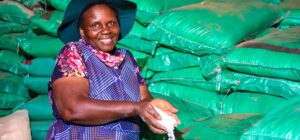
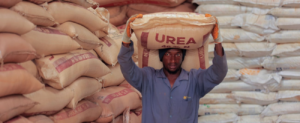
The institutions also intend to strengthen cooperation with African governments, research organizations, civil society and businesses, using shared data, financing and policy coordination to make fertilizer and food systems less vulnerable to future shocks.
Being straightforward, the ultimately objective to the African families, millions of farmers and sustainable enterprises on the ground, is a resilient fertilizer supply chain that is strong enough to protect food access and socioeconomic stability, when the next global shock arrives.
Source: AfDB