
Non-Driver, Non-Pedal, Non-Steering Tesla’s CyberCabs Service in Austin-Texas
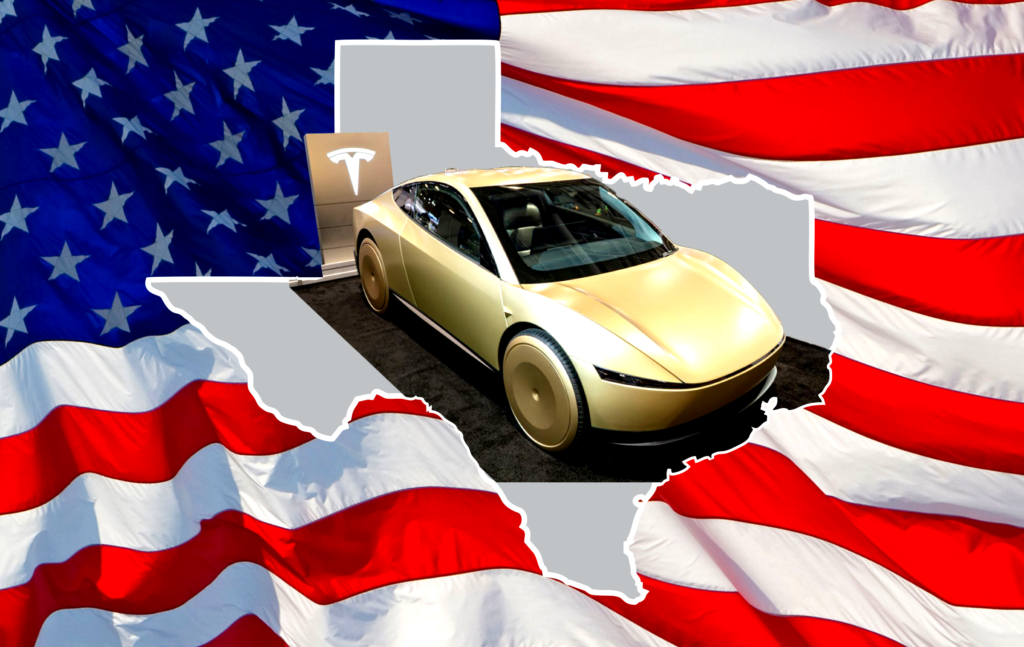
The familiar ritual of getting into a car, taking the wheel and pressing the accelerator, is being challenged in Austin, Texas, where Tesla has begun commercial rides with its DRIVERLESS CYBERCAB, a two-seat/two-doors vehicle designed without a steering wheel or throttle/brake pedals.
The launch represents another super-chapter in the electric-vehicle race. It is an early test to see if the automobile can evolve from something people use to own and drive as private-cars, into something they simply just summon and use, without belabouring their personal car on daily basis.
Tesla’s strategy in manufacturing is always built around scalability. The Cybercab is being manufactured at a Gigafactory Texas, using an unconventional “unboxed” production system that assembles major vehicle sections in parallel, before bringing them together. The approach is intended to reduce factory space, manufacturing complexity and costs, potentially giving Tesla a market-advantage, if autonomous taxis become a mass-market service.
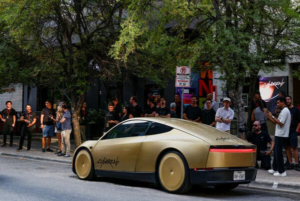
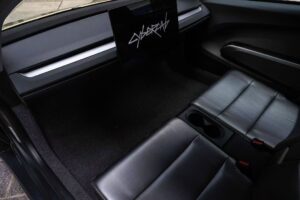
The vehicle’s minimalist design, reinforces that ambition. With no steering wheel, pedals or conventional driver controls, hundreds of mechanical and electrical components can potentially be eliminated. Tesla is also pursuing manufacturing techniques, intended to reduce dependence on traditional paint-shop operations. The implications for this pursuit are substantial, with respect to the global automotive industry. If Tesla can produce autonomous vehicles more cheaply and operate them at lower cost, the competition may move from horsepower and styling, to software, transport-fleet economics, artificial intelligence and access to passengers.
This is a transition from maintaining car-ownership-reputation to just consuming mobile-transport services, with almost outright-transferred individual energy exaction. Tesla’s higher stake seems to be pushing-off private-vehicle, one of human’s most valuable asset, towards the eventuality of high consumption of autonomous vehicle services, stresslessly.
A privately-owned car, spends much of its lifespan partly-driven and partly-parked. A robotaxi by contrast, can potentially operate throughout the day, generating revenue from repeated journeys. Tesla in its statement said, it is targeting operating costs that is below roughly 30% per mile; on the premise that if this figure is achieved at scale, it could challenge conventional ride-hailing economics and put pressure on established transportation businesses.
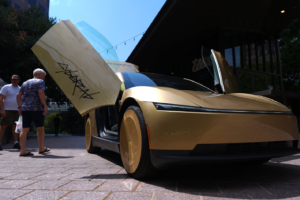
Passengers on the other hand, would feel the potential benefits are equally significant. Noting autonomous transportation could eventually provide cheaper transport, expand mobility for people unable to drive and reduce the need for parking in dense urban areas. But the social-change would not be as easy as it seems to transform.
Millions of people worldwide earn income from driving, including taxi operators, ride-hailing drivers, delivery workers, private drivers and commercial chauffeurs. A successful robotaxi industry could create new technology and fleet-management jobs, and simultaneously reduce demand for some traditional driving occupations. That makes self-driving vehicles not merely a transportation tier, but a labour-market tale.
The Cybercab’s biggest obstacle may not be manufacturing alone. Regulation could also pinch-in. The regulatory trajectory may still remain difficult… Although, US federal rules for vehicle-safety, were largely designed for automobiles controlled by human drivers, which might create some opinionated-concerns for vehicles that are deliberately built without conventional steering and braking controls.
Furthermore, automakers can seek exemptions from certain requirements, but the limited scale of existing exemption pathways, is incompatible with Tesla’s ambition to deploy hundreds of thousands of these novel vehicles. So, for autonomous vehicles to move from experimental stage to mass transportation services, federal regulations will have to evolve alongside the technology.
State governments have added another layer of regulation complexity. Texas has created a comparatively permissive environment for autonomous-vehicle operations, helping Austin City become an important testing ground. Other jurisdictions, including California and European markets, imposed more demanding approval and operational requirements. The resultant effect in this stead, is an uneven global regulatory-landscape, in which an autonomous vehicle may be commercially viable in one city, while facing substantial regulatory barriers in another.
Into the Camera vs Lidar battle in the self-driving cars evolution. Tesla is also taking a distinctly different technological path from competitors, such as Waymo and Zoox. Tesla’s approach relies heavily on cameras and neural-network software to interpret the environment, while many competitors combine Cameras, Lidar and Radar. Lidar creates detailed three-dimensional representations of surroundings and can provide additional sensing redundancy.
One of Tesla’s fight is fundamentally about scalability. Meaning, if artificial intelligence can learn to drive from visual information, much as human beings do, expensive specialized sensors and intensive mapping, could become unnecessary. On the flipside, the counterargument in general is safety. Cameras can face difficult conditions such as glare, darkness, fog and heavy rain. Hence, regulators and safety researchers are still scrutinizing how autonomous vehicle systems perform, when the environment becomes harder to interpret. The outcome of this argument and counterargument on these technology, could influence the cost and architecture of automated/driverless vehicles, for decades.
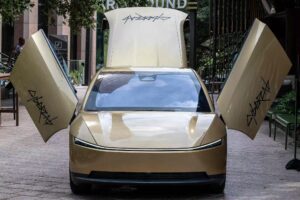
Let us then look at the Cybercab from a global business experimental-view point. Austin city’s Cybercab launch, is consequently a possible new economic model, which is much larger than a local transportation experiment. If driverless vehicles become reliable and cost-effective, cities could be unparked with privately owned vehicles, vicissitudes in climate-change demand will scaleup, new forms of needed public-private transportation will intensify competition among automakers, technology companies and ride-hailing platforms.
The insurance markets would be impacted also, as offtakers-market responsibility will shift from individual drivers’ consumption, to manufacturers and software operators. Energy demand could also rise, based on the longer hours that these driverless-pedalless cabs would operate for. Among all, logistic companies could leverage this technology to seriously integrate autonomous transportation into delivery networks.
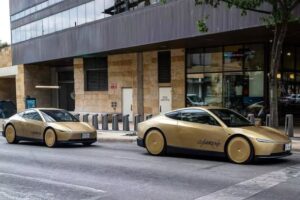
Meanwhile, note that investors would be closely watching the transformation in this window, because in Austin-Texas, the Cybercab experiment is already tangible. Passengers are beginning to experience a vehicle that does not have throttle, brake, steering and a driver waiting behind the wheel.
The real-deal of an evolution here, is a driverless car awaiting the total embrace of societies, cities, regulators, workers and consumers, as a self-controlling transport-service to humanity.