
Cameroon’s Indomitable Lionesses Roared to Historic WAFCON Glory
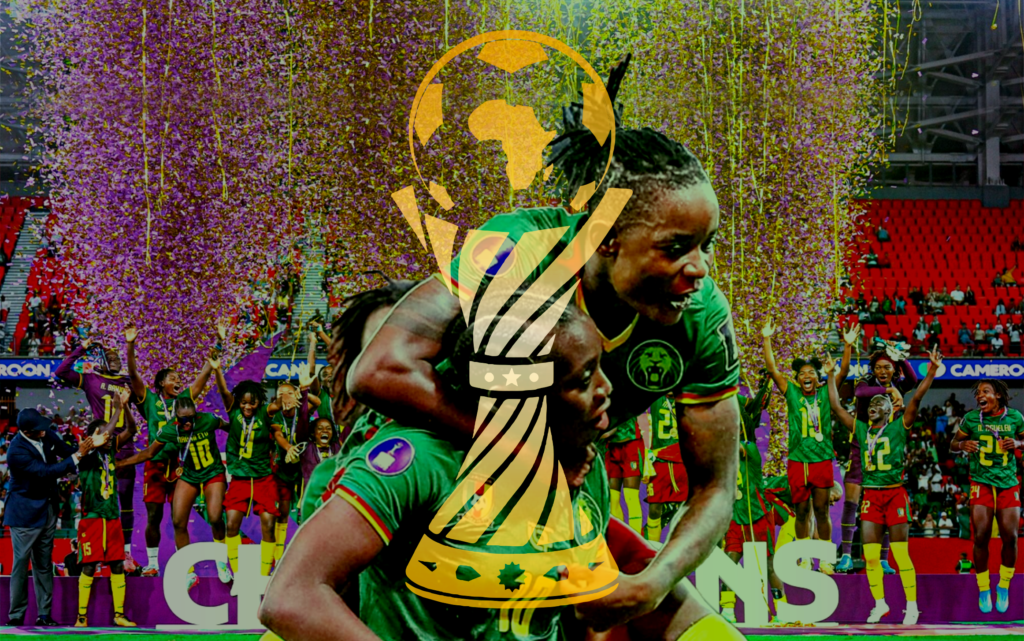
From Rabat, Morocco, Cameroon’s female football stars gave their nation a moment of extraordinary sporting pride, flying high in the glorious green, red and gold of the national flag as they lifted the Women’s Africa Cup of Nations (WAFCON) trophy, for the first time.
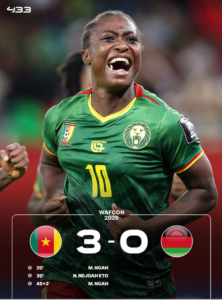
On August 16, 2026, the Indomitable Lionesses defeated tournament debutants Malawi 3 – 0, in the final at Rabat, producing a performance that was highly decisive on the pitch and deeply symbolic for women’s football across Africa. The victory marked a historic breakthrough for Cameroon and offered a powerful reminder that investment in women’s sport can generate sporting excellence, national confidence and wider social opportunity.
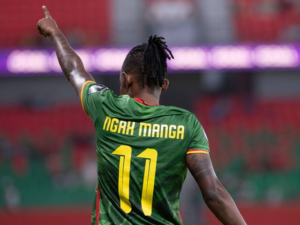
The final was settled with remarkable efficiency. Marie Ngah Manga struck twice, while Naomi Ndjoah Eto added a spectacular volley, as Cameroon turned the first half into a statement of intent. Malawi, despite its impressive campaign and the attacking threat of the Chawinga sisters, they struggled to break through a disciplined Cameroonian defence.
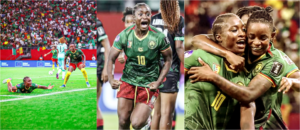
Even though, the significance of this victory goes beyond the scoreline to Cameroonian communities back home, it still drives a glorious support-campaign for women in sports, and it appears now as never ending passage of discussion. From football pitches in urban centres to grassroots fields where young girls often play with limited equipment and support, the Lionesses’ achievement provides a powerful image of what is possible, when talent is given a platform. An invigorated campaign built on fortitude.
Cameroon’s route to the trophy was marked by consistency, toughness and highly confident performances. The Lionesses opened their group campaign with a 2 – 1 victory over Mali, before edging Ghana 1 – 0. They managed a 1 – 1 draw with Cape Verde and ensured they finished at the top of Group – D. Then, the knockout stage then became a demonstration of defensive discipline.
Cameroon went on to defeat Nigeria, a 10 times champion, with 1 – 0 in the quarter-finals before overcoming the WAFCON hosts Morocco, with a 3 – 1 on penalties, in the semi-final. The Indomitable Lionesses completed the journey without conceding a goal during the knockout stages, before finishing the final with another clean sheet. This record-journey, speaks louder than individual brilliance from the team. It mirrors organisation, tactical discipline, collective confidence and the ability to perform under pressure.
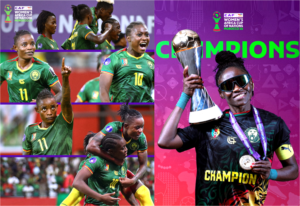
Goalkeeper Michaely Bihina emerged as one of the tournament’s standout figures, particularly after her penalty-saving heroism against Morocco. Midfield dynamo Monique Ngock, was recognised as Player of the Tournament, after controlling battles in the midfield and helped Cameroon quick transitions between defence and attack. The final itself, highlighted another defining feature of the campaign, which was a ruthless-efficiency. I think at the back of their minds, the final match was more than a trophy to the Indomitable Lionesses, because they converted their opportunities early, leaving Malawi with a mountain to climb, before the match settled properly.
In an all-encompassing spectrum, the celebration of the Indomitable Lionesses of Cameroon in Rabat, should also be viewed through a wider diplomatic and social lenses; for the reason that most major sporting competitions, have greatly become platforms for people-to-people diplomatic window. In this wise, the just concluded WAFCON featured nations whose governments may differ on political or economic fronts, but their citizens shared common sporting aspirations, cultural experiences and mutual respect althrough. Therefore, as much as Cameroon’s triumphant finishing belongs to its football federation and players, it also contributes to the wider African conversation about cooperation through sports.
Football creates informal diplomatic bridges. Players meet across borders, supporters travel, coaches exchange ideas, federations build relationships and young people encounter cultures beyond their immediate communities. In this sense, women’s football can function as a quiet form of public diplomacy, an instance that is driven by official speeches, shared competition and human connection.
Morocco’s hosting of the tournament, similarly demonstrates the capacity of African sporting events to bring countries together, while showcasing the continent as a destination for major international competitions.
But wait, let us look at the gender question in the celebration. There is also an unfathomable message in the sight of Cameroonian women, lifting Africa’s most important women’s football trophy. You will agree with me that in times past, women’s sport has operated with fewer resources, less media attention and fewer commercial opportunities than men’s sport. And up on till now, the quality of the competition has sustained the momentum of growth, with African women-footballers progressively proving that talent is not restricted by gender.
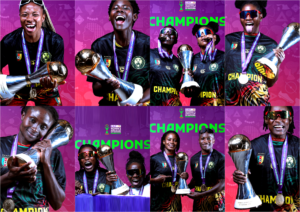
The Lionesses’ success strengthens the case for equal opportunity in sports, without diminishing the achievements of men’s football. Instead, it expands the sporting space available to everyone. A girl watching the celebrations from a village, neighbourhood or schoolyard in Cameroon, may see something larger than a trophy. She may see a possible career, a place in public life, a chance to travel, an opportunity to lead, and perhaps most importantly, an evidence that her ambitions deserve investment.
That is where the impact of grassroots female footballing-sections, becomes critical. The celebration should be followed by practical commitments of better community pitches, stronger girls’ academies, qualified coaches, safer sporting environments, school-based competitions and sustainable pathways from youth football to professional and international levels.
This glorious victory, ought to go from celebration-point to sustainable investment in human-capacity development index for sports. Winning a continental title can generate national excitement, no doubt. But after the celebrations, Cameroon should now take it as an opportunity to turn the Lionesses’ historic achievement, into a long-term development programme, for women’s football. Sponsorship, broadcasting, player welfare, grassroots scouting and professional league structures, all require sustained attention.

There is also an economic dimension. Successful women’s teams can stimulate merchandise sales, sponsorship, tourism, media activity and youth participation. More importantly, the professionalisation of women’s sport, can create jobs for athletes, coaches, medical professionals, administrators, journalists and other specialists. The challenge is to ensure that the benefits do not remain concentrated among a small number of elite players. In the sense that the pathway for a young girl kicking a football in a community field, to access an international stadium, must become clearer, safer and more accessible, deliberately.
Cameroon’s 3 – 0 victory over Malawi, will remain in the country’s sporting memory as the night the Indomitable Lionesses finally climbed to the zenith of African women’s football. The greatest legacy of the triumph, may lie above the medals and celebrations.

Here holds a possibility that more girls might enter the football sports-subsector; that more families would take women’s sporting ambitions, more seriously; that more sponsors might recognise and embrace the commercial value of the women’s game; that probably, African government’s attention would focus more on sport to further enhance youth development and social inclusion; and that African football diplomacy, will continue to use the women’s game as a bridge between nations and communities.
Therefore, as the Indomitable Lionesses of Cameroon lifted the golden trophy in Rabat, Morocco, in multiple locations across Africa, millions of young girls may have seen a purpose-drive reason that is more valuable to live for, a future in which the football pitch at the international stage, could also feature them too.