

Cost-Effective Flight Meets Engine Failure, Portrait of Ryanair and a Survivor
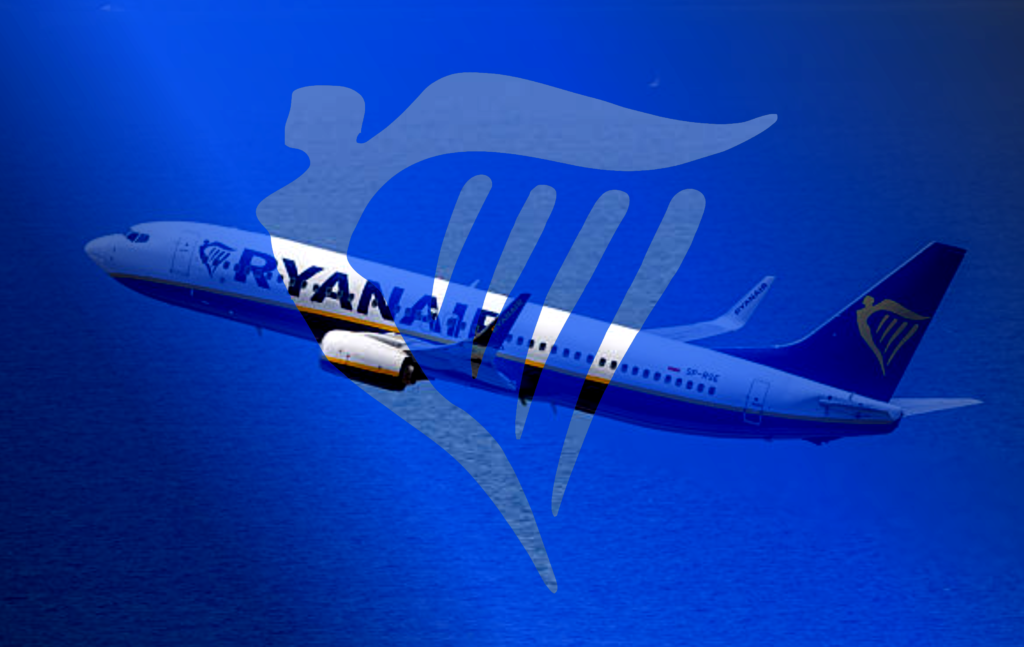
A routine Ryanair flight from Thessaloniki, Greece to Memmingen on July 10th, ended in a terrifying struggle for survival when an engine failure shattered a cabin window and partially pulled a passenger out of the aircraft.
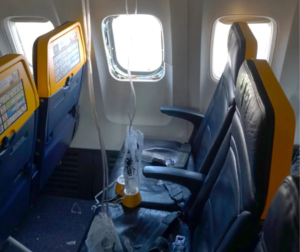
Ryanair flight FR1879, operated by a Boeing 737-800, had been airborne for only minutes, when a fan blade in the right engine broke apart. Debris tore through the engine casing and struck the fuselage, shattering a window around row 11. The resulting pressure loss sent oxygen masks dropping from the ceiling and transformed an ordinary European journey into an emergency.
At the centre of the chaos was 61-year-old Serbian passenger Ljubiša Karović, who was seated beside the damaged window with his seat belt fastened. The sudden pressure differential partially pulled his head and upper body through the opening. His wife, Svetlana, and other passengers reportedly grabbed his legs and seat belt and pulled him back into the cabin.
Karović survived, suffering injuries to his neck and shoulder, as well as friction burns and shock. The episode is a stark reminder that aviation safety is not only about engines, aircraft certification and cockpit procedures. In a crisis measured in seconds, survival can also depend on the reactions of passengers sitting nearby. The aircraft returned safely to Thessaloniki about an hour later, allowing emergency services to treat those affected. But the safe landing does not erase the pointers raised by the incident.
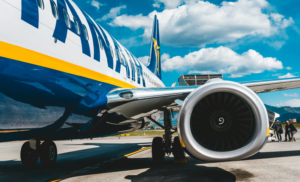

A preliminary investigation by the US National Transportation Safety Board, found evidence of metal fatigue in part of the engine fan blade, and investigators also found samples of bird strike. That combination matters. Bird strikes are a familiar aviation hazard, but an engine component breaking apart and sending debris through the passenger cabin, is more fundamental issue about component durability, inspection schedules and the ability to contain engine failures. The investigation will therefore be closely watched, to determine what broke, why the failure was able to produce such a dangerous secondary consequence.
The incident also places renewed attention on the business model of Ryanair, one of Europe’s largest airlines and a defining force in the continent’s cost-effective aviation sector. Ryanair’s success has been built around keeping fares low, moving large numbers of passengers and tightly controlling costs. Its network is highly responsive to airport charges, taxes and other operating expenses; ancillary fees for baggage, seat selection and other services form a significant part of its revenue.
That model has democratised air travel for millions of Europeans, which has made international traveling accessible to people who previously could not afford it in that region. Workers, students, families and migrants travelling between countries, cheap air fares are a commercial convenience and can be an important social and economic lifeline. But low prices inevitably intensify public scrutiny of how airlines manage maintenance, staffing, turnaround times and operational resilience.

There is no evidence from this incident that Ryanair’s cost-cutting practices caused the engine failure, and it would be irresponsible to draw such a conclusion before the investigation is complete. The accident still demonstrates why regulators and passengers must be able to distinguish between legitimate efficiency and unacceptable risk. Safety cannot become a game for more passengers.
Ryanair’s scale makes the concerned scrutiny particularly important. With hundreds of aircraft and thousands of short-haul flights operating each day, extremely rare failures can expose large numbers of people to risk. In a whole, some passengers may wonder if an airline can maintain rigorous safety standards, as well as compete primarily on pricing dynamics. The answer should be yes. Aviation safety cannot be treated as a luxury product, available only to passengers paying premium fares.
The incident also highlights the importance of cabin safety culture. Karović’s survival was achieved aided by the aircraft crew, emergency procedures and passengers who immediately acted to pull him away from the broken window. Their response illustrated an often-overlooked reality of mass air travel that in an emergency, strangers may become first responders.
The investigation now has a long-tape responsibility to identify the damaged engine component. It must also establish whether the failure was an isolated event, or inadequate maintenance and inspection procedures, or if similar aircraft or engines could have comparable vulnerabilities.

The lessons derived from this incident, is equally important to all aviation stakeholders. An engine failure should not automatically become a cabin emergency. Modern commercial aircraft are designed with multiple layers of protection, precisely because individual components can fail. Meanwhile, as a sobering reminder, this goes to show that the apparent normality of commercial aviation, rests on a complex chain of engineering, regulation, maintenance and human judgment.
However, the scenario played the aircraft landing safely in real-time. A passenger survived. But the shattered aircraft window, painted a hanging reminder in the flight’s episode of the scenario. And then you might ask, how many layers of safety must work perfectly before an ordinary flight remains ordinary? What happens when one of them fails?