
Morocco’s Conglomerate – Akwa Group, Strategically Ventures into Seawater Desalination
Morocco’s Akwa Group is reshaping its industrial strategy, pivoting toward water security, cleaner production and regional expansion, in a move that reveals both commercial opportunity and mounting social need, across North and West Africa.
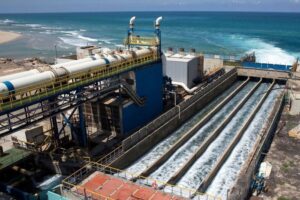
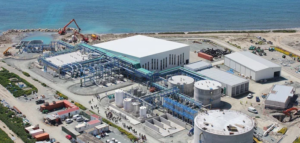
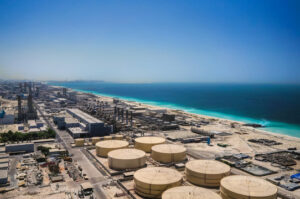
At the center of this venture, is a decisive investment in seawater desalination. Through its subsidiary – Green of Africa, the group has entered one of the continent’s fastest-growing infrastructure segments, driven by climate stress and urban population growth. Its late-2023 partnership with Spain’s Acciona, to develop the Casablanca desalination plant, positions Akwa at the forefront of the efforts to secure reliable water supply, for one of Morocco’s largest economic hubs. Besides industrial demand, such projects have direct human impact, such as helping stabilize household access to clean water, supporting agriculture and reducing the vulnerability of low-income communities to drought cycles.
The strategic realignment also extends to manufacturing. Under its Afriquia Lubrifiants brand, Akwa Group is strengthening a technology partnership with Chevron, to upgrade local lubricant production. By integrating advanced processes and quality standards, the company is reducing reliance on imports, while building domestic industrial capacity. This has broader economic implications of strengthening supply chains, creating jobs for artisans/skilled persons and positioning Morocco as a competitive production base for regional markets.
The Akwa leadership under Aziz Akhannouch, alongside the Wakrim family, is steering the conglomerate toward sectors with long-term persistence and sustainability. While maintaining its core fuel and gas distribution business, Akwa is aligning its portfolio with structural trends, to address water scarcity, energy transition and regional trade integration.
The group’s expansion across markets such as Côte d’Ivoire, Burkina Faso, Cameroon, Togo, and Niger, supports a wider ambition to tap into the underserved but rapidly growing economies. This expansion can translate into improved access to energy products, more stable supply networks, employment opportunities, etc., tied to distribution and logistics, for most local communities. While to the host countries, it indicates an increased private-sector investment in essential services.
As a whole, Akwa Group’s repositioning illustrates how large African conglomerates are adapting to a changing landscape, where profitability increasingly intersects with infrastructure gaps, environmental pressures and the everyday needs of growing populations.