
Madagascar’s Ancient Baobab Trees, Unlock 700 Years of Climate History and a Future Alarm
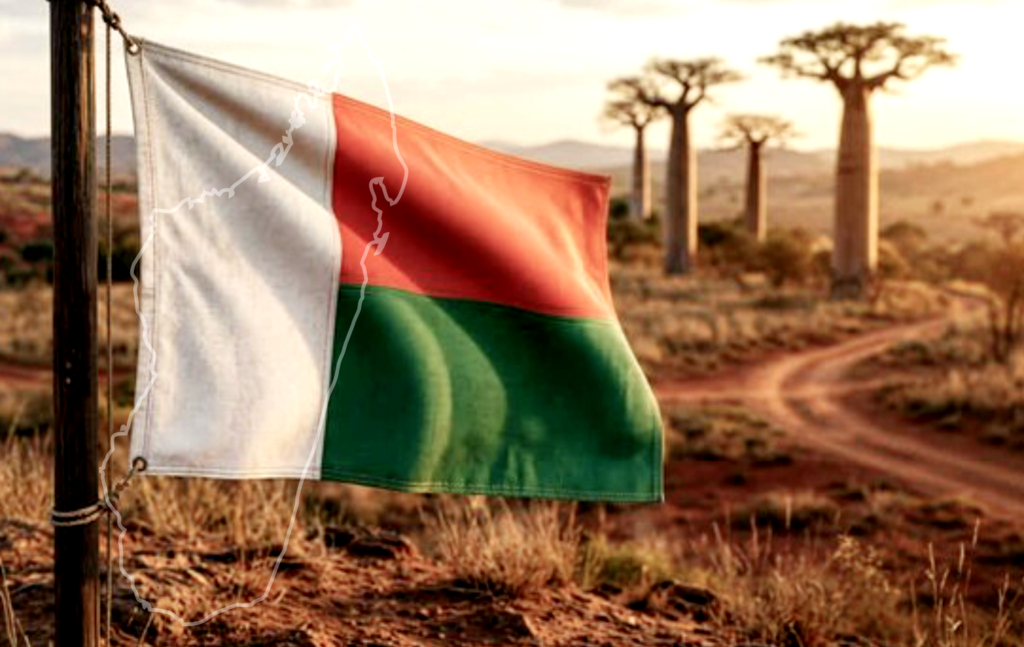
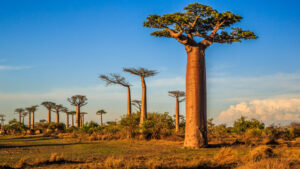
In the dry landscapes of south-western Madagascar, towering baobab trees, some of which are over a thousand years old, are quietly preserving a detailed archive of the island’s climate past. Now, scientists have decoded that record, revealing more than seven centuries of rainfall patterns and offering urgent lessons for communities and policymakers facing a global warming evolution.
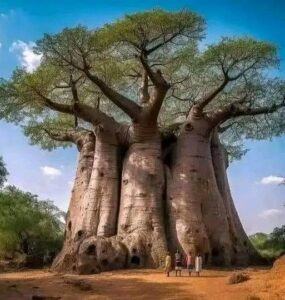
Often called Madagascar’s natural monuments, baobabs are more than ecological icons. Each year, they add a growth ring that captures subtle chemical traces of environmental conditions. By analyzing carbon isotopes locked in these rings, researchers have reconstructed a continuous rainfall record dating back to the 1300s, the first of its kind for the country.
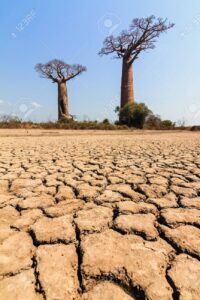
What emerges is a stark climate timeline. The region experienced a prolonged wet period between 1350 and 1450, followed by a severe and sustained drought from 1600 to 1750. Since then, rainfall has gradually declined, shaping the fragile ecosystems and livelihoods that depend on them. In the view of rural Malagasy communities, this history is not an abstract science. Farming, cattle herding and water access, remain tightly tied to rainfall. By revealing how climate patterns have changed over centuries, the research offers a practical tool for anticipating future drought cycles, improving crop planting-planning and strengthening food security in one of the world’s most climate-vulnerable regions.
The study also challenges long-held assumptions about environmental change in Madagascar. By combining baobab data with evidence from pollen, charcoal and sediment samples, researchers found that landscape transformation was not driven by human activities alone. Instead, drought and human land use, such as controlled burning and farming, worked together to reshape vegetation over time. Forests gave way to grasslands, not solely through deforestation, but as part of a complex interaction between climate stress and human adaptation.
This finding carries important implications for government policy. In some decades past, conservation strategies have often been built on the idea that Madagascar was once fully forested before human settlement. The new evidence suggests a more nuanced reality, where people/ecosystems have coexisted and adapted together for a longtime. Policy designers now face the challenge of designing climate responses that reflect this history, balancing conservation goals with the needs of local communities.
There are economic stakes as well. Agriculture remains a backbone of Madagascar’s economy, and prolonged drought threatens both livelihoods and national stability. Long-term climate data like this can guide investment in irrigation, drought-resistant crops, land management strategies, etc., that are better aligned with historical climate variability. It also strengthens the country’s position in global climate discussions, where evidence-based planning is increasingly tied to funding and international support.
The research contributes to a growing regional effort, to map Africa’s climate history, besides being focused on Madagascar. By linking these findings with similar records from Southern Africa, scientists hope to build a clearer picture of how climate systems have evolved; and how they may behave in the future.
In the whole process, the study highlights a simple but powerful truth of resilience built over time. Most centuries like Malagasy communities, have adapted to changing characteristics of rainfalls, by changing how they farm, what they grow and how they use the land. As climate change accelerates, that adaptability stands to be tested again, but this time with better data; arming governments/communities to have a stronger foundation to respond.
The baobabs, which are the silent witnesses to centuries of climate change, are now speaking. Their message is clearly stating that understanding the past is no longer optional, it is essential for building surviving-mechanics the future.