
Hannatu Musawa’s Albatross: Progress, Promises, and the Struggle to Define Nigeria’s Creative Economy
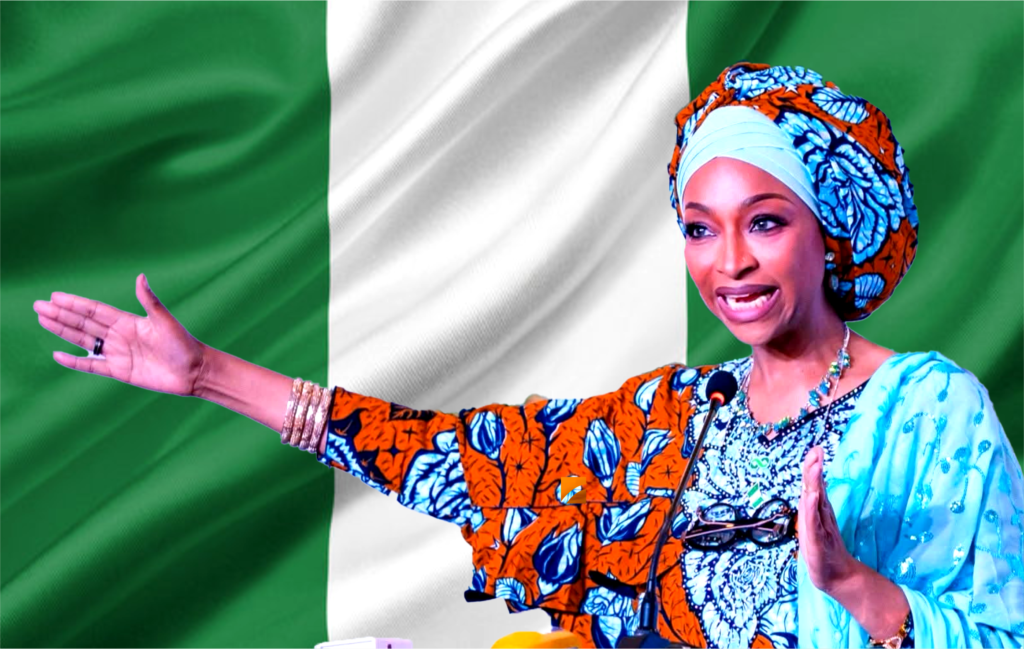
When Nigeria created the Federal Ministry of Art, Culture, Tourism and the Creative Economy in 2023, it was framed as more than bureaucratic restructuring. It was an economic statement: a declaration that oil would no longer stand alone as the country’s dominant narrative of national wealth. Under Minister Hannatu Musa Musawa, the ministry was tasked with converting culture, heritage, and creativity into measurable economic value.
Yet, almost three years into the “new dispensation”, the ministry finds itself balancing ambition with scrutiny, celebrated for its vision, but still struggling with the weight of execution, coordination, and public trust.
A bold mandate, a complex beginning
From inception, the ministry’s scope was unusually wide: arts, culture, tourism, creative industries, and later a formal merger with tourism functions. This consolidation was intended to create synergy across Nigeria’s fragmented cultural economy.
Under Musawa’s leadership, the ministry has articulated a structured roadmap anchored on what it calls an “8-point plan,” focusing on skills development, infrastructure, financing, intellectual property protection, digital transformation, and global market access.
In policy terms, this is one of the most ambitious frameworks Nigeria has attempted in the cultural sector.
The minister has also consistently framed the creative economy as “the new oil,” projecting long-term goals such as significant job creation and multi-billion-dollar contributions to GDP.
Early achievements: partnerships over projects
Rather than large visible infrastructure projects, the ministry’s most cited progress has come through partnerships and policy architecture.
Recent developments include collaborations with international development and financing institutions aimed at unlocking capital for creatives, improving data systems, and expanding access to global markets.
There has also been emphasis on financing structures and investment vehicles intended to support film, music, fashion, and tourism enterprises—sectors often constrained by lack of credit and formal investment channels.
In addition, initiatives under the “Destination 2030” vision and related programmes reflect an attempt to position Nigeria as a global cultural hub rather than a purely domestic creative market.
However, critics note that many of these initiatives remain in early-stage implementation, with limited measurable outputs in terms of infrastructure rollout or nationwide creative employment statistics.
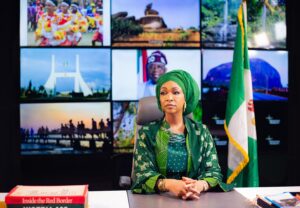
The central challenge: structure without visibility
The ministry’s primary albatross is not lack of vision—it is the gap between policy articulation and public-facing outcomes.
Observers point to three persistent challenges:
- Institutional complexity
The merger of culture, tourism, and creative economy has created a large but difficult-to-coordinate structure. Agencies with different mandates often operate in parallel rather than in synergy.
- Funding and execution constraints
While financing frameworks are frequently announced, stakeholders across the creative sector still report limited access to capital at scale.
- Data and measurement gaps
Even with ambitious job creation targets, the absence of transparent, widely accepted data on sector performance makes progress difficult to independently verify.
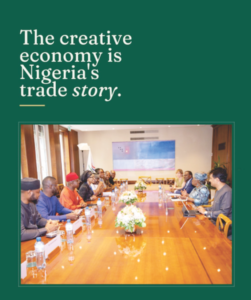
In a recent policy briefing, the minister herself acknowledged issues such as funding limitations, infrastructure deficits, piracy, and weak data systems as major constraints to sector growth:
Tis admission reflects both honesty and the scale of the task ahead.
Public perception: reform agenda vs. results pressure
Public discourse around the ministry has become polarized.
Supporters argue that Musawa inherited a structurally weak sector and is attempting foundational reform—building systems before visible outcomes.
Critics, however, suggest that Nigeria’s creative economy is too dynamic to be governed primarily through policy frameworks without faster, visible interventions such as creative hubs, tourism site upgrades, and industry-wide financing access.
This tension is not unique to Nigeria. Globally, cultural ministries often struggle to convert soft power into hard economic metrics quickly.
What is missing: the execution bridge
The ministry’s strongest conceptual weakness lies in what could be described as the “execution bridge”—the intermediate layer between policy design and grassroots implementation.
This is where former Lagos State Governor Babatunde Raji Fashola’s governance approach becomes relevant.
Fashola’s tenure in Lagos is frequently cited for one defining characteristic: visible infrastructure delivery tied to administrative discipline. From transport systems to public works, his model emphasized measurable projects with clear timelines and institutional accountability.
Applied to the creative economy, a Fashola-style approach would prioritize:
- Clearly defined pilot projects (creative hubs, tourism clusters, production zones)
- Time-bound delivery frameworks
- Strong coordination between ministries, states, and private investors
- Visible public milestones that build confidence in policy direction
A constructive suggestion: from policy architecture to creative corridors
A practical adaptation of this governance philosophy would be the creation of “Creative and Tourism Development Corridors” in strategic states such as Lagos, Abuja, Cross River, and Kano.
These corridors would combine:
- Film and media production facilities
- Tourism infrastructure upgrades
- Training and skills institutes
- Startup financing hubs for creative entrepreneurs
Such a model would convert national policy into geographically visible impact zones—bridging the current gap between vision and public experience.
A ministry still defining itself: Hannatu Musawa’s ministry stands at a formative stage where expectations are high, but delivery timelines remain stretched by structural realities.
Its greatest strength is clarity of ambition: Nigeria wants to monetize creativity, export culture, and diversify beyond oil. Its greatest weakness is the slow translation of that ambition into everyday economic transformation visible to artists, tourists, and investors.
In that sense, the ministry’s true challenge is not imagination, it is execution speed.
Whether it succeeds may depend less on policy declarations and more on whether it can adopt a more grounded, project-driven governance style, one that turns creative economy theory into tangible national infrastructure.
And in that transition, lessons from Lagos under Fashola remain a relevant reference point: big ideas only matter when they become visible systems that people can see, use, and trust.