
Megacities and Urban Growth on the Rise, Trying the Governments/Residents’ Limits
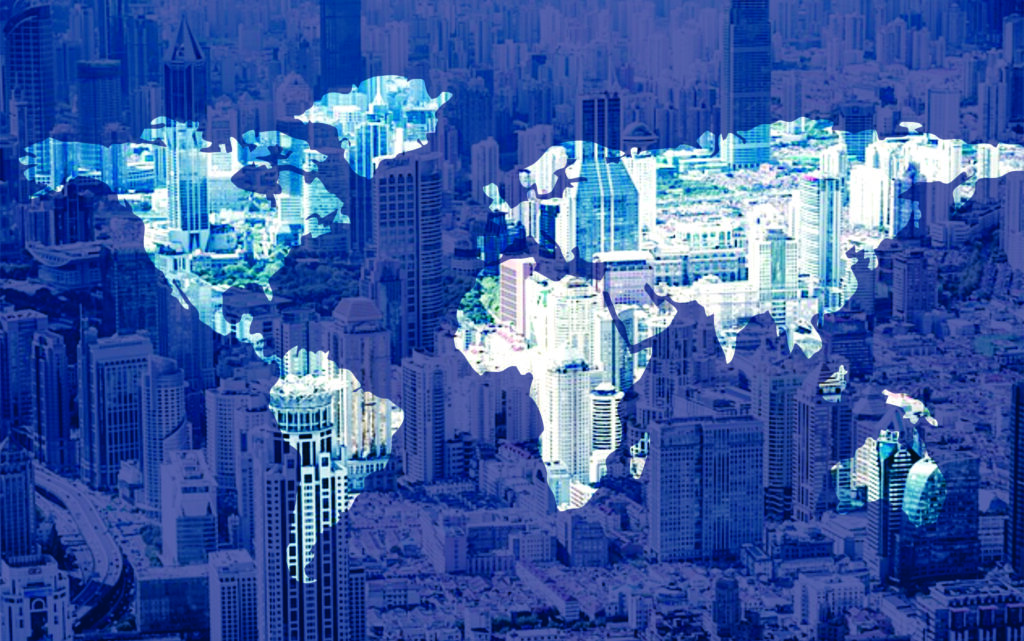
The world’s cities are expanding at a pace that is reshaping economies, politics and everyday life. But behind the impressive statistics on urban growth, can governments build cities that work for the people arriving in them? Here lies a more complicated problem.
The transformation is striking. In 1950, only about 2.5 percent of the world’s urban population lived in megacities. By 2020, that share had climbed to 16.4 percent. The rise reflects a broader migration from rural communities toward urban centres in search of employment, education, healthcare, infrastructure and greater economic security. Yet urbanization is not simply a story of opportunity. It is also a story of pressure.
As populations concentrate in large metropolitan areas, housing becomes more expensive, public transport more crowded, waste systems overstretched and environmental risks more difficult to manage. For low-income residents, the promise of the city can quickly become a struggle for affordable housing, decent work, clean water and physical security. In this story, Asia leads the urban growth race.
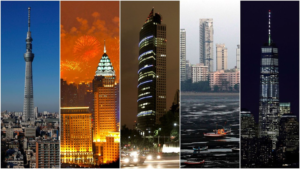
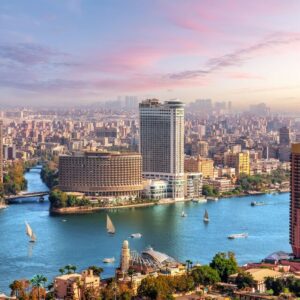
The scale of the transformation is mostly visible in Asia. The latest United Nations urbanization estimates place Jakarta at the top of the global urban-agglomeration rankings in 2025, with about 41.9 million residents, followed by Dhaka at roughly 36.6 million and Tokyo at 33.4 million. Delhi, Shanghai, Cairo, São Paulo, Mexico City, Mumbai and Beijing complete the leading group. Nine of the world’s ten largest urban agglomerations are in Asia, with Cairo providing the major African representation.
However, the figures require careful interpretation. The United Nations introduced a new geospatial methodology in 2025 that measures continuously built-up urban areas differently from many traditional city boundaries. That means some apparent changes in rankings, echo how cities are measured as well as how rapidly they are growing. This distinction matters because megacities are progressively extending beyond conventional municipal borders. A worker may live in one administrative area, work in another and depend on infrastructure controlled by several different authorities. The result is a governance problem, as much as a demographic one.
The human cost of urban concentration to millions of migrants and rural families, is that the city remains an economic lifeline. Metropolitan areas congregate employers, universities, hospitals, financial institutions and markets in their enclaves. They can create opportunities that smaller communities cannot provide. But economic growth does not automatically translate into better living conditions, anyways.
In rapidly expanding cities, formal housing construction often fails to keep pace with population growth. Informal settlements consequently become part of the urban landscape, frequently occupying land vulnerable to flooding, landslides or pollution. Another aspect of it, is transportation. Transport provides another dividing line. Wealthier residents can live in planned neighbourhoods regardless of distance, with reliable roads and private mobility, while poor residents/workers may spend hours commuting from peripheral settlements to employment centres.
The social consequences and divide are profound. Long journeys reduce spending time with families socially, surge transport costs, can limit access to good educational and healthcare centers. In respect to women, children, informal workers and people with disabilities, poorly designed urban systems can create additional barriers. This is where the statistics become personal.
A city that adds millions of residents without expanding affordable housing, sanitation, schools and healthcare, is not merely experiencing “urban growth“, but transferring the cost of growth to households that not able to absorb it.
Another heat beneath the concrete is climate change that is making the urban challenge harder. Dense construction produces the familiar urban heat-island effect, in which concrete, asphalt and buildings absorb and retain heat. Tall structures and narrow streets can also restrict air movement, slowing the dissipation of accumulated heat. With residents already exposed to air pollution, inadequate ventilation and poor housing, extreme heat can become a serious public-health threat.
The poorest communities often face the greatest exposure. They may have fewer trees and green spaces, less reliable electricity for cooling the atmosphere; and homes constructed from materials that offer limited protection against extreme temperatures. This creates a troubling paradox, the people contributing least to global emissions can be among those most vulnerable to the environmental consequences of urban growth.
Again, in a different phase, megacities are on a disaster frontier, as natural disasters with additional layer of risk to their evolvance. The Philippines ranked among the world’s countries with the highest natural-disaster risk in the 2024 World Risk Index, with Indonesia also among the most exposed. Both countries are home to rapidly growing urban populations and face combinations of earthquakes, flooding, tropical cyclones and other hazards.
Japan’s experience demonstrates how expensive urban vulnerability can become. The 2011 earthquake and tsunami produced enormous economic losses, while earlier disasters such as the 1995 Kobe earthquake and major earthquakes in China demonstrated the destructive capacity of natural hazards concentrated around densely populated areas.
But, natural or man-made disasters do not impact all sections of the society in the same way. The physical hazard may be the same, yet its aftermath consequences differ dramatically according to social-class, housing quality, access to insurance, emergency services and political influence. A wealthy family may rebuild. A low-income family may entirely lose its home, livelihood and savings simultaneously, without any form of immediate hope. These descriptions make disaster preparedness a question of social justice, psychosocial implications, as well as engineering engage.
As Africa’s upcoming urban test paints-out, it indicates that the next major chapter of global urbanization is gradually being written in Africa.
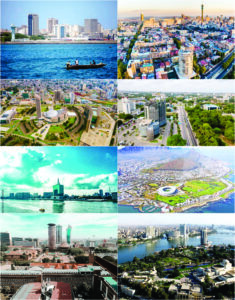
African cities are expected to absorb a substantial share of future population growth. Lagos, Kinshasa, Nairobi, Addis Ababa and other metropolitan centres, are positioned to become fast rising important economic engine urban-hubs.
Lagos illustrates both the opportunity and the danger. Its expanding population represents a vast labour force and consumer market, but rapid growth also places enormous demands on housing, transportation, drainage, electricity, waste management and public services. The success of the metropolis therefore, depends basically on how infrastructure and institutions can keep pace with the many people the state accommodates.
The same dilemma confronts most African governments nationally. Urbanization can move economies away from low-productivity agriculture, towards manufacturing, technology and services. Concentrated labour markets can encourage investment and innovation. Growing urban populations can also create powerful consumer markets. But those benefits are not automatic. If infrastructure remains inadequate and social-discrimination expands, congestion, pollution, unemployment and insecure housing, can undermine productivity. A megacity can become an engine of national growth, or a bottleneck that consumes enormous public resources without delivering inclusive prosperity.
Considering the changing urban future of Dhaka, the second leading urban agglomerations. By 2050, the global urban ranking order is expected to look considerably different. Dhaka is projected to reach about 52.1 million residents and potentially overtake Jakarta as the world’s largest urban mass. Karachi is also expected to rise sharply, whereas Delhi and Mumbai will remain among the world’s largest urban centres. Tokyo, by contrast, is projected to experience population decline and fall considerably in the global rankings. The contrast reveals two different urban futures.
In ageing societies, the challenge is maintaining economic productivity with smaller working-age populations. In rapidly growing developing cities, the challenge is creating enough jobs, housing and infrastructure for millions of new residents. Neither of this transition is easy.
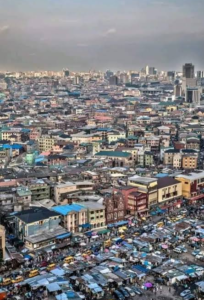
Perhaps beyond the megacity, the most important lesson is that the future of urbanization will not be determined solely by the world’s biggest cities. The UN expects the share of urban residents living in megacities to rise modestly before stabilizing and eventually declining slightly. Medium-sized cities are expected to absorb an increasing share of urban growth.
This could be an opportunity. Instead of allowing every economic opportunity to become concentrated in a handful of giant metropolitan areas, governments could strengthen smaller and medium-sized cities with roads, digital connectivity, universities, hospitals, industries, reliable public services, infrastructure, etc. Such strategy could reduce excessive migration pressure on megacities, while spreading economic opportunity more evenly across regions.
Ultimately, it is worthy to note politically that the megacity boom is not just a demographic phenomenon. It is a test of political leadership. Urbanization forces governments to answer difficult questions like who gets affordable land? Who receives reliable public transportation? Which communities receive drainage and flood protection? Where are schools and hospitals built? Who benefits from rising property values? And who bears the environmental costs of development? These questions surpasses any form statistics.
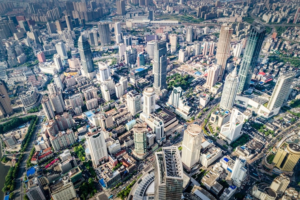
A successful city is not simply one with millions of residents, skyscrapers, technology hubs and rising GDP. It is a city where an ordinary worker can afford a home, reach work safely, raise a family, access healthcare and survive an extreme-weather event, without losing everything.
Watch, the coming decades will produce some of the largest urban populations in human history. However, in this urban progress, the real measure of progress will be how large these cities become and how fairly they distribute the opportunities and burdens that come with growth.