

World Bank Commends Alex Otti Over Governance and Development Reforms in Abia State

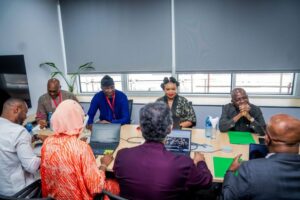
The recent reception of Alex Otti at the World Bank office in Nigeria, has drawn renewed attention to the growing profile of Abia State, as one of the country’s emerging examples of reform-driven governance. What began as a routine working visit, evolved into a bigger endorsement of the state’s development trajectory, with officials highlighting reforms in healthcare, infrastructure, transparency and grassroots economic support.
The recognition echoes increasing international interest, in how state governments in Nigeria are responding to long-standing challenges of unemployment, weak public infrastructure, underdevelopment and declining public trust. Under Otti’s administration, Abia State has pursued a governance approach centered on fiscal discipline, public-sector accountability and investments in human capital, areas that are increasingly viewed as critical factors to sustainable growth.
Among the most visible reforms, is the rehabilitation of more than 200 primary healthcare centres across rural and urban communities. Residents in parts of Aba and other local government areas, say improved access to healthcare has reduced travel time for treatment and eased pressure on overstretched hospitals. Health workers have also reported better working conditions and more regular engagement with government authorities. a shift many describe as overdue after years of neglect.

The World Bank’s decision, to select Abia as the first state for its Human-capital Opportunities for Prosperity and Equity (HOPE) study, further promoted the state’s profile within development circles. The initiative focuses on strengthening education systems, healthcare delivery and workforce management, particularly for young people and vulnerable communities. This program-collaboration invite, demonstrates a growing confidence among international development partners, towards Abia state’s capacity to implement evidence-based reforms.
Over time too, some economic observers have pointed to Abia state’s renewed emphasis on SMEs, especially with focus on the Aba district, which is undeniably-regarded as one of Nigeria’s most important commercial and manufacturing centres, for decades. Since the emergence of Alex Otti in 2023, traders, artisans, manufacturers, importers, craftsmen, etc., in the Aba business district, say they now operate longer business hours; a development that people attribute to the improved road rehabilitation projects and tighter security operations across Aba commercial-transit corridors. Business owners noted that easier movement of goods, reduced security concerns and growing investors’ confidence, are gradually reshaping commercial activities in the city. Otti’s reforms, are increasingly seen by many Southeastern entrepreneurs, as the engine-room providing the operational backbone for everyday business activities, while also making the environment safer and more conducive for economic growth.

The administration’s fiscal management has also attracted attention. By clearing salary arrears and prioritizing prompt wage payments, Otti’s government has attempted to rebuild confidence within the civil service, while strengthening domestic economic activity through improved household spending power. Development experts note that such measures often have ripple effects on local economies, particularly in states where public-sector salaries remain a major source of economic circulation.
Abia’s growing cooperation with international institutions, has further opened doors to large-scale development financing, including participation in the approximately $700 million Sustainable Urban and Rural Water Supply, Sanitation and Hygiene (SURWASH) programme. Diplomatically, the engagement highlights how development-partnerships are increasingly tied to policy promises, measurable governance outcomes and transparency benchmarks.
Then again, sustaining Otti’s reforms will require continuity in political-leadership, institutional strengthening and a comprehensive-inclusion of rural communities, which have been excluded from the benefits of government-led development. Also, there has to be a call for intense citizens-participation, improved monitoring of public projects and further investment in youth employment, outside urban centres.
Nevertheless, the international recognition carries symbolic importance for Abia state. As the acknowledgement from the World Bank shows that local reforms in Abia State, are gaining visibility beyond Nigeria’s borders.