

Be Certified for Africa’s AI Future; and a Push for Industrialization
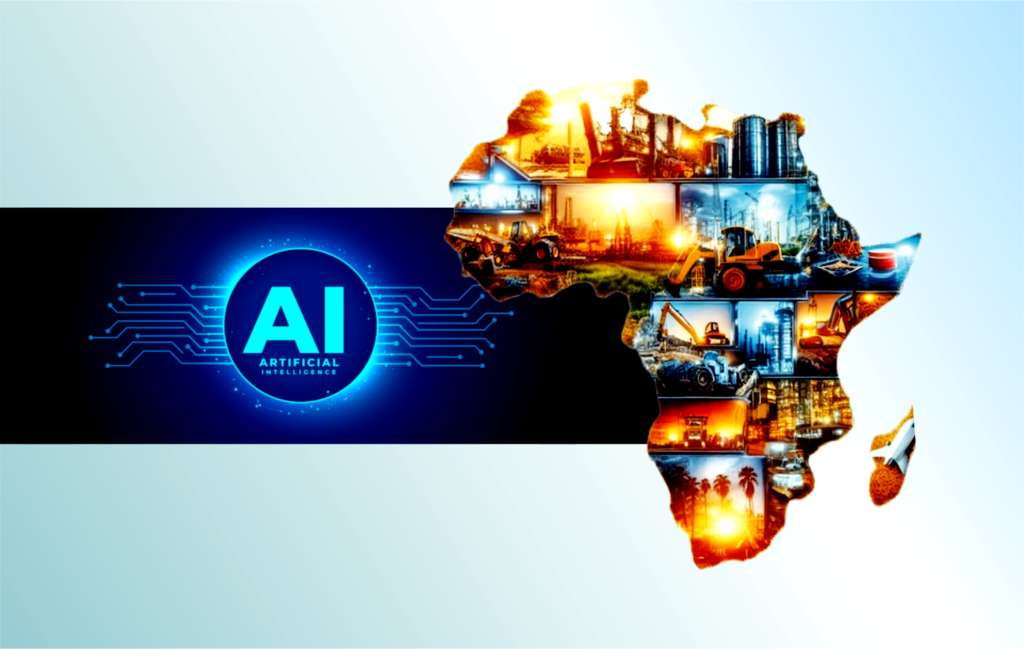
As artificial intelligence (AI) rapidly transforms economies around the world, a growing debate is emerging across Africa asking – is the continent prepared for an AI-driven future; and are its workforce and governments moving fast enough to remain relevant in the global digital economy?
The question is no longer whether AI will influence workplaces and industries. It already is. From healthcare and finance to engineering, law, broadcasting, education and public administration, AI-powered tools, are increasingly becoming part of everyday operations. Employers are placing greater value on digital competence, automation skills and AI literacy, creating new opportunities while simultaneously raising concerns about workforce displacement.
Presumably, industry experts would warn that professional qualifications alone, may no longer guarantee long-term competitiveness in the labour market. As an alternative, workers across sectors are being encouraged to acquire AI-related knowledge and certifications that can complement their existing expertise and improve their adaptability to changing workplace demands. This represents both a challenge and an opportunity to many working class and job-searching Africans. As much as the challenge lies in the pacesetting-speed that technological change is stirring, the opportunities lie in the possibility of how AI usage unlocks new industries, improve productivity and expand economic participation across the continent. Thus, anchoring some growing questions about Africa’s digital sovereignty.


Apart from individual skills development in AI usage maneuverability, concerns are mounting about Africa’s bigger digital future. A significant portion of the continent’s digital infrastructure remains dependent on foreign-owned technologies and services, including cloud storage systems, data management platforms, cybersecurity frameworks and digital communication networks. As AI becomes increasingly reliant on data and computing power, questions surrounding digital sovereignty, data ownership and technological independence are becoming more urgent.
Some policy authorities, maintain that African governments must intensify efforts to evaluate and strengthen their national AI strategies. Such reviews would need to examine key issues including data protection, local innovation capacity, public funding mechanisms, workforce development, regulatory frameworks and implementation readiness.


While at the grassroots level, many technology advocates believe that the continent risks becoming merely a consumer of AI products developed elsewhere, if deliberate investments are not made in local research, talent development, industrial development and infrastructure. “The conversation must shift from simply adopting AI, to actively shaping how AI serves Africa’s development goals“, noted by Vicronlion, a technology policy observer.
In reviewing AI and the future of employment across industries, one will note that businesses are progressively integrating AI into their operations to improve efficiency, reduce costs and enhance service delivery. Tasks that previously required extensive human input, can now be performed more quickly through automation and intelligent software systems. While this does not necessarily eliminate the need for human workers, it changes the skills employers demand.
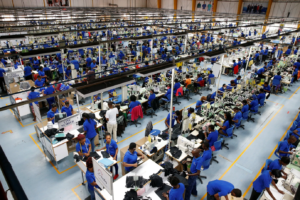
Based on the current evolution, most labour market analysts would suggest that workers who combine professional expertise with digital and AI competencies, are likely to be better positioned for future employment opportunities. Conversely, those who fail to adapt may face increasing competition in a technology-driven economy. This change is particularly important for Africa, where millions of young people enter the labour market every year. Creating pathways for AI education, vocational training and digital certification, could therefore become a critical component of future employment strategies.
On the other hand, let’s consider government responsibility and the need for rapid industrial policy. The AI transition is not solely the responsibility of individuals. Governments also have a central role to play. Across Africa, there is an invisible mounting pressure to develop industrial and industrial strategies that align with technological advancements. Most economist in-tune with today’s tech-evolution, would agree that AI should be viewed as a digital tool and catalyst for industrial growth, manufacturing expansion and job creation.
There is growing concern among development experts that many African nations, continue to rely heavily on external borrowing to finance economic development, while industrial development, output and domestic production, are not commensurate with the scale of the foreign loans/investments. This disconnect, has prompted calls for African governments to focus more deliberately on building industries, which could also be powered by local resources, local innovation and emerging technologies such as AI. Supporters of this narrative claim that stronger domestic industries would generate employment, strengthen national revenues and reduce long-term dependence on foreign financing.


Tuning to the grassroots reality. Away from policy conferences and technology summits, you will note that the impact of economic uncertainty, is felt by ordinary citizens, almost in any part of Africa you visit. Across many African communities, many families continue to grapple with unemployment, rising living costs and limited access to economic opportunities. To most them, the promise of AI would be meaningful, only if it translates into practical benefits such as jobs provision, business growth, improved public services, higher incomes and economic.
This reality highlights the need for inclusive AI policies that ensure technological progress benefits not only large corporations and urban centres, but also small businesses, rural communities and young entrepreneurs. Because, the failure to address these concerns could widen socioeconomic disparities and fuel public dissatisfaction, in countries where employment opportunities remain limited.
As AI continues to reshape global economies, most experts agree that Africa is standing at a critical intersections, with the level of industrialisation and human capacity index. The clarion-call now, clarifies that human capacity development in AI certification, through continuous learning and digital literacy, are becoming more and more important for career sustainability. While to the African governments, a strong need for proliferated industrialisation, is earnestly beckoning.


Also, governments should take up an equal significant challenge of creating policies that encourage innovation, strengthen digital sovereignty, expand industrial capacity and generate employment opportunities, through more industrial development, which will in turn absorb the growing workforce in Africa.
The future of Africa’s AI journey, will likely depend on how quickly the continent adopts new technologies; how effective it develops the concerned institutions; how much industries are established; and ultimately, the human capital needed to lead in an increasingly AI-driven world.
In the years ahead, relevance may not be determined solely by traditional qualifications, but by the ability of both citizens and governments to adapt, innovate and compete in a rapidly evolving digital era.