

Nigeria’s Population Surge Fuels Data Center Boom, But Electricity Challenges Loom

LAGOS, Nigeria – Nigeria’s rapidly expanding data center sector is increasingly being driven by more than technology trends and artificial intelligence. Industry analysts, investors and policymakers are pointing to the country’s growing population as a major force behind rising demand for digital infrastructure, positioning Nigeria as one of Africa’s most strategic technology markets.
With a population estimated at over 240 million and projected by the United Nations to exceed 400 million by 2050, Nigeria is expected to become the world’s third most populous nation. For investors, this demographic growth represents a long-term opportunity to build the infrastructure needed to support millions of future internet users, digital consumers and technology-driven businesses.
Government officials and industry stakeholders say the country’s youthful population is creating unprecedented demand for digital services. With a median age of about 18 years and internet penetration now exceeding 50 percent, millions of Nigerians are joining the digital economy through smartphones, fintech platforms, online entertainment, e-commerce and cloud-based services. This demographic shift is transforming how investors view Nigeria’s digital future. Rather than responding solely to current demand, many infrastructure developers are making long-term bets on a market that could become one of the world’s largest digital economies over the next three decades.
Picture Credit: The Guardian Nigeria
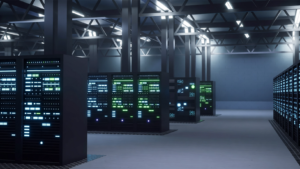
The trend is already evident in growing investment commitments across the sector. Nigeria’s data center market, valued at an estimated $288 million in 2025, is forecast to exceed $1 billion by 2031 as operators expand capacity to meet rising demand for cloud computing, artificial intelligence applications and local data storage.
Major industry players, including Equinix, MTN Nigeria, Rack Centre and Open Access Data Centres, have accelerated investments in Lagos and other commercial hubs, reflecting confidence in Nigeria’s long-term digital growth prospects.
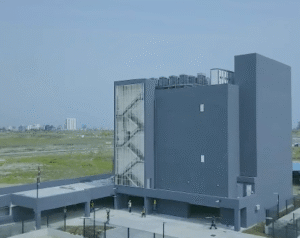
In 2025, MTN announced plans to invest more than $240 million in a new Lagos data facility designed to support increasing demand for artificial intelligence and cloud services. Industry estimates suggest broader investments approaching $1 billion are flowing into Nigeria’s data center ecosystem as operators seek to strengthen infrastructure capacity.
Beyond attracting private capital, the expansion of data centers is increasingly being viewed by government officials as a catalyst for economic advancement. Industry experts note that local data storage facilities can help reduce dependence on foreign infrastructure, strengthen cybersecurity, support digital sovereignty and create employment opportunities across engineering, construction, telecommunications and information technology sectors.
At the grassroots level, the growth of digital infrastructure is expected to support thousands of small businesses that rely on online payments, digital marketing, cloud applications and e-commerce platforms. Entrepreneurs, financial technology firms and content creators are among the groups expected to benefit from improved data processing capabilities and reduced service latency.
However, concerns remain about whether supporting infrastructure can keep pace with the sector’s ambitions.
Picture Credit: Africa Data Center
Industry leaders continue to identify unreliable electricity supply as one of the biggest obstacles to large-scale data center development. Many facilities still depend heavily on diesel-powered backup systems and hybrid energy solutions, increasing operational costs and raising sustainability concerns.
Experts argue that without significant improvements in power generation, transmission and energy reliability, Nigeria could struggle to fully capitalize on the growing demand for digital services. Regulatory certainty, improved broadband connectivity and investment-friendly policies are also being highlighted as critical factors that will determine the pace of future growth.
These issues are increasingly shaping policy discussions as governments across Africa seek to balance digital transformation goals with infrastructure realities. The growing convergence between energy and digital infrastructure has also become a key topic at major industry forums, including African Energy Week 2026, where data centers and artificial intelligence are expected to feature prominently in discussions about Africa’s economic future.
The stakes are high. While population growth alone cannot guarantee digital success, the combination of a young population, expanding internet access, growing fintech adoption and rising demand for AI-powered services is creating one of the continent’s most compelling investment stories.
As investors look beyond today’s market conditions, many see Nigeria’s expanding population not simply as a demographic statistic, but as the foundation of a future digital economy capable of driving economic growth, innovation and job creation for decades to come.
SOURCE: African Energy Chamber