
The Captain in the Suit: Can Ahmed Musa Win the Management Game?

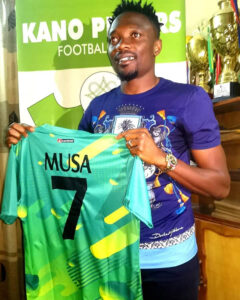
In the history of Nigerian football, few names command the respect of Ahmed Musa. As a player, he was the speed merchant who could change a match in a heartbeat. But today, the legendary former Super Eagles captain faces a challenge far greater than any defender he ever faced on the pitch: the General Manager’s office at Kano Pillars.
As someone who has navigated the industry from the touchline to the negotiating table, I know that transition well. But there is a massive difference between controlling a ball and controlling the complex, often chaotic machinery of an NPFL club.
There is a layer to Ahmed Musa’s tenure that makes it one of the most audacious experiments in Nigerian sports history: He is currently serving as both the General Manager and an active player for Kano Pillars.


In the boardroom, he holds the pen that defines the club’s future; on the pitch, he laces up his boots to fight for the points that keep the club in the league. As an intermediary, I have to ask: Can a man successfully manage himself? This dual role is a double-edged sword. It provides the locker room with the ultimate leader—someone who is literally in the trenches—but it blurs the lines of professional detachment. When the team underperforms, is he criticizing the players, or is he looking in the mirror? This is an intense, high-pressure balancing act that puts his legacy on the line every single matchday.
If we judge Musa solely by the league table, we miss the point. A GM’s job isn’t just to watch the ninety minutes on Sunday; it’s to manage the other 364 days of the year.
Musa brings a level of international respect that few Nigerian administrators possess. He has the ears of corporate sponsors and the attention of the media. The honest truth? Pillars has felt more “visible” under his leadership. But visibility doesn’t pay the bills—operational structure does.

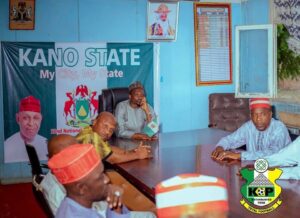
Kano Pillars is a heritage institution, but it is also a state-run entity. Anyone who has worked in the Nigerian football sector knows the friction between “administrative politics” and “football performance.” How much of Musa’s vision is being stifled by the red tape of the traditional system?
As an intermediary, I look at the talent pipeline. Is Musa using his global network to create a direct path for Pillars’ youngsters to reach Europe? If he isn’t turning Pillars into a springboard for the next generation, then he is only managing the present, not the future.
Ahmed Musa is currently the most important test case for Nigerian football. If he succeeds in transitioning from a national icon to a successful, commercially-minded GM, he sets the template for every former Super Eagle to return home and build the league from within.
But if he finds himself trapped by the same old “government-dependent” habits that have plagued the NPFL for decades, then we have to admit that even our biggest legends cannot change a system that refuses to evolve.
Ahmed Musa has brought glamour to the office, but the “Captain in the Suit” now faces his toughest test. Can he move from being the face of the club to the engine of the club?
The captain’s armband was a privilege. The GM’s desk is a responsibility. We are watching, Ahmed.