
President Tinubu Prioritizes Tech-Driven Strategy to Combat Terrorism, Insecurity and Boost Local Defence Industry

The Federal Government has unveiled a renewed strategy to confront Nigeria’s security challenges through technology, intelligence-led operations and stronger local defence production, in a move officials say could improve public safety, stimulate economic growth and strengthen the country’s leadership in African security cooperation.
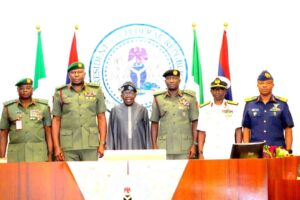
Speaking at the grand finale of the 2026 Nigerian Army Day Celebration and African Land Forces Forum (ALFF) in Port Harcourt, President Bola Ahmed Tinubu said his administration is prioritising the deployment of emerging technologies, modern military equipment and improved training to help security forces respond more effectively to terrorism, banditry, kidnapping and other evolving threats.
Represented by Vice President Kashim Shettima, the President said the government’s long-term security vision goes beyond military victories to creating safer communities where farmers can return to their fields, businesses can thrive without fear and families can live with greater confidence in their daily lives. “Our administration is firmly committed to countering contemporary threats through the adoption of emerging technologies and the building of capacity across all battle spaces,” the President said, stressing that intelligence-driven operations would become central to national security efforts.
The administration is also positioning security reforms as an economic development strategy, outside the battlefield. Tinubu said the revitalisation of the Defence Industries Corporation of Nigeria (DICON) would encourage local manufacturing of military hardware, reduce dependence on foreign imports, create skilled jobs and promote home-grown technological innovation.
Security analysts have long argued that strengthening Nigeria’s domestic defence industry could stimulate engineering, research and manufacturing sectors while creating employment opportunities for young professionals and expanding the country’s industrial base.

The President also highlighted the African Land Forces Forum as an important platform for defence diplomacy, saying collaboration among African armies has become increasingly necessary as criminal networks, terrorism and transnational insecurity continue to cross national borders. He noted that intelligence sharing, joint planning and technological cooperation could improve regional responses to common security threats.
In considering most communities across Nigeria that have experienced years of violent attacks and displacement, government officials say improvements in security would ultimately translate into better access to schools, healthcare, markets and agricultural activities, particularly in rural areas where insecurity has disrupted livelihoods.
President Tinubu paid tribute to members of the Armed Forces, describing their sacrifices as essential to preserving Nigeria’s unity and contributing to peace across the African continent. He assured families of fallen soldiers that the nation would continue to recognise their service and honour their sacrifices.
Earlier, Rivers State Governor Siminalayi Fubara described the hosting of the dual event in Port Harcourt as a symbol of improving peace and stability in the state. He urged the Federal Government to sustain investments in the welfare, healthcare and living conditions of military personnel, noting that motivated troops remain critical to national security.
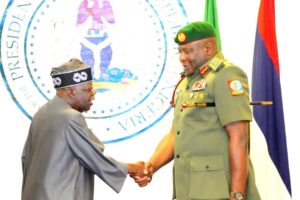
Chief of Army Staff, Lieutenant General Waidi Shaibu, reaffirmed the Nigerian Army’s commitment to protecting the country’s territorial integrity despite increasingly complex security threats. He said the changing nature of terrorism and organised crime requires continuous adaptation, improved operational planning and stronger cooperation with regional and international partners.
The ceremony also reflected Nigeria’s growing ambition to play a larger diplomatic role in continental security affairs, bringing together military leaders, policymakers and defence stakeholders to discuss collective responses to emerging threats facing Africa.
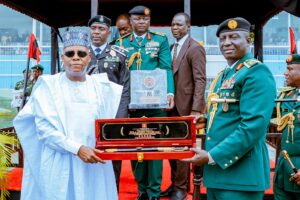
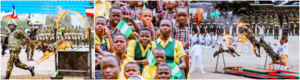
The event concluded with the presentation of the Chief of Army Staff Commendation Awards and military demonstrations showcasing operational capabilities, underscoring the government’s message that investments in technology, innovation and regional cooperation are becoming central pillars of Nigeria’s evolving security strategy.
While many Nigerians continue to look beyond policy announcements to measurable improvements in safety, the renewed emphasis on technology, indigenous defence production and cross-border collaboration signals an effort to link national security with economic resilience, industrial development and the restoration of public confidence in affected communities.