

Dangote Unveils a $17 Billion Lamu Refinery Establishment, Promoting Regional Energy Hub in Kenya

The Dangote Group is planning to establish a multibillion-dollar oil refinery on Kenya’s Lamu Island in a move that could reshape East Africa’s energy landscape, strengthen regional fuel security and accelerate economic growth across several countries.
The proposed refinery, designed to process up to 700,000 barrels of crude oil per day, would mirror the scale of the company’s flagship refinery in Lagos, Nigeria. If completed, it would become one of Africa’s largest refining facilities and position Kenya as a strategic supplier of refined petroleum products, to East and Central Africa.
The project, which is estimated at about US$17 billion (KSh2.2 trillion), comes as governments across the region seek to reduce dependence on imported refined fuel, stabilize energy supplies and create new industrial opportunities.
This is a government backed transformational investment. The Kenyan government has thrown its weight behind the project, describing it as a critical investment capable of transforming the country’s industrial and logistics sectors.
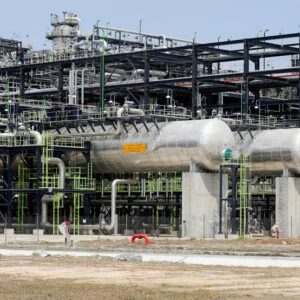
President William Ruto has consistently promoted the refinery as a cornerstone of Kenya’s ambition to become East Africa’s leading energy hub. To fast-track implementation and reduce bureaucratic delays, Deputy President Kithure Kindiki has been assigned to coordinate the massive investment across government agencies.
Authorities say the project is currently in its preliminary stages, with engineering studies, site surveys and regulatory processes underway. Environmental impact assessments and public participation exercises are expected before construction receives final approval, reflecting growing government efforts to balance industrial expansion with environmental protection and community interests.
But why is Lamu the chosen location? Lamu emerged ahead of competing proposals, including Tanzania’s Tanga Port, largely because of its strategic location and deep-water maritime infrastructure. Situated along Kenya’s northern coastline in the Indian Ocean, Lamu offers direct access for large crude oil tankers while serving as a natural gateway to landlocked markets such as Uganda, South Sudan, Rwanda, Burundi, eastern Democratic Republic of Congo and parts of Ethiopia.

Lamu’s deep-water port, significantly reduces shipping constraints and provides an efficient distribution network for refined petroleum products, throughout the region. And apart from its commercial value, Lamu remains one of the East Africa’s most historically significant settlements. Home to the UNESCO-listed Lamu old town. The island has long served as a centre for trade along the Swahili coast, although its unique heritage and fragile ecosystem, have intensified calls for careful planning.
In reviving the LAPSSET vision, it is believed that the refinery could become the long-awaited anchor project for the Lamu Port-South Sudan-Ethiopia Transport (LAPSSET) Corridor. One of Kenya’s largest infrastructure programmes.
Since the project was launched, sections of the corridor have struggled with limited cargo volumes and slow commercial uptake. A refinery of this magnitude would generate continuous imports of crude oil, while facilitating large-scale exports of refined fuel, increasing port activities and improving returns on investments already made in roads, port facilities and supporting infrastructure. The increased industrial activities could also attract petrochemical industries, storage terminals, logistics firms, shipping services, manufacturing businesses, etc., creating an industrial ecosystem around Lamu Port.

The refinery’s economic opportunities for local communities, which will be the most immediate impact on the society, is employment. President Ruto estimates the project could create approximately 60,000 direct and indirect jobs, spanning construction, engineering, transport, maintenance, security, logistics, administration and other support services.
Presently in Lamu County, where employment opportunities remain relatively limited, the investment would enhance employment statistics, stimulate local businesses also and increase domestic wages; furthermore, it will expand demand for accommodation, food services, retail trade and transportation. The project could also encourage skills development through vocational training and technical education, equipping young people with expertise in engineering, industrial operations and energy-related professions. As for the wider region, amplified economic activities may generate higher tax revenues that governments can channel into schools, healthcare facilities, roads, electricity networks and other public services.
Moreover, in boosting regional energy security beyond Kenya, the refinery has the potential to reshape fuel supply chains across East and Central Africa. Many countries in the region, import refined petroleum products from overseas markets, which exposes consumers to volatile global prices, foreign exchange pressures and shipping disruptions. Local refining could shorten supply chains, lower transportation costs and improve the availability of petrol, diesel, aviation fuel and other petroleum products. Some economists forecast that improved regional refining capacity, will also help conserve foreign exchange reserves, reduce import bills and improve energy resilience during periods of global supply uncertainty.

Despite its projected economic benefits, the proposed refinery faces significant environmental and social scrutiny. Environmental organisations, including Greenpeace Africa, have warned that industrial development around Lamu, would threaten sensitive mangrove forests, coral reefs and marine ecosystems that support local fishing communities. Many residents also remember previous large infrastructure projects that generated disputes over land ownership, compensation and access to traditional fishing grounds.
Community leaders have therefore called for transparent consultations, fair compensation where necessary and strict environmental precautions are taking to ensure local source of revenue are protected throughout the project’s lifecycle.
There are also queries questioning the long-term viability of investing heavily in fossil-fuel infrastructure, at a time when many countries are accelerating the transition toward renewable energy. And this has raised concerns that such facilities could eventually become stranded assets, if global oil demand declines. So, there has to be a consideration of balancing growth with sustainability.
As feasibility studies continue, the Dangote refinery proposal represents one of the most ambitious industrial investments, ever considered in Kenya. Supporters contend that it could stimulate industrialisation, strengthen regional energy security, generate thousands of jobs and unlock the economic potential of the LAPSSET Corridor.

However, its ultimate success will depend on engineering, financing and also on how effectively the government, investors and local communities will address environmental protection, public participation and equitable sharing of the project’s economic benefits.
Surpassing the diverse opinions, the development presents both an opportunity to redefine Kenya’s position in Africa’s energy economy and a test of its ability to pursue large-scale industrial growth, while protecting the communities and its environment.