
$500 Million Crypto Agreement Helped Pakistan Regain Diplomatic Access to Washington
Sometime last week in Islamabad, a cryptocurrency partnership that generated more than $500 million for United States President Donald Trump’s family business, has also emerged as an unexpected diplomatic tool for Pakistan, highlighting how digital finance is progressively influencing international relations, preceding traditional trade and investment.
Financial disclosures released this week showed that World Liberty Financial (WLF), the Trump family’s cryptocurrency venture, earned the president more than $500 million from token sales in 2025 alone. Pakistan was among the earliest countries to engage with the company, signing a memorandum of understanding (MoU) aimed at exploring blockchain-based financial solutions. While the agreement up till now hasn’t produced any operational crypto project, greatest value may have been political, rather than technological. Yet, crypto ambitions drive, is still on paper.
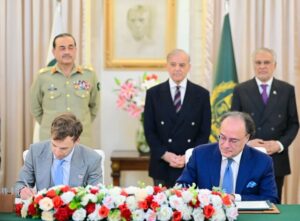
In January, Pakistan’s Ministry of Finance signed an MoU with SC Financial Technologies, an affiliate of World Liberty Financial, to explore the potential use of the firm’s USD1 stablecoin, for cross-border payments and digital financial innovation. The signing ceremony, attended by Prime Minister – Shehbaz Sharif, Chief of Army Staff – Field Marshal Asim Munir, Finance Minister – Muhammad Aurangzeb, and World Liberty Financial executives including – Zach Witkoff, signaled Pakistan’s desire to position itself as an emerging player in the global digital economy.
However, nearly six months later, government officials confirmed that no pilot programme has commenced, no licences have been issued, and no transactions using the USD1 stablecoin have taken place in Pakistan. Even so, some believe the agreement succeeded in strengthening diplomatic engagement between Islamabad and Washington, at a critical geopolitical moment. But, this is also building another foundational enhancement for a digital economic spread.
Although the crypto partnership is yet to translate into commercial activity, Pakistan has continued building the legal and institutional framework needed to regulate digital assets. The passage of the Virtual Assets Act earlier this year, established the Pakistan Virtual Assets Regulatory Authority (PVARA) to oversee licensing, consumer protection and compliance within the country’s growing cryptocurrency sector.
The State Bank of Pakistan has also allowed banks to open accounts for licensed crypto companies, marking another step towards integrating digital finance into the country’s formal financial system. These reforms could create long-term opportunities by attracting investment, encouraging financial technology innovation and creating skilled jobs for young Pakistanis in blockchain development, cybersecurity, digital payments and financial services.
But what could be the opportunities and questions in this whole developmental passage? Pakistan already ranks among the world’s fastest-growing cryptocurrency markets. According to the Chainalysis Global Crypto Adoption Index, the country ranked third globally in crypto adoption last year, reflecting widespread public interest in digital assets. Despite this, there still questions about the practical value of introducing another stablecoin.
Pakistan at the moment receive records of overseas remittances, through formal banking channels, with the State Bank reporting $38.3 billion inflows during the last financial year, which is a 27% increase over the previous year. Monthly remittances have reached an all-time high of $4.25 billion in May, and annual inflows are projected to exceed $42 billion.
Banking experts are claiming that the existing digital banking services, already allow many overseas Pakistanis to transfer money quickly and securely, raising questions about whether another stablecoin would significantly improve the system. They also note that Pakistan’s foreign exchange reserves is limited. Meaning digital tokens would ultimately need to be converted into US dollars for international trade, unless widely accepted by trading partners. Here is what diplomacy through digital finance scheme pressures in.
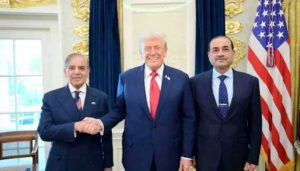
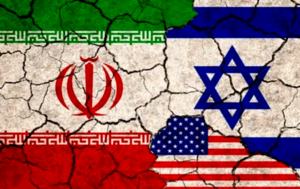
Many analysts view the World Liberty Financial agreement as part of a greater diplomatic strategy. Since the signing of the MoU, Pakistan has significantly expanded engagement with senior US officials. President Trump hosted Field Marshal – Asim Munir, at the White House. An unprecedented meeting for a Pakistani army chief, who was not also serving as a head of state. Pakistan has also positioned itself as a regional diplomatic actor, during the heightened tensions involving Iran, which some senior American officials later acknowledge Islamabad’s role in facilitating dialogue.
However, these developments suggest that the crypto agreement, served as an avenue for rebuilding high-level communication with the Trump administration, providing Pakistan with direct access that could prove valuable in discussions on trade, security cooperation, investment and regional stability. Positively, it impacts the socio-societal transactions beyond politics.
Currently in Pakistanis, the immediate benefits of the agreement is limited, as no digital payment platform has been launched and no consumer services have been introduced under the partnership. Nonetheless, there is a prospect that a well-regulated digital asset sector, could eventually expand financial inclusion, lower transaction costs for businesses, encourage entrepreneurship and create employment opportunities for the country’s growing youth population. If regulatory reforms continue and responsible investment follows, Pakistan’s crypto strategy could help modernise its financial sector, and strengthen links with international technology markets.
Though at the moment, observers within/outside Pakistan are saying that the biggest return on Pakistan’s crypto drive with the WLF, is not measured in digital coins or financial transactions, but in diplomatic influence, demonstrating how emerging technologies are gradually becoming instruments of foreign policy, as much as tools of economic innovation.