
Kemi Seba’s Extradition Battle Raises Political Tensions, as South African Court Weighs Benin’s Request
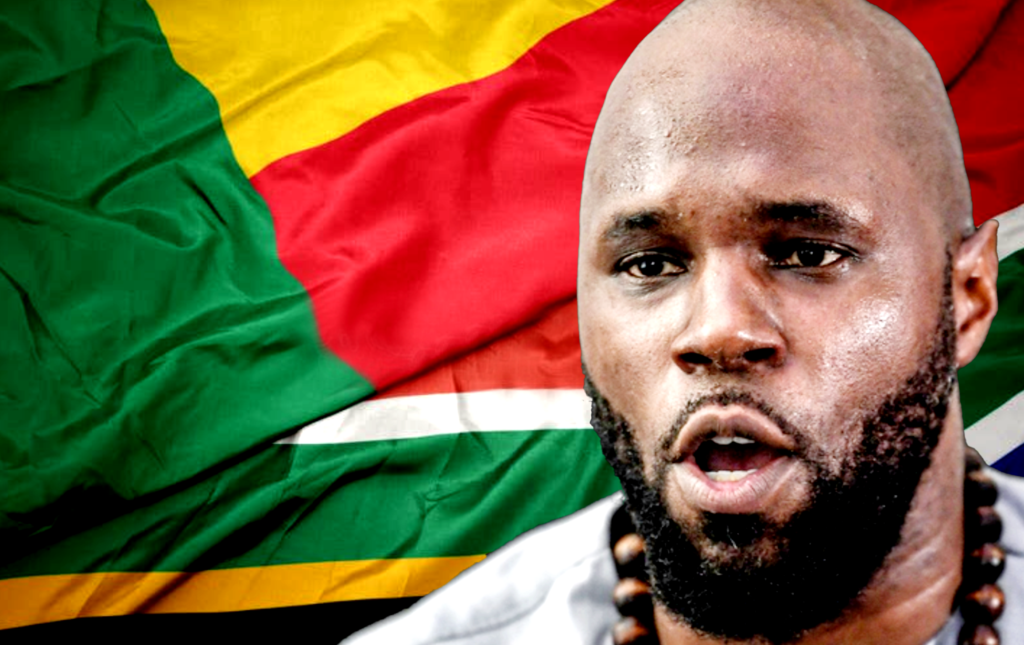
The detention of prominent Pan-African activist Kemi Seba in South Africa has evolved into a closely watched legal and political case, drawing attention to questions of political dissent, regional security and the balance between free expression and state authority across West Africa.
Seba, born Stellio Gilles Robert Capo Chichi to Beninese parents in Strasbourg, France, is wanted by the Beninese government over allegations that he incited rebellion by publicly endorsing a failed coup attempt against President Patrice Talon’s administration in December 2025. Authorities in Benin accuse him of threatening national security after he described the attempted military uprising as a “day of liberation” and praised the mutinous soldiers in videos circulated on social media.
The 45-year-old activist, known for his outspoken criticism of Western influence in Africa and his close association with Russia, has become a polarising figure on the continent. After France revoked his citizenship in 2024, Seba became a special adviser to Niger’s military-led government, further strengthening his profile within a growing bloc of anti-Western political movements in the Sahel.

South African authorities arrested Seba in Pretoria alongside his son and a local associate while he was allegedly attempting to leave the country through Zimbabwe. Officials contend that he had overstayed his visa and posed a flight risk as Benin sought his extradition. Investigators also allege he planned to use paid facilitators to evade immigration controls, claims that have added another legal dimension to the ongoing proceedings.
In relation to the government of Benin Republic, the case extends away from one individual. In Cotonou, officials argue that prosecuting those accused of encouraging unconstitutional changes of government, is essential to preserving democratic institutions and deterring future attempts to destabilize the country. Benin has in recent years faced heightened security concerns, linked to regional instability, making the protection of constitutional order a central political priority.
The case has also reignited debate over the shrinking political space across parts of West Africa. Seba’s supporters portray him as a political dissident whose anti-establishment views, have made him a target of state authorities, while critics claim that publicly encouraging a military takeover, crosses the line from political activism into incitement against a democratically elected government.
The South African court’s decision could carry wider diplomatic implications. Any ruling on extradition, will be closely monitored by governments across the continent, as they navigate an increasingly complex questions surrounding political asylum, cross-border law enforcement and judicial cooperation within Africa.
Outside the courtroom, the dispute resonates with ordinary citizens in Benin Republic and across the region. Many people remain concerned about the recurring threat of coups in West Africa, where political instability often disrupts livelihoods, weakens investor confidence and diverts public resources away from development priorities. Businesses typically become cautious during periods of uncertainty, while families bear the consequences of slower economic growth, rising unemployment and disruptions to public services.
Seba and his legal team are contesting the extradition request, disagreeing that he faces a genuine risk to his safety if returned to Benin. They have applied for political asylum in South Africa, maintaining that he has avoided returning to Benin since May 2024 because of what they describe as a “well-founded fear” for his life, under the current administration.
As legal proceedings continue, the case is expected to test the South Africa’s extradition framework and broader African efforts to balance national security, political freedoms and the rule of law amid a period of heightened political uncertainty across the region.