

China has the World’s Largest Solar Power System, a New Era in Global Energy
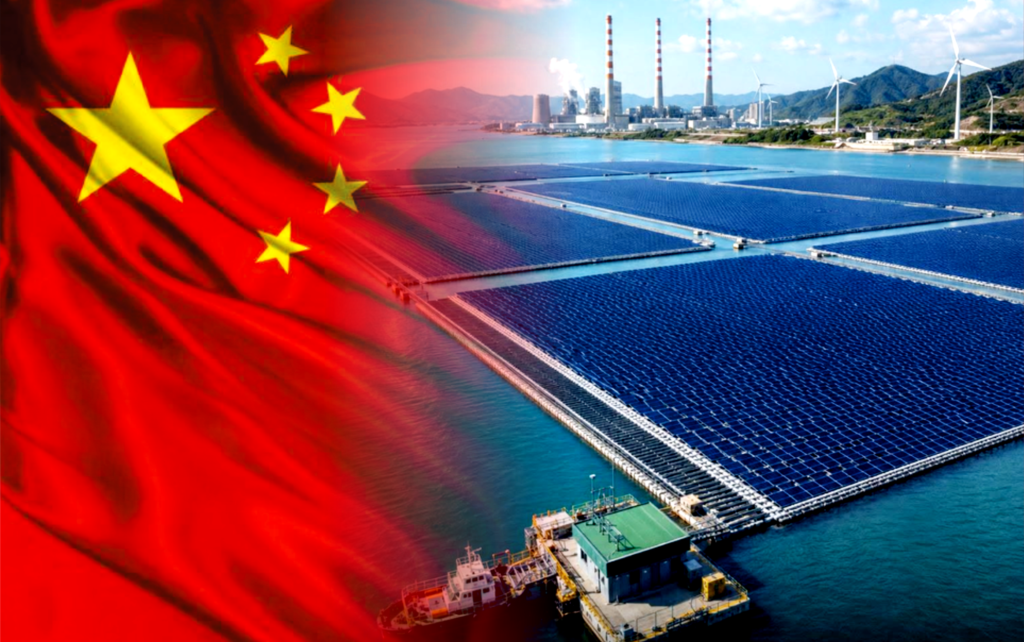
As geopolitical tensions intensify and energy markets remain vulnerable to conflict, supply disruptions, and volatile fuel prices, China is emerging as one of the world’s most strategically positioned energy powers. While many nations continue to wrestle with dependence on imported fossil fuels, Beijing has spent years investing in an energy transition that now appears to be reshaping the global balance of power.
China today operates the world’s largest solar power system, supported by an unprecedented expansion of renewable energy infrastructure. Alongside vast wind power projects, extensive hydroelectric capacity, significant coal reserves, growing nuclear generation, and one of the world’s largest battery manufacturing industries, the country has developed an energy portfolio designed to reduce reliance on external suppliers while supporting long-term economic growth.
This transformation did not happen overnight. For more than a decade, China has steadily expanded domestic manufacturing of solar panels, batteries, electric vehicles, and critical minerals processing, giving it considerable influence over global clean-energy supply chains. Today, Chinese manufacturers produce the majority of the world’s solar photovoltaic modules and dominate several stages of battery production, positioning the country at the center of the global clean-energy economy.
The ordinary Chinese citizens notes that the investment has brought both opportunities and challenges. Renewable energy industries have generated millions of jobs in manufacturing, engineering, construction, and technology. Rural regions that once depended heavily on agriculture have increasingly become home to sprawling solar farms and wind projects, creating new sources of income and infrastructure development.
However, the rapid expansion has also raised concerns. Large renewable projects sometimes require significant land use, prompting debates over environmental protection, local livelihoods, and the balance between development and conservation. Communities affected by major infrastructure projects have occasionally questioned compensation, relocation policies, and long-term environmental impacts.
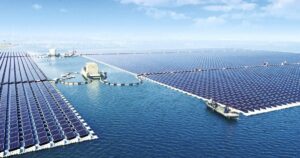
Internationally, China’s renewable energy leadership carries profound political and economic implications. Many developing countries now rely on Chinese technology for affordable solar installations, strengthening Beijing’s influence through infrastructure partnerships and clean-energy investments. At the same time, several Western governments are seeking to diversify supply chains, citing concerns over strategic dependence on Chinese manufacturing for critical energy technologies.
Energy analysts argue that China’s strategy reflects more than climate policy. It is also an exercise in national security. By combining renewable energy expansion with domestic energy reserves and industrial self-sufficiency, Beijing has sought to insulate its economy from external shocks that could arise during periods of geopolitical instability.
Nonetheless, some experts and professionals caution people, countries, etc., against viewing China as entirely energy independent. Despite record-breaking renewable deployment, the country remains one of the world’s largest importers of crude oil and natural gas. Sustaining economic growth while reducing fossil fuel dependence remains one of Beijing’s most significant long-term challenges.
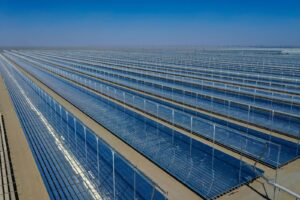
The bigger question facing the international community, is whether other nations can accelerate their own energy transitions quickly enough to narrow the gap. As competition increasingly shifts from oil fields to solar manufacturing, battery technology, and critical mineral supply chains, China’s early investments are yielding strategic advantages that are becoming more visible with each passing year.
Whether this leadership translates into lasting geopolitical influence will depend on how successfully China balances economic growth, environmental sustainability, technological innovation, and international cooperation. What is gradually clear is that the global contest for energy leadership, is no longer defined solely by oil reserves. It is also being shaped by who can generate, manufacture and control the clean-energy systems that will power the future.