
RECAP: Spain Lifted the Trophy, FIFA Won the World-Cup-by-Profit…
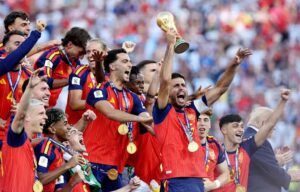
A lesson that escapes the world’s mind through the spectacular buzz-rush of football entertainment. Spain’s 1 – 0 extra-time victory over Argentina in the 2026 FIFA World Cup final, delivered the sport’s biggest prize to the players and their federation, with a record of $50 million champion’s payment. Argentina received $33 million as runners-up. The prize pool for the 48-team tournament was set at $655 million, with every participating federation guaranteed atleast $10.5 million, including preparation funding.
But beyond the final score lies is a larger story about modern football: the extraordinary commercial value created by players, coaches, supporters and national teams, and the financial system that distributes the unequal value across global football for the actors that generate the spectacular buzz-rush of the football entertainment.
The figures also require some clarification. Claims that FIFA simply collected nearly $9 billion from the 2026 tournament and retained more than $5 billion as profit, should not be presented as established final figures without FIFA’s completed financial reporting. FIFA accounts for its finances across four-year cycles, and its revenue encompasses broadcasting, sponsorship, licensing, ticketing, hospitality and other commercial activities, instead of the receipts from a single match or tournament.
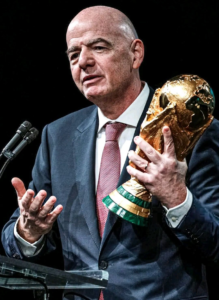
Talents are at the centre of the football economy. The World Cup’s commercial engine begins on the pitch. Players supply the athletic ability, creativity, tactical intelligence and competitive spectacle that make global football commercially valuable. The tournament transforms the sporting talent into television products for audiences, sponsorship opportunities, ticket demand, merchandise sales and worldwide media attention. This creates an important economic distinction that the people who produce the sporting spectacle, are not necessarily the same institutions that control the commercial rights surrounding it.
FIFA owns and commercialises the global rights associated with its competitions, while national associations, clubs, leagues, broadcasters, sponsors and players, occupy different positions within the football economy. The distribution of money therefore depends on the competition, contractual arrangements and FIFA’s established funding programmes.
The debate is not basically about if FIFA makes money. It is about how much football generates, who controls the revenues and how much eventually reaches the different layers of the game. Consequently, FIFA’s financial role goes beyond World Cup prize money. FIFA’s own development programmes, show that its financial model is also designed to redistribute money into football.

Under FIFA Forward 3.0, covering 2023 – 2026, FIFA allocated $2.25 billion for football development. Each of its 211 member associations can receive up to $8 million during the cycle, including up to $3 million for approved development projects and up to $1.25 million annually for operational costs. Eligible lower-revenue associations, can also receive additional assistance for national-team travel and equipment.
The programme supports projects including pitches, technical centres, training facilities, competitions, national teams and administrative capacity. FIFA says, its Forward programme had already made about $2.8 billion available between 2016 and 2022; and has funded more than 1600 projects.
The six continental confederations, also receive funding. Under Forward 3.0, each of the continental confederations is entitled to $60 million over the four-year cycle, while recognised zonal and regional associations can receive up to $5 million.


That redistribution is particularly significant for football economies, outside Europe’s richest leagues. In countries where domestic football generates comparatively little commercial income, FIFA development funding can help finance infrastructure, youth competitions, women’s football, administration and national-team activities.
The missing link of developing creative talent: this is where the economics of the World Cup connect directly with football’s creative future. A technically gifted player does not emerge simply because a country qualifies for the World Cup. Talent requires pitches, qualified coaches, youth competitions, scouting systems, equipment, medical support and sustained opportunities to play.
FIFA’s development model is therefore intended to strengthen the ecosystem, in which the talents develop. Its funding rules specifically, identify infrastructure, competitions, capacity-building and national teams, among eligible development activities.

The long-term benefit is potentially larger than any individual World Cup prize. A $50 million championship payment, rewards success at the summit; investment in youth football can help determine whether another generation of players, reaches that summit.
Seeing the World Cup from the perspective of a global commercial platform. The 2026 tournament also demonstrated how football has evolved from a sporting competition, into a vast global media and commercial platform. Broadcast rights give networks access to millions of viewers. Sponsors purchase association with one of the world’s most recognisable sporting events. Ticketing and hospitality convert stadium demand into direct revenue, while licensing and merchandising extend the tournament’s commercial reach, beyond the host cities.
Even though the players remain the central attraction, the economic infrastructure around them is enormous to suffice for football development. That is why discussions about football finances, progressively extend beyond prize money. The critical and important questions beckoning here, concerns revenue generation, redistribution, player/club compensation, infrastructure investment and governance. Whereas, the persisting-probe on the revenue generated from critical minds across the globe, seek to know if redistribution is sufficient, transparent and fairly connected to the people and institutions that create the football’s value.

Recent criticism from player representatives, has focused precisely on this distribution question. On one hand, FIFPRO Europe has argued that players and clubs should have a stronger role in FIFA’s decision-making and noted that European clubs supplied much of the players’ value at the 2026 World Cup.
A prize is only one factorial-measure of football’s value. Therefore, Spain’s $50 million win, tells only part of the World Cup’s financial story. The trophy represents sporting achievement. The prize represents direct financial reward. But FIFA’s commercial system represents the infrastructure, through which billions of dollars are generated around the global game. Moreso, programmes such as FIFA Forward, represent an attempt to recycle part of that wealth, into football development.
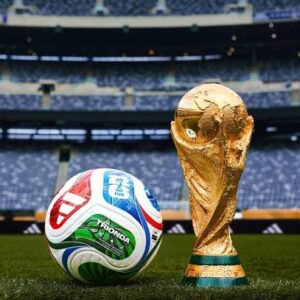
Well, to the next generation of footballers, the answer to the queries on why FIFA make’s so much monies and the global football teams that create the football’s value, earn just something lesser than 10%, transcends the conversations on the World Cup winner’s prize, to how a talented football child in Buenos Aires, Kinshasa, Accra, Lagos, or elsewhere around the world, gets a quality pitch, coach, equipment, competition and a pathway to develop that talent.
Here is the bigger worth behind the critical dissecting-story of Spain’s World Cup triumph/benefits and FIFA’s profit cashout; FIFA may have anchored on the net profit and the trophy/money-prize has gone to the champions, but the value of football is much more created for the uplifting of an entire global ecosystem of football talents.