

President Tinubu Rejected Meeting with South African Envoy, based on Afrophobia/Xenophobic Violence
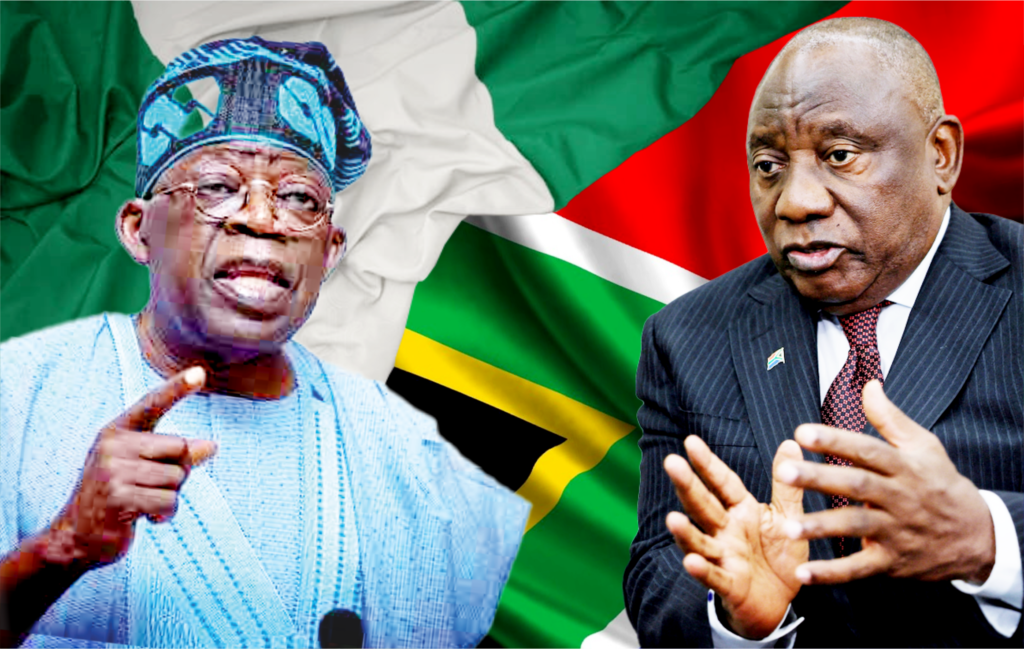
President Bola Tinubu has declined to personally receive a special South African envoy in Abuja, citing the continued wave of xenophobic violence targeting Nigerians living in South Africa. Instead, the President directed the delegation to hold discussions with Nigeria’s Minister of State for Foreign Affairs. This reaction is widely interpreted as a calculated diplomatic indication that Abuja is unwilling to return to business as usual, as long as concerns over the safety of Nigerian/other African citizens remain unresolved in South Africa.
The decision comes against the backdrop of repeated reports of attacks, destruction of businesses and killings involving foreign nationals, including Nigerians in South Africa. The Nigerian authorities have been saying that repeated diplomatic assurances, have not translated into meaningful protection in South Africans for affected Nigerians and African nationals.
The core of Nigeria’s position is its insistence that South Africa fully signs and ratifies the Memorandum of Understanding on the Early Warning Mechanism (EWM), which is an agreement that is intended to help both countries identify and respond to emerging tensions, before they escalate into violence. Officials also say the Minister of Foreign Affairs advised that a presidential meeting would send a wrong message, probably undermining or fueling continuous attacks on Nigerians, without adequate accountability or lasting solutions.

The diplomatic rejection echoes growing frustration within Nigeria, over what many officials/citizens view as a pattern of delayed responses to violence affecting Nigerian migrants. In the stead, the opinion of some analysts is that the Presidency is gradually linking high-level political engagement to measurable actions, including stronger security guarantees, investigations into attacks, prosecution of perpetrators, and credible compensation mechanisms, for victims and their families.
With regards to these two Africa’s largest economies, the development highlights a mounting pressure on an already complex bilateral relationship. Nigeria and South Africa have long cooperated on regional peace, trade and continental integration, but the recurring Afrophobic/xenophobic tensions over the treatment of migrants, sustain a test on mutual trust. This latest episode, is expected to intensify calls within African diplomatic circles for the South African government to demonstrate greater effectiveness in protecting foreign nationals, and address the root causes of xenophobic violence.
Afrophobic/xenophobic violence against non-South Africans, bags significant social consequences, asides diplomatic formalities. Few Nigerians that are still living and working in South Africa at the moment, are on daily basis concerned about their personal safety, livelihoods and businesses. Many of them will continue to live in the fear sudden attacks, which often leave victims displaced, injured, or financially devastated. As Nigeria’s firm diplomatic stance offers many citizens reassurance that their government is defending their interests, many also hope it leads to practical improvements in security for them who might still be living in South Africa, rather than prolonged diplomatic confrontation and reactional-formalities.
The tensions also resonate among some South Africans, many of whom reject xenophobic violence; and are worried about the deteriorating relationship that is currently affecting employment, investment, tourism, educational exchanges, etc., between the two countries. It is of worthy note that stronger community engagement and law enforcement, are essential to preventing these attacks and future ones in South Africa.
Economically, sustained diplomatic strain could cast uncertainty over commercial ties between Africa’s two largest markets. Up on till now, South African companies hold substantial investments in Nigeria, across sectors including telecommunications, retail, financial services, entertainment sector, consumer goods, etc., and on the other hand, Nigerian entrepreneurs also operate businesses in South Africa. Although, even with the fact that no formal economic restrictions have been announced, it is possible that elongated socio-tensions in South Africa against Nigerians, could fuel public pressure for closer scrutiny of South African corporate interests in Nigeria, or encourage calls for stronger economic reciprocity.
Politically, President Tinubu’s decision also mirrors growing domestic expectations that the Nigerian government adopt a firmer posture, whenever her citizens abroad face persistent threats. The move shows that protecting Nigerians overseas, is becoming a progressive visible component of Nigeria’s foreign policy and diplomatic engagement.
As both governments seek a path forward, many people believe that restoring immigrants’ confidence, will require more than diplomatic reactionary exchanges. Concrete action to improve public safety, strengthen bilateral cooperation, immigrants’ confidence and rebuild safety-trust for other non-South Africans, is likely to determine away forward towards stable and mutually beneficial bilateral relationship/partnership.
Picture Credit: Punch | Great Africa | Reuters