
EXCERPT: 3 Years/Counting of President Tinubu’s Strategic Reforms, Bold High-Stakes, Mounting Social Costs and Nigeria’s Future
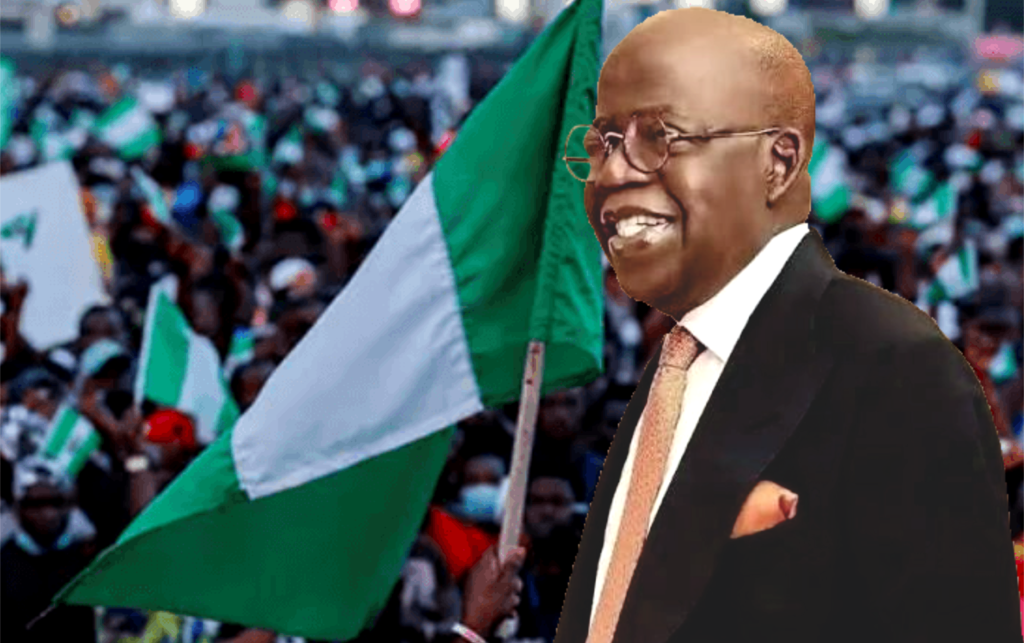
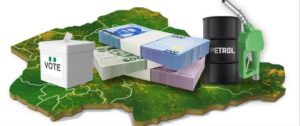
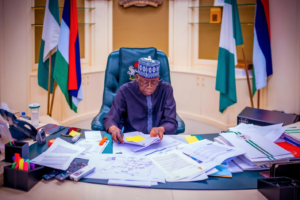
Three years and counting towards the end of his first term, President Bola Ahmed Tinubu’s administration has dramatically reshaped Nigeria’s economy through far-reaching fiscal and monetary reforms. Central to this agenda are the removal of petrol subsidies and the unification of the foreign exchange market policies, which the government says were necessary to avert fiscal crisis and restore macroeconomic stability.
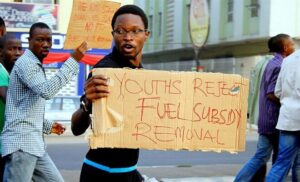
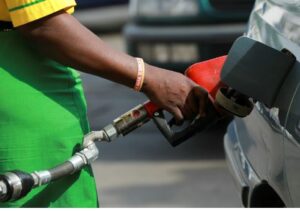
The administration has maintained that these reforms have strengthened public finances, improved investor confidence and laid the foundation for long-term economic growth. Though, the same measures have also fuelled soaring inflation, a sharp rise in living costs and declining domestic purchasing power, leaving millions of Nigerians struggling with the immediate rebounds of change from these strategic reforms and macroeconomic outcomes.
The Presidency upholds that the reform programme, has delivered significant structural gains across the economy.
- Subsidy Removal: The elimination of petrol and electricity subsidies ended programmes that had consumed trillions of naira annually, creating additional fiscal space for government spending and development priorities.
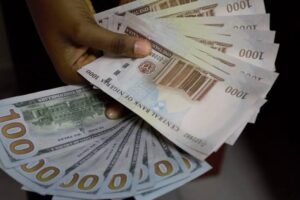
- Foreign Exchange Reform: The consolidation of multiple exchange-rate windows into a market-driven system was designed to improve transparency, reduce arbitrage and attract foreign investment.
- Capital Market Growth: Higher corporate earnings, banking sector recapitalisation and renewed investor confidence have driven the Nigerian Exchange (NGX) to record market capitalisation levels.
- Infrastructure Investment: The administration has expanded capital expenditure through ambitious national budgets and major infrastructure projects, including the Lagos-Calabar Coastal Highway and ongoing rail and road developments, as part of its long-term growth strategy.
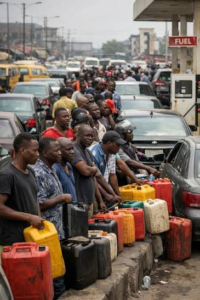
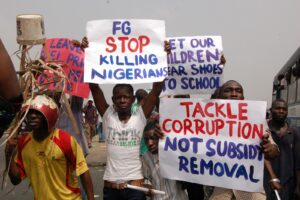
While these reforms have won praise from investors and international financial institutions for addressing long-standing economic distortions, they have also imposed significant short-term hardships on families and businesses, making the balance between fiscal stability and social welfare as one of the defining tests of Tinubu’s first term.
Rising cost of living and social challenges trail these reforms with factors like Persistent Inflation: the naira’s depreciation, higher fuel and transport costs drove up the prices of food, healthcare and other essential goods and services, intensifying pressure on home-front incomes; Growing Poverty: the economic reforms pushed many vulnerable Nigerians deeper into poverty, while government relief measures faced criticism for their pace, coverage and ability to cushion the impact on low-income households; and Weak Agricultural Output: persistent insecurity in key farming regions sustains the disruption food production, limiting the effectiveness of government agricultural programmes and contributing to sustained food inflation.
Join me in a mini deep-dive profile of Nigeria’s most consequential presidency in a generation, and the high-stakes wager that its economic reform, though painful, states as the only path to redemption.
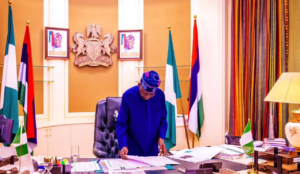
Prologue: The Day Everything Changed
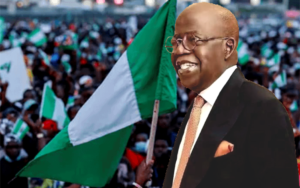
On the morning of May 29, 2023, Bola Ahmed Tinubu stood at Eagle Square, Abuja, and uttered five words that would define his presidency and alter the trajectory of Africa’s largest economy forever.
“Subsidy is gone”
No preamble. No soft landing. No political choreography. Just a blunt, unvarnished declaration delivered in the cadence of a man who had spent a lifetime calculating risks and acting before others could react. The crowd fell silent. Analysts scrambled for their calculators. And somewhere in Lagos, a bus conductor raised his fare before the speech had even ended.
Three years later, that single sentence remains the rosetta stone for understanding everything that has followed: the soaring inflation; the naira’s wild ride, the street protests, the investment summits, the diplomatic shuttles across four continents, and the persistent, gnawing question that haunts every Nigerian household: “Will this actually work?”
This is the story of a presidency built on a simple, brutal premise: that Nigeria’s economy was too broken to be fixed gently and that only shock therapy could prevent total collapse. It is also the story of a nation caught between the arithmetic of macroeconomic reform and the arithmetic of survival between GDP growth projections and the price of a bag of rice.
Part I – The Reckoning: Why President Tinubu Chose the Hard Road
To understand the Tinubu administration, one must first understand the inheritances in summary.
By mid-2023, Nigeria was effectively running on fumes. The petrol subsidy, a decades-old political sacred cow, was consuming over ₦10 trillion annually, roughly 30% of total government revenue. Twenty-seven of Nigeria’s 36 states could not pay salaries without federal bailouts. External reserves were dwindling. The naira operated on a fantasy exchange rate that bore no resemblance to market reality, and the national debt was compounding faster than the economy could grow.
“The old subsidy regime encouraged corruption, smuggling and waste while placing enormous pressure on public finances“, Tinubu would later explain, defending his decision at the Africa CEO Forum in Kigali. “It is a fake life to think you can, in a global economy, continue the subsidy that is wasteful“.
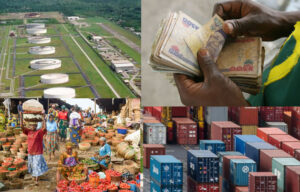
The diagnosis was not unique to Tinubu. Every economist, every multilateral institution, every serious policy analyst had said the same thing for years. What made Tinubu different was that he acted and he acted without the cushioning mechanisms that reform-minded predecessors had always demanded, as political insurance.
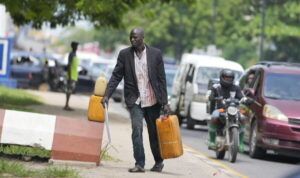
Within weeks of taking office, Tinubu ended the subsidy and also unified Nigeria’s multiple exchange rate windows, allowing the naira to float. The immediate result was economic chaos by design: petrol prices quadrupled overnight, the naira plummeted from ₦460 to over ₦1500 to the dollar, and inflation surged to a 28-year high of 34.8% by December 2024.
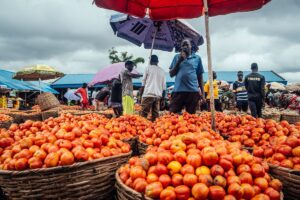
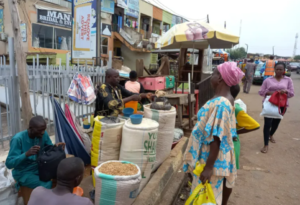
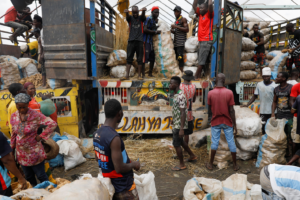
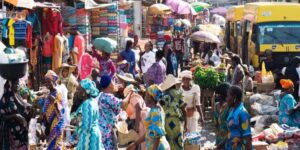
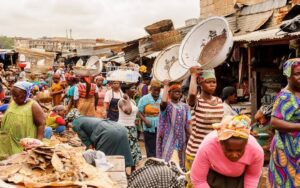
To the average Nigerian, the maths was devastating. A 50kg bag of rice that cost ₦38,000 in January 2023, reached ₦92,000. But by mid-2026 it came down to between ₦55,000 to ₦64,000. Crate of eggs more than tripled. Transport fares doubled, and then doubled again. A civil servant earning the new minimum wage of ₦70,000, found that rent alone could consume nearly 60% of their monthly income.
Yet, Tinubu remained unapologetic. “It is difficult, it is painful” he told a television audience, “but it is just like the human reproduction process. A woman carries a pregnancy, endures the pain of labour, and smiles when she sees a live child“.
The metaphor was characteristically Tinubu, visceral, unsparing and rooted in a political philosophy, forged in the trenches of Lagos politics, where he earned his reputation as a strategist who could absorb short-term pain for long-term positioning. But it also revealed something profound; a belief that Nigerians, if told the truth, would endure hardship for a credible vision of renewal.
Part II – The Ledger: What Over 3 Years of Reform Has Produced
If the Tinubu presidency were a corporate turnaround, the financial statements would tell a story of dramatic restructuring, followed by fragile stabilisation.
By the close of 2025, the front-page numbers had shifted dramatically. Inflation, which peaked at 34.8% in late 2024, had eased to 15.15% by December 2025. A decline of nearly 20 percentage points, in a single year. Food inflation, the most politically sensitive metric, fell even more sharply, from 39.84% to 10.84% over the same period.
Foreign reserves stood at $45.4 billion as of December 29, 2025, a substantial buffer that allowed the Central Bank to defend the naira with greater confidence. The Nigerian Stock Exchange posted a remarkable 48.12% gain in 2025, consolidating a bullish run that began in the second half of 2023, and foreign direct investment, which had flatlined at $90 million in the second quarter of 2025, surged to $720 million in the third quarter, a figure that gestured renewed investors interest, being while modest by historical standards.
“Nigeria is making serious foundational progress“. Tinubu declared in July 2026, while hosting a delegation from Deloitte Africa. “The reforms on revenue will continue to stimulate growth. Yes, some issues are difficult; taking the bitter medicine is never easy, but it is working well“.
The fiscal picture had indeed brightened. With the subsidy removed, government revenues improved significantly. States that had been borrowing to pay salaries, by 2026 were no longer doing so. This is a claim Tinubu made forcefully: “Today, there is no state that is borrowing to pay the salaries of employees“.
However, there was a cruel paradox at the heart of these numbers. While inflation was easing, poverty was rising. The World Bank’s April 2026 Nigeria Development Update, reported that the national poverty rate had climbed from 56% in 2023 to 63% in 2025, meaning roughly 140 million Nigerians now lived below the poverty line. As one analyst put it: “Inflation is cooling, yet poverty keeps climbing. How can both be true at once?” The answer lay in what economists call the “disconnect between moderating prices and real income growth“. Prices had stabilised, but they had stabilised at a much higher level than before the reforms. Wages, meanwhile, had not caught up. A graphic designer in Lagos captured the national mood in a single sentence: “My salary doubled in two years, but I feel poorer than I did before“.
The Structural Reforms
The Tinubu administration pursued a sweeping restructuring of Nigeria’s economic architecture.
- Tax Harmonisation: The administration confronted what Tinubu called “the challenge of multiple taxation across all tiers of government“, pushing states to adopt harmonized tax laws to reduce the burden on businesses and consumers.
- Electricity Decentralisation: The Electricity Act of 2023 fundamentally restructured Nigeria’s power sector, empowering states to establish their own electricity markets. By mid-2026, 12 states had enacted their own electricity laws, with Enugu, Ekiti and Ondo already managing their state electricity markets independently. In rural Ekiti East, communities that had been without power since 2013 saw electricity restored. In Abia State, factories began receiving over 23 hours of uninterrupted power for the first time.
- Local Government Autonomy: In a landmark Supreme Court judgement, financial autonomy was granted to Nigeria’s 774 local government councils, a dimension that Tinubu championed as essential to bringing development closer to communities. “The Supreme Court has said, Give them their money directly“, he told governors, warning that non-compliance could attract decisive executive action.
- Education Financing: The Nigerian Education Loan Fund (NELFUND) was established to improve access to higher education, disbursing a total of ₦282 billion by mid-2026.
- Digital Economy: In January 2026, President Tinubu signed a presidential executive order on virtual assets coordination, establishing a regulatory framework for cryptocurrencies and blockchain services, designed to eliminate fraud, strengthen financial integrity and position Nigeria as a hub for fintech innovation.
- Social Protection: In a significant pivot, President Tinubu declared 2026 the “Year of Families and Social Development“, launching a $3 billion suite of social protection and human capital development programmes. The Nigeria Families First Programme (NFFP) was designed to target economic empowerment, child welfare and homefront stability; an implicit acknowledgement that macroeconomic stability alone could not heal the social wounds, inflicted by the reform process.
Part III – The Global Chessboard: Foreign Policy as Economic Strategy
If the domestic agenda was about survival, the foreign policy agenda was about ambition. And here, Tinubu deployed the same strategic audacity that had defined his economic reforms.
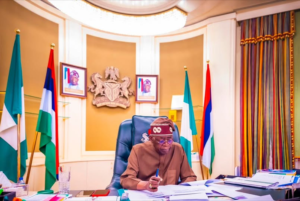
The administration’s foreign policy was built around what Foreign Minister Yusuf Maitama Tuggar called the “4Ds Doctrine” – Democracy, Development, Demography, and Diaspora. It was not merely a diplomatic framework; it was an economic strategy dressed in the language of international relations.
Since taking office, President Tinubu has undertaken 36 official foreign visits across Africa, Europe, Asia, the Middle East, and the Americas. The pace was relentless and, to critics, excessive, but the administration insisted that each trip was meticulously planned, with delegates required to produce implementation reports and follow-up actions.
The results, on paper, were staggering. Investment commitments exceeding $50 billion were announced, spanning telecommunications, energy, manufacturing, infrastructure, mining, agriculture, and the blue economy. Major commitments included ExxonMobil ($10 billion), Afreximbank ($5 billion), Indorama ($8 billion), Shell ($3 billion), Jindal Steel ($3 billion), Arise Integrated Industrial Platforms ($3.5 billion), Coca-Cola ($1 billion), and Maersk ($600 million). However, the administration’s foreign policy was about more than investment figures. It was about repositioning Nigeria in a rapidly shifting global order.
Regional Leadership: The ECOWAS Test
Barely three months after assuming office, President Tinubu was unanimously elected Chairman of the ECOWAS Authority of Heads of State and Government, a position that immediately thrust him into the center of West Africa’s most acute political crisis.
Military coups in Niger, Mali, and Burkina Faso presented an immediate test of Nigeria’s diplomatic credibility. The initial response, collective sanctions and the threat of military intervention were widely portrayed as Nigerian belligerence, but diplomatic records indicate that these were collective ECOWAS decisions guided by existing regional protocols, not unilateral Nigerian aggression.
Behind the scenes, President Tinubu pursued a more pragmatic strategy. He approved the delivery of 300 trucks of petroleum products to Niger without fanfare. He dispatched his foreign minister to engage the military junta in Niamey. He received the letters of credence of Mali’s new ambassador, an unusual gesture toward a regime that had come to power unconstitutionally, and he approved the first full payment of Nigeria’s ECOWAS Community Levy in nearly two decades, releasing over ₦169 billion to the regional body.
The approach was classic President Tinubu: firm on principle, flexible in execution, and always calculating the long game. “The hallmark of a transformative leader,” he once said, “is the ability to take decisions, do what you’ll do, at the time it has to be done, on behalf of the people.”

Global Positioning: BRICS, G20, and the Quest for a Seat at the Table
In January 2025, Nigeria was admitted as a “partner country” of BRICS, the bloc of emerging economies that includes Brazil, Russia, India, China, and South Africa. It was a strategic pivot toward multipolar alliances and greater engagement with the Global South, even as President Tinubu insisted that Nigeria’s traditional partnerships with the West would not be sacrificed.
Nigeria also deepened its engagement with the G20, hosting the Agriculture Ministers’ Conference on Food Security in November 2025, and continued its long-standing advocacy for reform of the United Nations Security Council, demanding permanent African representation.
On sensitive international disputes, the administration maintained what it called “strategic neutrality anchored on international law” supporting peaceful resolution of the Kosovo question, upholding the One-China Policy, and backing self-determination for Western Sahara.
The administration placed particular emphasis on engaging Nigeria’s vast diaspora, a population whose annual remittances run into billions of dollars. Through the Nigerians in Diaspora Commission (NiDCOM), efforts focused on encouraging investment, technology transfer, and professional partnerships. In January 2025, sustained diplomatic intervention contributed to the acquittal of three Nigerian women facing drug-related charges in Saudi Arabia, a small but symbolically potent demonstration of the government’s commitment to protecting citizens abroad.
Part IV – The Shadow: Security, Inequality, and the Unfinished War
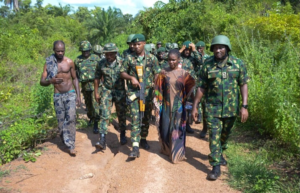
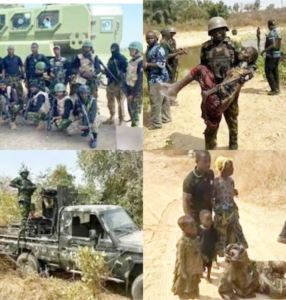
In cognizance of all the diplomatic fanfare and macroeconomic indicators, the President Tinubu administration has been unable to escape the shadow of insecurity that has haunted Nigeria for over a decade.
Nigeria faces what security analysts call a “triple threat“: Boko Haram and ISWAP in the Northeast, bandit groups in the Northwest, and a resurgence of inter-communal violence in the Middle Belt. The violence has been reported to have killed more than 10,200 civilians in the 18 months between early 2023 and mid-2025.
The situation has evolved in troubling ways. Banditry, once confined to Zamfara, Katsina, and Sokoto states, has spread southward into Kogi State and beyond. Boko Haram and ISWAP have begun providing financial support and training to bandit groups, creating what The Soufan Center described as “a fraught and fluid nexus between jihadist insurgents and criminal networks.”
New threats have emerged. The Lakurawa group in Kebbi State, with ties to terror groups in Burkina Faso, Mali, and Niger, was designated a terrorist organisation in 2025. The Mahmuda group in Kwara State is believed to be an offshoot of Boko Haram.
The administration has intensified military operations, reporting the elimination of several terrorist commanders and the disruption of criminal networks, but security experts maintain that sustained peace will depend not only on military gains but also on addressing the unemployment, poverty, and local grievances that fuel recruitment.
The security crisis has a profound human dimension. Thousands of children have been abducted in mass kidnappings targeting schools. In November 2025, more than 300 students and teachers were abducted from a boarding school in Papiri, Niger State, a grim echo of the 2014 Chibok abduction. A decade after Chibok, 82 of the 276 girls remained unaccounted for. Insecurity has now reshaped daily life in rural Nigeria, families have abandoned their homes, food supply chains have been disrupted, and school attendance is falling.
The administration has also faced criticism over military conduct during counterterrorism operations, including erroneous airstrikes that have killed hundreds of civilians. While authorities have issued apologies, minimal steps have been taken to ensure accountability or minimise civilian harm.
Part V: The Verdict – A Presidency at the Crossroads
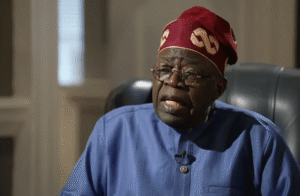
Three years into the Renewed Hope agenda, the central question remains unanswered: Can macroeconomic stability, governance reforms, and international partnerships translate into tangible improvements in living standards?
The administration’s defenders point to a growing body of evidence that the reforms are working. GDP growth has been robust, exceeding 4% annually. The naira has stabilised. Investor confidence has returned. States are no longer bankrupt, and Nigeria’s international profile has never been higher, from BRICS partnership to G20 engagement to the restoration of relations with the UAE.
The Minister of Budget and Economic Planning Abubakar Bagudu noted that “the reforms have improved cooperation between the executive and legislative branches of government,”
Critics however, point to a different reality. Poverty is rising, not falling. Food prices remain punishingly high. Security has deteriorated in key regions, and the promised investment commitments have yet to mature into the large-scale employment-generating projects that ordinary Nigerians were told to expect.
Foreign policy observers have however noted that many investment commitments announced during international engagements are yet to mature into fully operational projects capable of generating large-scale employment. The constant domestic security concerns, inflation, foreign exchange pressures and infrastructure deficits continue to reduce the country’s attractiveness to investors.
The administration’s own data tells a story of partial progress. While 64% of Nigerians in one survey reported that their household income no longer covered basic expenses, the government has responded with an expanding social protection architecture, from the $3 billion human capital programmes to the family-centred development strategy.
Epilogue: The Wager
As President Tinubu enters the second half of his first term, the defining characteristic of his presidency is becoming clear: it is a wager.
A wager that Nigerians will endure pain today for prosperity tomorrow. A wager that foreign investors will look past security concerns and infrastructure deficits if the macroeconomic fundamentals are sound. A wager that regional leadership and global visibility can be converted into domestic development. A wager, above all, that a country of 220 million people can be governed not by consensus but by conviction.
“My philosophy is Nigeria first,” Tinubu declared, defending his decision to prioritise locally produced cement and steel for the Lagos-Calabar Coastal Highway project. “This country is ours. We must build it together.” It is a philosophy that has won him admirers among investors, multilateral institutions, and foreign governments who see in him a leader willing to make the hard choices that predecessors deferred, but it has also cost him dearly among ordinary Nigerians who feel that the “bitter medicine” has been administered without sufficient palliative care.
The coming months will determine whether this wager pays off. The administration has pledged to “do more work” if re-elected, to deepen reforms, and to ensure that the benefits of structural transformation reach every Nigerian household.
As one policy analyst put it: “The long-term success of Nigeria’s foreign policy will be judged not only by international recognition or diplomatic engagements but also by its ability to deliver economic opportunities, strengthen governance, enhance regional peace and improve the quality of life for ordinary citizens.”
As the President Tinubu’s administration navigates the last track to the end of its first term, its biggest challenge will be to translate macroeconomic gains into measurable improvements in living standards. The success of its reform agenda, will depend on some indices like the effective implementation of social protection programmes, stronger security in food-producing communities, a more stable domestic energy supply, total curbing of insecurity, policies that reduce inflation, create jobs and restore the purchasing power of Nigerian households.
Three years in and counting, the jury is still out. The reforms have laid a foundation. The diplomacy has opened doors. The investments have been pledged, but for the millions of Nigerians who still skip meals, who still fear bandits on their farms, who still wonder if their children’s education is secure, the ultimate verdict will be delivered not in boardrooms or summit halls, but in the quiet arithmetic of daily survival.
President Bola Ahmed Tinubu has placed the largest stake of his political life. The stakes could not be higher, and the wheel is still spinning.