
Branding Misery, Trafficking Cartel Mislabeling Drugs with Haaland Stamps…
Football is supposed to be an escape. It is the universal language of joy, a multi-million-dollar theater of dreams where heroes like Erling Haaland are sculpted into modern demigods. But sometimes, reality crashes into our screens from the most bizarre angles, reminding us that the dark underbelly of the global economy touches every corner of the sport we love.
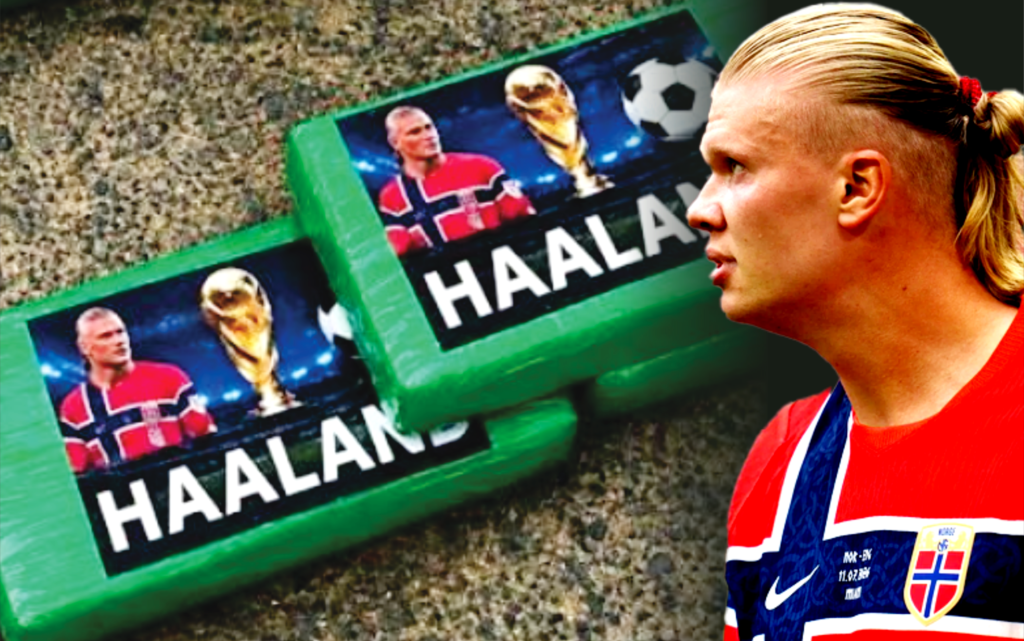
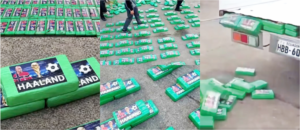
When anti-narcotics police along the Pan-American Highway in Ecuador intercepted a truck near the Colombian border and pulled out 469 kilograms of cocaine, the world didn’t just gasp at the scale of the multi-million-dollar haul. They gasped at the stickers plastered across the packages: the smiling, golden-haired face of Erling Haaland.
Fresh off a scorching summer performance at the World Cup, the Norwegian striker’s likeness wasn’t just on billboards, trading cards, or television screens. It was serving as corporate branding for transnational organized crime.
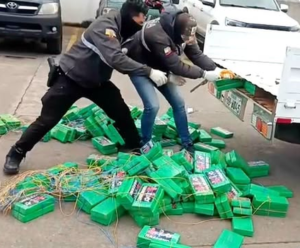
To the uninitiated, stamping a football icon’s face onto a block of narcotics feels surreal—almost like a sick joke. But in the cold, corporate logistics of the international drug trade, it is standard operating procedure.
Cartels and syndicates don’t use high-profile faces like Haaland’s—or previously, Lionel Messi—because they are fans. They use them as brand signatures and quality control tokens. In a multi-billion-dollar shadow economy spanning from the labs of South America to the streets of North America and Europe, these logos act as tracking devices, batch indicators, and a guarantee of origin between cartels and distribution networks. It tells the receiving syndicate: This product belongs to this specific network, and the quality is certified.
It is the ultimate perversion of commercial branding. The very faces we celebrate for inspiring our youth are being co-opted to brand the poison destroying other communities.
Here in Nigeria, reading about a half-ton of cocaine stamped with a football star’s face feels like watching a movie from a completely different planet. Nigeria is not traditionally a producer or a destination market for industrial-scale cocaine operations in the way Latin America is; our local struggles with illicit substances often manifest differently—ranging from the economic desperation fueling local substance abuse to the pressures pushing our youths into petty drug peddling just to survive the streets. Yet, the underlying motivation is identical: money, systemic failure, and the exploitation of the vulnerable.
When we look at it from a holistic standpoint, whether it is a cartel exploiting transit routes in Ecuador or local syndicates taking advantage of broken economic systems in our own backyard, the root cause is a profound lack of structural integrity. Organized crime thrives where governance is weak, where institutions look the other way, and where young people see crime as the only viable elevator out of poverty.
This is where the story hits home for us. In our local communities, from the dusty pitches of our grassroots academies to the crowded street corners, we preach football as the ultimate redemption song. We tell our kids that raw talent can buy them a ticket out of hardship. But when global superstars like Haaland become unwitting billboards for international cartels, it exposes a harsh truth: the world outside our local pitches is ruthless, and commercial exploitation is everywhere.
If we want to protect the sanctity of our game and the minds of our young talents, we have to look beyond the goals and the glamour. We have to build insulated, disciplined environments where our kids understand the value of honest labor, integrity, and genuine success.
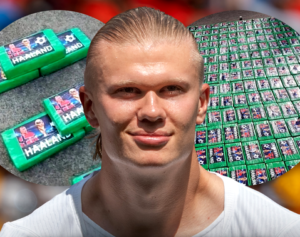
Erling Haaland didn’t ask to be put on a brick of cocaine, just like African talents don’t ask to be exploited by corrupt systems that treat human potential as disposable cargo.
As publishers, analysts, and custodians of the game’s culture, our job is to peel back the shiny layers of modern football and look at the uncomfortable intersections where sports meets society. The Haaland stamp is a stark reminder that the world is watching our game—and sometimes, the darkest forces in society try to wear our heroes’ faces.
We must keep our eyes open, protect our grassroots, and ensure that the only place our children see greatness is on the scoreboard, never in the shadows.