
2025-2026: China’s Push across Africa, from Mega Loans to Mega Contracts as Construction Spending Surges – Excerpt
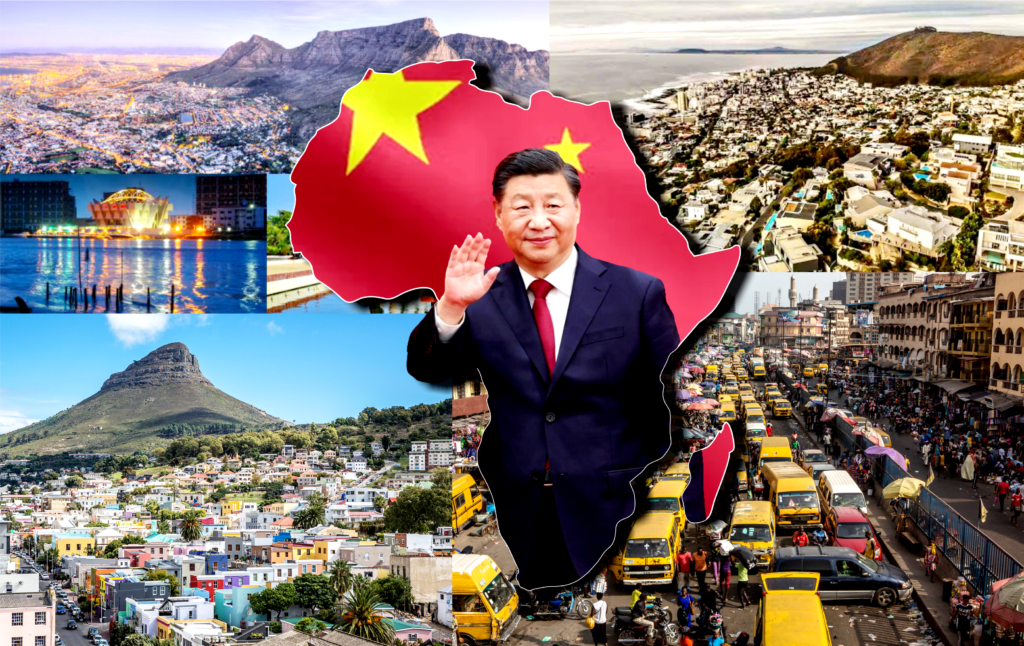
Africa is entering a new phase in its infrastructure partnership with China. The era that once revolved around large sovereign loans is increasingly giving way to engineering contracts, commercial financing, industrial investments, and strategic partnerships aimed at accelerating transport networks, energy production, digital infrastructure, and manufacturing.
While critics continue to question debt sustainability and transparency, many African governments view the renewed wave of Chinese-backed projects as a practical response to decades of infrastructure deficits that continue to constrain economic growth. The transformation represents not merely a financial shift but an evolution in China’s engagement strategy, one that carries profound economic, political, environmental, and social consequences for both sides.
From bustling rail construction sites in Nigeria to renewable energy facilities across Southern Africa, the continent has become one of the world’s largest destinations for Chinese engineering expertise. Construction spending reaches record levels. Chinese construction activity across Africa accelerated sharply between 2025 and 2026.
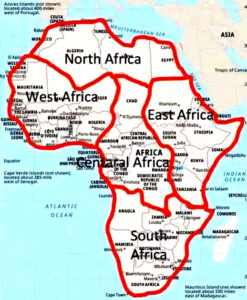
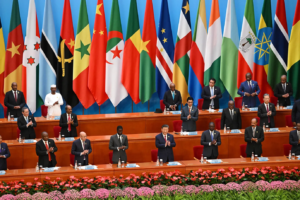
Available industry estimates indicate that African governments awarded Chinese engineering and construction firms contracts valued at approximately $30.5 billion during the first half of 2025. If sustained throughout the year, total contract values approached $39–$61.2 billion annually, representing one of the strongest recoveries in Chinese overseas construction since the slowdown that followed the COVID-19 pandemic.
Unlike previous decades, however, much of this spending did not originate from direct budgetary expenditures by the Chinese government. Instead, financing increasingly came through:
- Chinese policy banks
- Commercial lending institutions
- State-owned engineering companies
- Export credit arrangements
- Public-private partnerships
- Engineering, Procurement and Construction (EPC) contracts
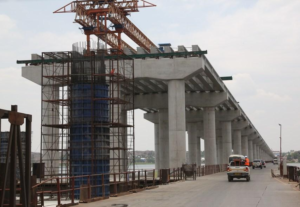
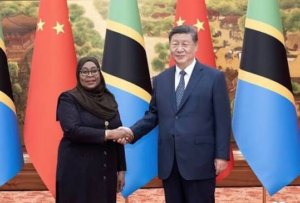
This distinction is significant. While public discourse often describes all Chinese infrastructure spending as “government investment,” many recent projects are executed through commercial contracts backed by Chinese financial institutions rather than financed directly from Beijing’s national budget.
Consequently, no verified public figure exists for a single Chinese government “construction budget” dedicated exclusively to Africa during 2025-2026. Instead, analysts track several related financial flows, including sovereign loans, foreign direct investment, EPC contract values and commitments announced under the Forum on China-Africa Cooperation (FOCAC). This partnership worth hundreds of billions dollars.
According to the Boston University Global Development Policy Center’s Chinese Loans to Africa Database, Chinese lenders signed 1319 sovereign loan, commitments totaling approximately $180.87 billion between 2000 and 2024.

These commitments transformed transportation networks, expanded electricity generation, modernized ports, financed airports, and supported telecommunications across dozens of African countries. Sectorial lending included:
| Sector | Total Lending (2000–2024) |
| Energy | $62.72 billion |
| Transportation | $52.65 billion |
| ICT | $15.67 billion |
| Financial Sector | $11.98 billion |
The data illustrates China’s long-term emphasis on productive infrastructure, rather than short-term consumption financing.
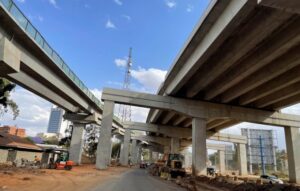
China got inspired to convert from loans to construction contracts. Perhaps the most significant development during 2025-2026 has been the transition away from large sovereign loans. Several factors explain this evolution. African governments face increasing debt-servicing pressures, while Chinese lenders have become more selective after witnessing repayment difficulties in several borrowing countries.
As a result, Chinese companies are increasingly winning EPC contracts in which African governments secure financing from multiple sources, including commercial banks, export credit agencies, and blended finance mechanisms. Industry analysts estimate that approximately:
- 70–80% of major infrastructure projects remain debt-financed
- 20–30% consist of grants, technical assistance, or concessional programs
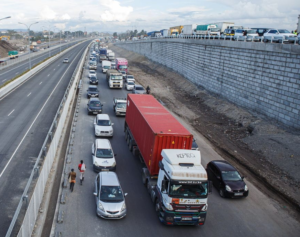
Increasingly, loans are also being denominated in Chinese yuan rather than U.S. dollars, reflecting Beijing’s broader internationalization strategy for its currency.
Nigeria emerges as the largest construction market that China pitched its construction on. Nigeria has become the largest destination for Chinese construction contracts on the continent. Recent estimates place Chinese construction agreements in Nigeria at approximately $24.6 billion, including major investments in:
- Rail transportation
- Oil and gas processing
- Electricity infrastructure
- Urban transport
- Manufacturing facilities
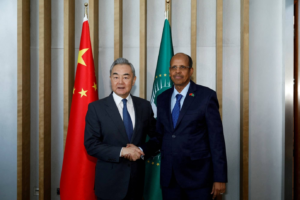
Among flagship developments is the proposed 74-kilometer Kano light rail project, valued at roughly $1.85 billion, alongside extensive investments in refining and gas processing infrastructure. The scale of activity reflects Nigeria’s strategic importance as Africa’s largest economy by GDP and one of its largest consumer markets.
Energy remains the dominant sector. Although renewable energy receives increasing attention, fossil fuels continue to dominate construction values. Recent contracting cycles suggest:
- Oil and gas processing projects exceeded $44 billion
- Green energy investments reached approximately $9.7 billion
- Low-carbon technology exports, including solar modules and batteries, totaled around $9.8 billion
This dual-track strategy reflects China’s attempt to balance immediate energy security with long-term climate commitments. With regards to most African governments’ concerns, expanding electricity access remains a more urgent priority, than choosing between renewable and fossil-fuel technologies.
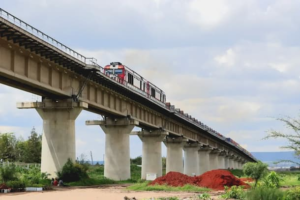
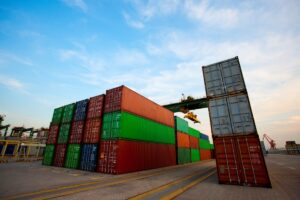
Railways, highways, bridges, and ports remain central to China’s infrastructure strategy. Transportation investments now exceed $52 billion cumulatively since 2000. Major corridors continue to reshape regional trade by reducing logistics costs and improving connections between ports, mining regions, industrial zones, and agricultural markets.
Economists argue that these investments may ultimately generate larger productivity gains than their initial construction costs, if accompanied by improved governance and regional trade reforms. One of the clearest shifts since the early Belt and Road years is the growing emphasis on renewable technologies. Chinese companies are now expanding:
- Solar power
- Wind farms
- Battery storage
- Electric vehicle supply chains
- Waste-to-energy projects
- Grid modernization
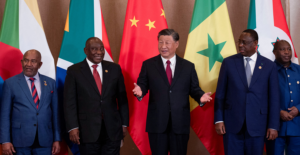
Programs such as the Africa Solar Belt initiative reflect Beijing’s effort to reposition itself as a supplier of low-carbon infrastructure while maintaining strong commercial relationships across the continent. Several African governments also see renewable energy as an opportunity to reduce dependence on imported fuel while expanding electricity access to underserved rural communities. Thus, many citizens feel that the debate surrounding Chinese infrastructure is less about geopolitics than about daily life.
New roads shorten travel times for farmers transporting crops to markets. Expanded electricity networks improve healthcare delivery, allow small businesses to operate longer hours, and enable students to study after sunset. Improved ports and railways reduce freight costs that ultimately affect consumer prices.
At the same time, communities affected by large projects have raised concerns about land acquisition, environmental impacts, compensation, and consultation. Civil society organizations in several countries have called for greater transparency in procurement, stronger environmental safeguards, and more meaningful engagement with local residents before projects begin.
Labour practices also remain under scrutiny. While earlier projects often relied heavily on imported Chinese workers, more recent contracts increasingly emphasize workforce localization. This shift has expanded employment opportunities for African engineers, technicians, construction workers, and suppliers, though labor unions continue to advocate for higher wages, improved safety standards, and greater skills transfer.
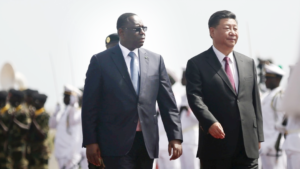
Employment generation has become a central justification for continued Chinese investment. President Xi Jinping has pledged that Chinese cooperation would facilitate or create at least one million jobs across Africa through infrastructure, industrial, and manufacturing initiatives. Examples include:
- Kenya’s approximately $1 billion cooperation package projected to create 28,000 jobs across manufacturing, agriculture, and tourism.
- South Africa’s planned $800 million automotive investment expected to generate approximately 2,500 jobs.
The quality and longevity of these jobs will depend on the extent to which projects build local supply chains, develop technical skills, and support domestic industries beyond the construction phase.
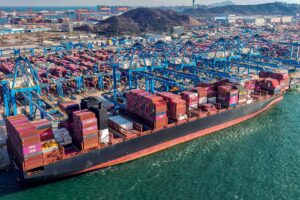
Infrastructure development has been accompanied by expanding commercial ties. China-Africa bilateral trade reached approximately $348.05 billion during 2025, marking a record annual level. By the first half of 2026 alone, two-way trade had already reached roughly $208 billion, underscoring the depth of the economic relationship.
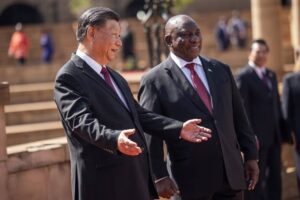
Meanwhile, Chinese foreign direct investment into Africa remained significant, with annual inflows estimated at approximately $3.37 billion in 2024, followed by nearly $4.7 billion in new greenfield investment commitments during 2025. These figures suggest that Chinese engagement increasingly extends beyond infrastructure into manufacturing, technology, logistics, mining, and industrial development.
Political dimensions, opportunity and strategic competition: China’s infrastructure expansion unfolds amid growing geopolitical competition across Africa. Western governments have launched alternative financing initiatives emphasizing transparency, sustainability, and private-sector investment, while China continues to promote its model of rapid infrastructure delivery under the Belt and Road Initiative and the Forum on China-Africa Cooperation (FOCAC).
As concerning African leaders, this competition offers opportunities to diversify partnerships and negotiate better financing terms. However, it also requires careful governance to ensure projects align with national development priorities rather than external strategic interests.
Many governments are increasingly seeking to balance relationships with multiple partners—including China, the European Union, the United States, Gulf States, India, and multilateral development banks—to maximize investment while avoiding overreliance on any single source.
Debt sustainability remains a central concern. Despite the shift toward commercial contracts, debt sustainability continues to shape infrastructure decisions. Risk levels vary considerably:
| Country | Indicative Risk Profile | Key Considerations |
| Angola | High | Oil-backed borrowing, commodity price exposure |
| Ethiopia | High | External debt pressures, foreign exchange constraints |
| Zambia | High | Debt restructuring history, mining dependence |
| Democratic Republic of the Congo | Moderate to High | Commodity dependence, governance challenges |
| Nigeria | Moderate | Large economy but significant debt-servicing pressures |
| Kenya | Moderate | Major transport investments with fiscal implications |
| Namibia | Low to Moderate | Greater emphasis on investment and renewable projects |
| South Africa | Low to Moderate | Stronger institutional capacity and diversified financing |
These qualitative risk profiles reflect broad assessments of debt distress and fiscal exposure rather than precise default probabilities.
China’s engagement with Africa is evolving rather than retreating. The continent is witnessing a transition from an era defined primarily by sovereign lending to one increasingly characterized by commercial engineering contracts, industrial investment, renewable energy, manufacturing partnerships, and technology transfer.
Whether this new phase delivers lasting economic transformation will depend not only on the volume of capital committed but also on project quality, governance, environmental safeguards, local participation, and the ability of African economies to convert infrastructure into sustained productivity gains.
Africans ultimate measure of success will be the new roads connecting farmers to markets, electricity reaching homes, businesses, consistent jobs and public debt staying manageable.
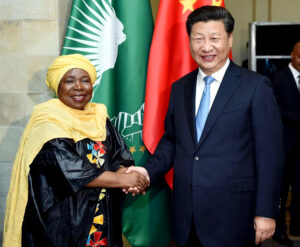
As cranes continue to reshape skylines and transport corridors across the continent, the challenge for policymakers on both sides will be ensuring that infrastructure serves as a foundation for inclusive development rather than a source of future financial strain.
Several figures in this article refer to different categories of Chinese engagement, such as sovereign loans, foreign direct investment, construction contract values, and policy commitments, which are not directly comparable and should not be added together. Additionally, while construction contract values in 2025-2026 are substantial, there is no verified public statistic showing the Chinese government’s direct budgetary spending on African construction for that period. Much of the recent activity is financed through Chinese state-owned enterprises, policy banks, commercial lenders, and EPC contracting arrangements rather than a single government budget line.