
Nigerian Seating Senator and the Banditry Allegations, What Is Known, Alleged and still Unanswered
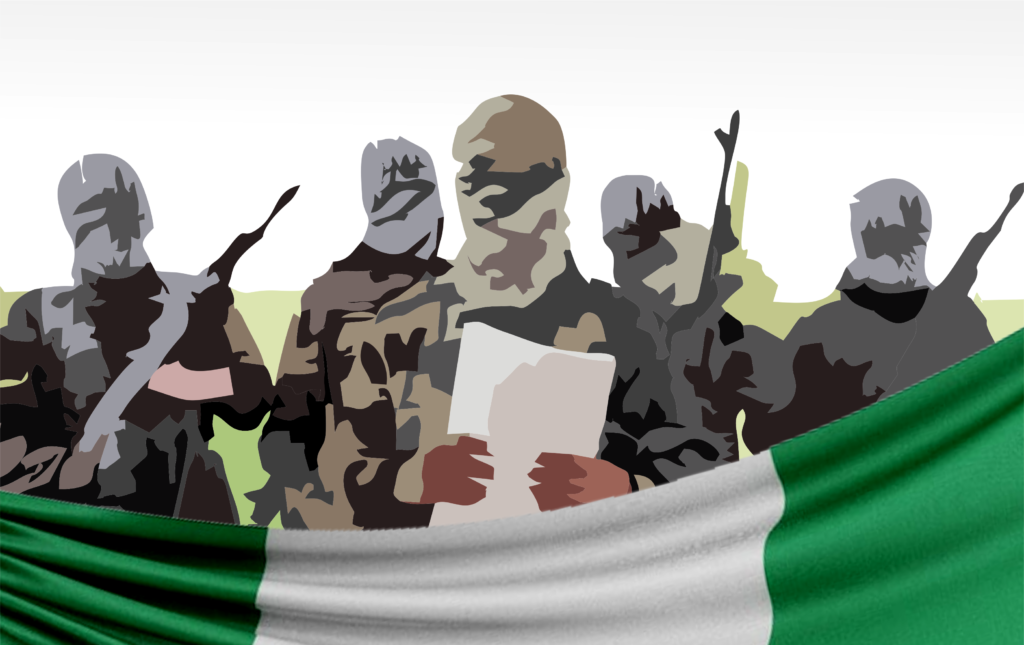
In early September 2026, allegations linking Senator Shehu Buba Umar, who represents Bauchi South Senatorial District, to individuals associated with bandit networks triggered renewed public scrutiny of the senator’s record and his political ambitions ahead of the 2027 Bauchi State governorship election.
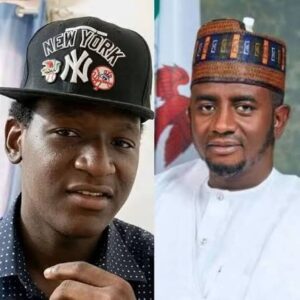
These accusations, brought forward by a citizen named Hassan during a highly publicised interview with social media influencer D English Alhaji Media, directly accused Senator Buba and other unnamed political actors of abetting criminal syndicates that have terrorised the region for more than a decade. The controversy immediately gained nationwide traction, threatening to reshape both national intelligence protocols and the upcoming 2027 Bauchi State gubernatorial race, where Buba is currently positioned as the candidate for the Peoples Redemption Party (PRP).
Senator Buba has aggressively rejected the accusations, framing them as a calculated attempt by political adversaries to assassinate his character and derail his political future. The lawmaker has pointed to a deeply personal history with his primary accuser, whom Buba identifies as an orphan he once sponsored and educated, before the young man allegedly turned to home espionage, propaganda campaigns, and subsequent flight to the Republic of Niger. Concurrently, the senator has defended his prior actions, including interactions with wanted bandit kingpins such as Bello Turji, by pointing to his formal legislative role as the former Chairman of the Senate Committee on National Security and Intelligence. Buba argues that his past engagements were part of a state-sanctioned non-kinetic soft-power strategy designed to find peaceful resolutions and negotiate grassroots peace accords, rather than any illicit complicity with armed actors.
This special analytical report synthesises the public allegations, the senator’s legal and personal counter-narrative, the institutional policy context surrounding kinetic versus non-kinetic intelligence frameworks, and the broader political warfare that has historically pitted Senator Buba against Bauchi State Governor Bala Mohammed.
2. Hassan’s Accusations: Alleged Dogo Gide Ties and Abuja Tactical Training
The controversy erupted publicly on September 1, 2026, when the social media influencer D English Alhaji Media published a video interview (Part 7 of an ongoing series on Nigerian insecurity) in which a local resident named Hassan formally identified Senator Shehu Buba Umar as the politician behind previously vague allegations of sponsoring banditry. During the recorded exchange, Hassan detailed allegations that connected the senator’s office to notorious bandit kingpins, most notably Dogo Gide, whom Nigerian authorities have identified as a wanted terrorist.
Hassan’s allegations specifically focus on two key individuals associated with the Dogo Gide network: Baba Ngida, whom Hassan described as Gide’s younger brother, and Bashir, described as Gide’s close associate since childhood who grew up assisting the bandit leader with cattle grazing. According to Hassan, Baba Ngida and another associate named Adam were brought directly to Abuja, where they were accommodated and provided specialised tactical training. This training reportedly focused on advanced drone operations and professional sniping, two highly specialised combat skills that could significantly enhance the operational capabilities of bandit networks. Crucially, Hassan alleged that Adam served as the Personal Assistant (PA) to Senator Shehu Buba at the National Assembly during the time of these activities.
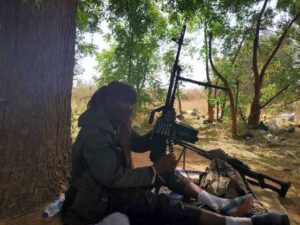
Hassan said he possessed more than ten voice recordings involving Adam and Baba Ngida, as well as photographs purportedly showing military-grade night-vision equipment. The report reviewed here does not establish whether the recordings or photographs are authentic, when they were made, who appears in them, or whether they establish any connection to Senator Buba.
Hassan further claimed that he flagged these developments to officials of the Department of State Services (DSS). However, he alleged that the DSS was highly reluctant to intervene. Hassan alleged that a DSS official told him, “Hassan, we can’t do anything in this matter because this person is powerful. We know him. We know his work.” The identity of the alleged official and the authenticity of the statement could not be independently established at the time of this analysis.
Hassan urged the public to examine his materials objectively and called for a formal, unshielded investigation, emphasising that no public official should be above the law. While these allegations remain unverified independently, they have placed enormous pressure on Nigeria’s security and political institutions.
3. The Senator’s Defence: Response, Personal History, Counter-Allegations and Legal Action
On September 3 and 4, 2026, Senator Shehu Buba Umar broke his silence in an interview with Albarka Radio in Bauchi, offering a comprehensive rebuttal that combined personal history, criminal accusations against his accuser, and details of active law enforcement operations. The senator strongly denied any involvement in banditry and instead recontextualised his relationship with Hassan. According to Buba, Hassan was introduced to him as an orphan in need of educational support in desperate need of educational support. Driven by charitable motives, the senator connected Hassan with a prominent cleric, Musa Asadussunnah, who successfully secured admission for him in both Islamic and conventional schools. Buba also personally provided Hassan with a bicycle to facilitate his daily commute to his studies.
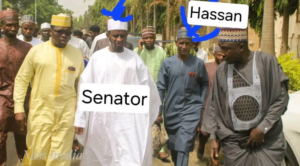
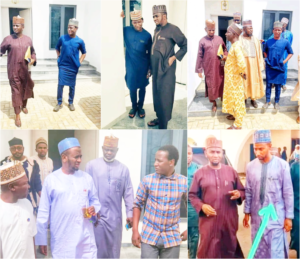
However, Buba revealed that Hassan quickly showed a lack of commitment to his education, informing his benefactors that he intended to drop out of school to pursue a car dealership business. Although Buba strongly advised him against this decision, emphasising that finishing school was critical for his long-term future, Hassan insisted on leaving and abandoned his studies three weeks later. The senator further alleged that Hassan used his access to the senator’s residence to secretly record visitors at his private residence, secretly taking photos and recording videos of various visitors and guests who came to meet with Buba. Buba claimed these materials were subsequently compiled, edited, and sold to his political opponents to manufacture malicious online propaganda and damage his reputation ahead of the 2027 elections.
In response to what he termed ‘baseless social media propaganda’, Senator Buba confirmed that he has taken decisive legal steps by submitting a formal petition to the Inspector-General of Police (IGP). According to the lawmaker, police investigations have moved rapidly; Buba said the investigation resulted in four arrests. The police and relevant courts should be contacted to independently establish the identities of those arrested, the charges filed and whether the proceedings relate directly to the allegations under discussion: two in Kano, one in Bauchi and one in Abuja, all of whom are currently facing court proceedings. However, Buba disclosed that Hassan, the primary suspect behind the broadcasts, has fled Nigeria to the Republic of Niger, from where he continues to run live internet broadcasts. The senator alleged that these broadcasts are being actively funded by political rivals in Bauchi, concluding defiantly, ‘Those sponsoring him cannot change destiny; if God says I will be, nobody can stop me.’
To fully comprehend the gravity of the accusations and the nature of Buba’s defence, the controversy must be examined through the lens of Nigeria’s national security policy. Prior to the scandal, Senator Buba served as the Chairman of the Senate Committee on National Security and Intelligence, a position that placed him at the heart of the federal government’s security strategy. In this official capacity, Buba worked alongside senior security personnel, military chiefs, and prominent religious leaders to advance the Nigerian government’s non-kinetic strategy for tackling the persistent threat of banditry across the northern states.
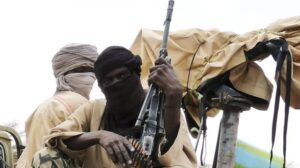
The Case for Verification: However, until authentication of the alleged recordings and photographs, clarification of the identities and roles of the individuals named, verification of the reported arrests and court proceedings, and a clear account of the authority under which Buba engaged with armed groups. For a country confronting a persistent security crisis, the standard should be simple: serious allegations require serious investigation, and serious investigation requires evidence.