
“Africa Has What It Takes” – Experts Urge Stronger Financial Systems to Unlock Large-Scale Capital Mobilisation in Africa: 2026 Annual Meeting
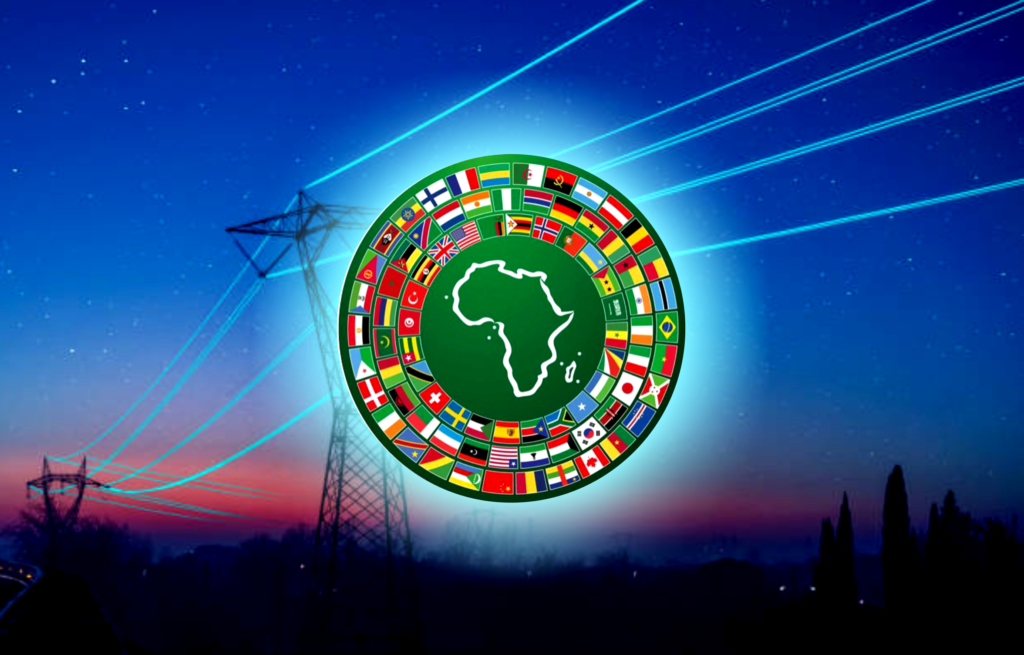
African finance leaders rally $250bn institutional capital behind mission 300
In BRAZZAVILLE, Republic of the Congo, African finance leaders have called for stronger coordination among Development Finance Institutions (DFIs), to unlock an estimated $250 billion in assets and accelerate the delivery of Mission 300, a joint initiative of the African Development Bank Group and the World Bank Group aimed at connecting 300 million Africans to electricity by 2030.
The appeal was made during a high-level meeting on the sidelines of the AfDB Annual Meetings in Brazzaville, where policymakers and financial institutions discussed strategies to mobilise African capital, for large-scale energy investments. Speaking at the event, AfDB Vice President Kevin Kariuki said, achieving Mission 300 would require collective action across the continent’s financial ecosystem. “No single institution can deliver the Mission 300 goal alone. We need African capital to work more systematically for African development”, he said.
Financial commitments are already emerging. The Banque Ouest Africaine de Développement announced a commitment of 1.1 billion CFA francs (about €1.7 million) to support the initiative. The pledge was disclosed by Oumar Tembely during discussions on establishing a dedicated Mission 300 African DFI coalition.
Mission 300 is expected to require about $238 billion across its first 30 participating countries, with nearly half of the funding anticipated from private-sector sources. Participants highlighted blended finance structures and risk-mitigation instruments as critical tools for attracting investment into energy infrastructure projects. The meeting also spotlighted the vast financing potential within African markets. According to Constant N’zi, African commercial banks collectively hold around $2.5 trillion in assets, presenting a significant opportunity to support infrastructure and economic development.


Stakeholders argued that African DFIs are well positioned to drive the continent’s energy transition due to their local market expertise and long-term development mandates. However, challenges including fragmented coordination, limited institutional capacity and inadequate risk-sharing mechanisms continue to constrain investment flows.
To address these barriers, participants proposed the creation of a Mission 300 DFI coalition that would streamline collaboration, improve investment coordination and help channel African capital into priority energy projects. The initiative is also aligned with the New African Financial Architecture for Development framework championed by the AfDB.
The session was one of four knowledge events, organised as part of the African Development Bank’s 2026 Annual Meetings, taking place in Brazzaville, Republic of Congo.
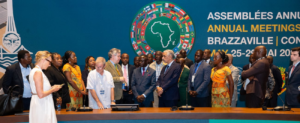
Experts at a high-level African Development Bank (www.AfDB.org) panel on Wednesday, 27 May, said stronger, more integrated financial systems will be critical to helping Africa mobilise development finance at scale in a fragmented global environment.
Moderated by Hassatou N’Sele, Vice President for Finance and Chief Financial Officer of the African Development Bank Group, the session brought together heads of financial institutions, supervisory and regulatory authorities, central bankers, and legal and development finance experts from Africa and beyond.

The session was one of four knowledge events organised as part of the African Development Bank’s 2026 Annual Meetings, taking place in Brazzaville, Republic of Congo.
Under the theme, “Strengthening and Consolidating Africa’s Financial Systems and Agency in the Changing World,” panelists examined how to unlock more domestic and development finance for the continent.
N’Sele invited Nobumitsu Hayashi, Governor of the Japan Bank for International Cooperation, to open the discussion with lessons from Asia’s experience. “Japan is a consistent and long-term partner for development in Africa,” she said.
Hayashi said Japan’s post-Second World War financial recovery and Asia’s recovery from the 1990s financial crisis underscored the importance of regional financial integration, strong domestic markets, and local-currency bond markets, supported by credit guarantee mechanisms. “We are doing a lot of financial integration, because (it is) the real driver of sustained economic growth within the Asian countries,” Hayashi said.
The discussion focused on how development partners can help build integrated domestic financial systems, how insurance and guarantee instruments can unlock long-term capital, and how legal and regulatory reforms can strengthen Africa’s financial architecture.
Panelists also pointed to the African Development Bank’s New African Financial Architecture for Development (NAFAD) as a timely initiative to help address Africa’s annual development financing gap, estimated at $400 billion.
The panel: Dieudonné Fikiri Alimasi, First Deputy-Governor of the Central Bank of the Democratic Republic of the Congo; Michel Dzombala, Deputy Governor of the Bank of Central African States (BEAC); Ngueto Tiraïna Yambaye, Managing Director and Chief Executive Officer of the African Guarantee and Economic Cooperation Fund (FAGACE); Manuel Moses, Chief Executive Officer, African Trade & Investment Development Insurance (ATIDI), Kalidou Gadio, Co-Chair of US-Africa Practice, DLA Piper, USA; Cedrick Motetcho, Chief of Business Development, Arab Bank for Economic Development in Africa (BADEA); and Carlos Lopes, Honorary Professor, Nelson Mandela School of Public Governance, University of Cape Town.
Key takeaways:
On stabilising the macroeconomic framework:
Dieudonné Fikiri Alimasi said restoring trust in local currencies depends on macroeconomic stability, including exchange-rate stability, alongside faster adoption of technology to improve banking penetration and accelerate financial inclusion.
On the role of Central Banks:
Michel Dzombala said central banks in the CEMAC region can play a catalytic role in helping mobilise finance for regional financial institutions.
On changing risk perception:
Ngueto Tiraïna Yambaye said African institutions must work more closely together to change investor perceptions of risk, noting that existing African guarantee funds still cover only a small share of financing needs.
On The New African Financial Architecture for Development (NAFAD):
Manuel Moses said Africa has significant resources that can be better mobilised, and that NAFAD offers a framework for organising those efforts more effectively from within the continent.
On removing barriers:
Kalidou Gadio called for reforms to remove legal and regulatory constraints that limit the use of capital, including sovereign wealth funds, and said deeper, more unified markets will be essential to scaling investment.
On partnerships:
Cedrick Motetcho said partnerships must be treated as a practical way of working rather than an aspiration, enabling institutions to move more quickly and deploy available financing tools more effectively.

On policy reform to support resource mobilisation:
Carlos Lopes said macroeconomic and financial policies must do more to support structural transformation and make better use of long-term domestic capital, including pension funds.
In closing, N’Sele asked panelists to identify the most important actions to advance before the next Annual Meetings. They agreed that Africa’s challenge is not a lack of resources, but the urgency of mobilising them more effectively. “Africa has what it takes, all the assets needed to transform its economies”, Alimasi said.
The discussions in Brazzaville emphasized growing momentum among African financial institutions to take a leading role in financing the continent’s infrastructure needs, with Mission 300 emerging as a flagship effort to strengthen energy access, power security and sustainable development across Africa.
To recap or catch part of the session you missed, click here (https://apo-opa.co/430tdAX).
For more information on the 2026 Annual Meetings and to follow the sessions click here (https://AM.AfDB.org).
Contact: media@afdb.org
SOURCE: African Development Bank Group (AfDB)