
Battle for Hormuz Rewrites the Rules of Global Space, at the Toll of Commons
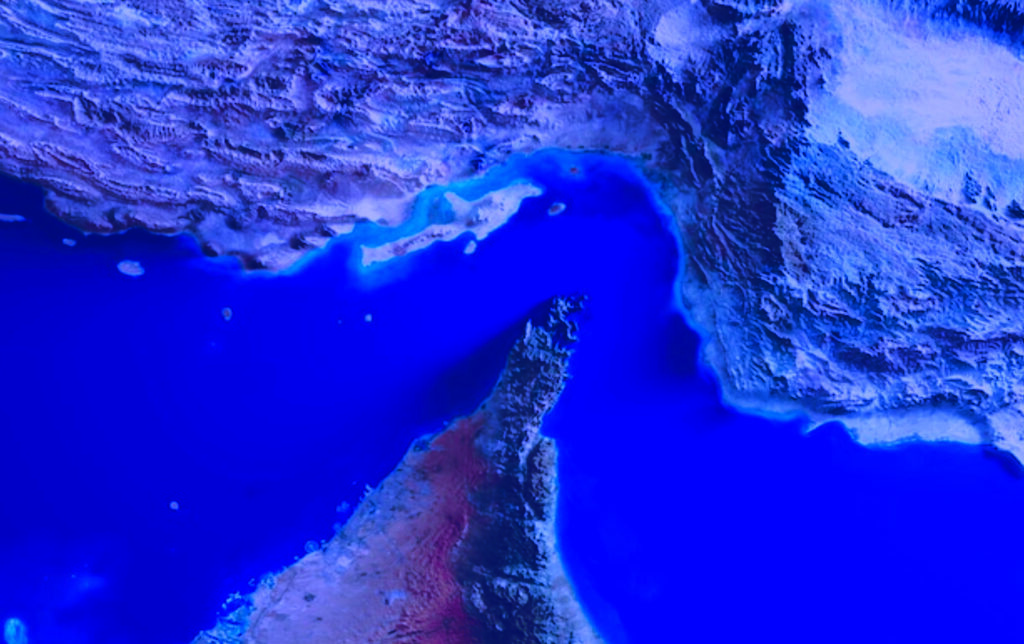
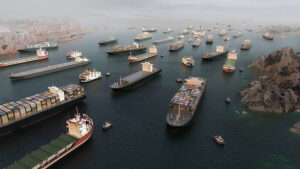
The financial capitals of the West have allowed themselves a collective sigh of relief, as leading authorities in Washington have announced an impending agreement to restore freedom of navigation in the Strait of Hormuz. Their talk of a breakthrough and a return to the diplomatic drawing board promises a rapid decompression in the global energy markets. However, on the water, the reality is starkly and violently different, an attack on a tanker belonging to the Abu Dhabi National Oil Company (ADNOC) marks the fifteenth of such vessel targeted since the outbreak of hostilities in late February. In addition, the United Kingdom Maritime Trade Operations (UKMTO) reports another vessel being struck by a projectile. The reaction to these has led to a plummet of the daily ship transit by a third in a single twenty-four-hour window, and oil prices have marched steadily upward.
The disconnect between the upbeat confidence of international diplomacy and the reality of the Persian Gulf reveals a deeper, more permanent transformation. The crisis in the Strait of Hormuz is not a temporary breakdown in regional security, nor is it a routine diplomatic gridlock capable of being resolved by a standard memorandum of understanding. It is something far more profound: the physical and legal unravelling of the post-war global commons.
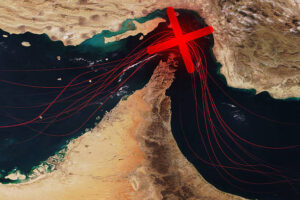
In decades, the global economy has relied on a foundational legal fiction: that certain vital maritime arteries belong to no one and everyone, existing as untolled, open corridors protected by international law. Today, that assumption is dead. In its place, a new doctrine of sovereign territorial blackmail is being forged, where geography is privatised, international waterways are treated as real estate, and global security is balkanised into defensive fiefdoms.
To understand the current crisis, one must first dismantle the illusion that the Strait of Hormuz remains an international waterway. Historically, the strait was governed by international legal frameworks that explicitly prohibited the imposition of transit fees or discriminatory blockades. Since the outbreak of war on 28 February, shattered by joint U.S. and Israeli strikes, Iran has systematically dismantled this norm.
Imposing an effective blockade, demanding unilateral tolls from passing ships, and drafting parliamentary legislation to formally ban U.S. and Israeli vessels from transiting the waterway, Tehran has asserted a radical new principle: that physical proximity yields absolute sovereign jurisdiction over global trade. Under this draft plan, any nation deemed to have harmed Iran is barred from transit until war reparations are paid.
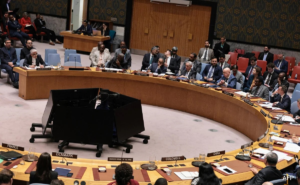
This is not merely a tactical block; it is the weaponisation of geography. In this new paradigm, global space is no longer neutral. It is a transactional resource to be metered and filtered based on geopolitical alignment and ideological compliance.
This territorial grab is being executed via a highly sophisticated “dual-track” strategy that exploits the diplomatic machinery of the West. On one hand, Iranian Foreign Minister Abbas Araghchi and Omani negotiators are close to finalising a technical, transit-sharing framework. This proposed interim arrangement, splitting traffic so that inbound vessels transit Iranian waters and outbound ships exit via Omani waters, is packaged as a constructive attempt to restore safe passage.
Yet, the security apparatus in Tehran has made it abundantly clear that this technical arrangement is a diplomatic screen. Sardar Mohbi, spokesman for the Islamic Revolutionary Guard Corps (IRGC), pointedly declared that the Oman negotiations have “nothing to do with the reopening of the Strait of Hormuz,” asserting instead that the “enemy is forced to accept Iran’s conditions”.
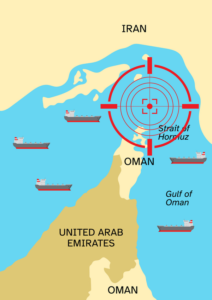
Those conditions, articulated by Mohammad Bagher Zolghadr, the secretary of the Supreme National Security Council, are nothing short of a demand for a total American capitulation in the Middle East. Zolghadr’s list includes:
- The complete withdrawal of S. military forces from the region;
- The lifting of the parallel S. naval blockade and all economic sanctions;
- The unconditional release of all frozen Iranian assets;
- The payment of comprehensive war reparations;
- An absolute halt to S. actions against Iran’s regional allies in Lebanon, Palestine, Yemen, and Iraq.
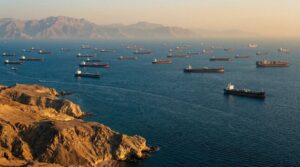
By decoupling the technical navigation talks with Oman from the actual physical reopening of the strait, Tehran has created a structural trap. It offers the West the tantalising carrot of a shipping lane scheme whilst maintaining an iron lock on the actual transit, using the blockade as an enduring lever to extract sweeping geopolitical concessions. It is a strategy that treats diplomacy not as a path to peace, but as “theatre diplomacy”, a term of derision recently deployed by Iranian Parliament Speaker Mohammad Bagher Ghalibaf against the Trump administration’s erratic public pronouncements.
What this crisis ultimately reveals is that in a multipolar world, globalised infrastructure is highly vulnerable to localised, asymmetrical power. The post-Cold War era of seamless, borderless trade was built on the assumption that certain spaces were sacrosanct, protected by an unshakeable consensus and enforced by a single global hegemon.
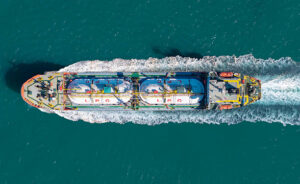
When that hegemon’s deterrence falters and when regional actors discover that they can survive, negotiate, and even project power whilst under siege, the illusion of the global commons dissolves. The Strait of Hormuz is no longer a shared highway of human progress; it has reverted to what it was in the centuries before the rise of the modern rules-based system: a heavily fortified, highly contested, sovereign toll station, where transit is a privilege to be purchased, and geography is the ultimate weapon of the state.
The modern world is discovering, to its immense cost, that whilst capital and data can travel at the speed of light, the physical commodities that fuel civilisation must still pass through narrow, shallow channels of rock and water, and those channels are once again in the hands of those who are willing to fight for them.