

Egypt’s New Garment Factory Signals Activation of Industrial Policy, Transcending Exportation
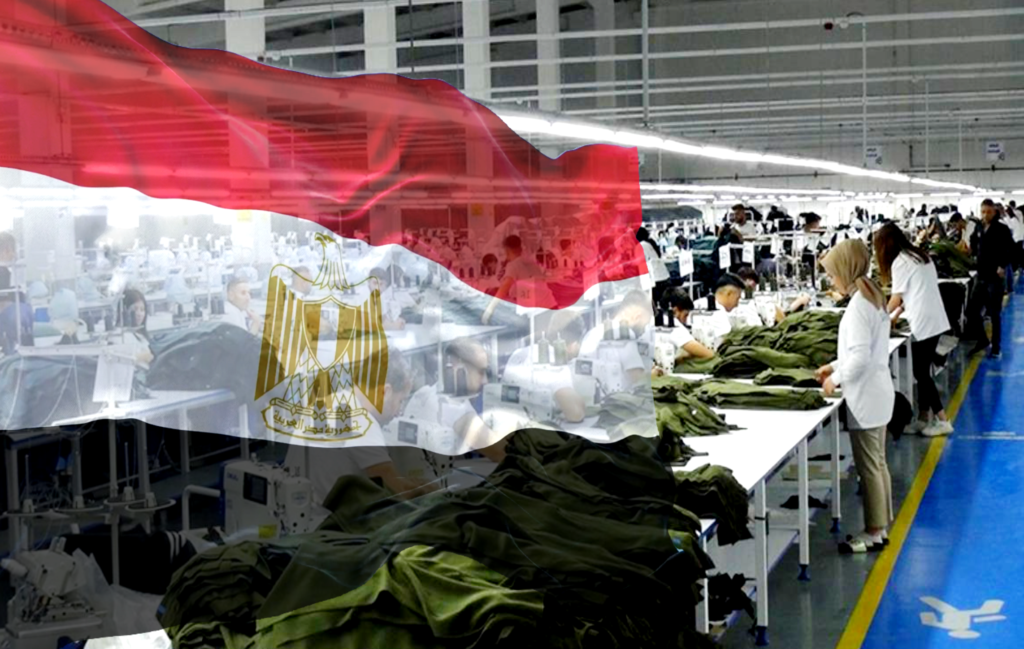
A government-backed manufacturing drive in Alexandria is being presented as a test of whether industrial policy can create jobs, boost exports, and improve household incomes.
In the industrial zone of New Borg El Arab City on the outskirts of Alexandria, Egypt has opened one of its largest recent textile investments: the Jade Textile garment factory. Officials say the project is designed to strengthen Egypt’s position as a regional manufacturing hub while generating export earnings estimated at $250 million to $500 million annually once the plant reaches full capacity.
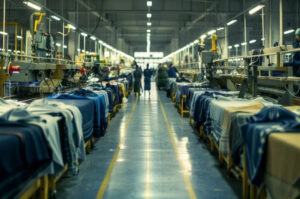
The factory, managed by Turkey’s Yeşim Group (Jade Textile), represents an investment approaching EGP 500 million and spans roughly 60,000 square meters. It brings advanced production processes under one roof, from fabric cutting and embroidery to sewing and finishing, in an effort to improve efficiency and compete with established textile exporters across Asia and the Middle East.
Key facts
| Investment | ~EGP 500 million |
| Factory size | ~60,000 m² |
| Direct jobs at the new plant | 6,000+ |
| Total Yeşim employment footprint in Egypt | 15,000+ |
| Projected annual exports at full capacity | $250m–$500m |
Why the government is watching closely. Prime Minister Mostafa Madbouly inaugurated the facility during a broader tour focused on attracting foreign industrial investment and expanding local manufacturing capacity. The government has repeatedly argued that Egypt must move beyond reliance on imports and low-value economic activity by increasing production, exports, and skilled employment.
Textiles and garments are central to that strategy. Egypt already has a large domestic market, access to regional trade agreements, and a long history in cotton and textile production. Officials believe that modern factories with integrated production lines, can help the country capture a larger share of global apparel supply chains, creating good number of jobs, promoting skills and driving households’ impact.
Beyond export targets, the project’s most immediate impact is expected to be employment. The Alexandria plant has created more than 6,000 jobs, while Yeşim Group’s operations across Egypt now employ over 15,000 workers.
In respect to most families in Alexandria and surrounding communities, factory jobs offer a more stable income than informal work. Local residents interviewed by Egyptian media during the opening said they hoped the investment would bring not only wages but also training opportunities for younger workers entering the labor market.
Economists note that large manufacturing projects often generate additional employment indirectly through transport, packaging, maintenance, food services, and other supporting businesses. These “multiplier effects” can spread the benefits beyond the factory gates if local suppliers are able to participate.
Question! Can industrialization deliver broad-based growth? The government’s challenge is ensuring that headline investment figures translate into wider social gains. Egypt has faced persistent concerns over unemployment, inflation, and the rising cost of living. Industrial projects are increasingly being judged not only by export performance but also by their ability to raise incomes and create opportunities outside major urban centers.
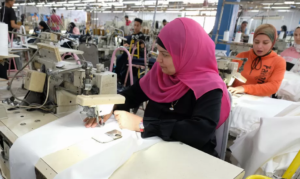
Analysts say the Jade Textile facility illustrates both the promise and the pressure of Egypt’s industrial agenda. If production expands as planned, the factory could become a significant source of foreign currency earnings and help strengthen the country’s manufacturing base. But sustained success will depend on workforce development, reliable infrastructure, access to finance for local suppliers, and continued competitiveness in global apparel markets.
A test case for Egypt’s manufacturing ambitions. In the meantime, the opening of the New Borg El Arab factory stands as a visible symbol of Egypt’s effort to turn industrial policy into economic and social results. Whether it becomes a model for future investments will depend less on the ribbon-cutting ceremony and more on what happens in the years ahead: steady production, rising exports, stronger local supply chains, and tangible improvements in workers’ lives.