
From Crude to Creativity, Nigeria’s Strategic Pivot to the Orange Economy

Nigeria stands at a pivotal macroeconomic crossroads, where the historical reliance on subsoil assets is being superseded by the limitless potential of the human mind. This transition from a resource-based economy to a knowledge-based one, is not merely a policy preference; it is a survival imperative in an era of global decarbonisation and commodity volatility. To ensure long-term fiscal resilience, the nation must pivot from the extraction of finite crude oil to the cultivation of infinite creativity, ensuring that its primary export is no longer vulnerable to external price shocks but is instead fuelled by a perpetual, renewable resource.
This Next-Oil concept, a strategic perspective championed by former minister Lai Mohammed frames the creative industry as the essential engine for infrastructure development, job creation, and the restoration of national pride. This sector is formally defined as the Orange Economy, a term conceptualised in 2013 by Felipe Buitrago Restrepo and Iván Duque Márquez for the Inter-American Development Bank (IDB). It encompasses the immense value derived from intellectual property, cultural heritage, and artistic expression. Unlike the extractive industries of the 20th century, the Orange Economy is built upon the infinite capacity of human imagination.
| Dimension | Extractive Economies (e.g., Crude Oil) | Creative Economies (The Orange Economy) |
| Sustainability | Depletion-based; finite resources that inevitably diminish. | Renewable; human creativity regenerates and expands through use. |
| Scalability | Limited by physical reserves and intensive infrastructure. | Infinite; digital ecosystems allow ideas to scale globally at near-zero marginal cost. |
| Value Generation | Dependent on global commodity price fluctuations. | Value is compounded through innovation, branding, and intellectual property. |

This conceptual shift is underpinned by a data-driven ROI that demands the immediate attention of fiscal authorities and global investors alike. As for a global strategist, measuring the creative economy is essential for quantifying the impact of national soft power and integrating intellectual capital into macroeconomic development planning.
The synthesized data from UNCTAD, UNESCO, and the International Finance Corporation (IFC) highlights the sector’s formidable scale. The global creative economy generates approximately $2.3 trillion in annual revenue, contributing between 3% and 3.1% of global GDP. Workforce data further underscores its importance: while conservative estimates place global employment in Creative and Cultural Industries (CCIs) at more than 30 million people, broader UN assessments suggest a scale of 50 million jobs. These industries are uniquely inclusive, employing more people aged 15–29 than any other sector and maintaining a workforce that is nearly 50% female.
Investment in the creative sector yields a superior return compared to many traditional industrial plays. Data from the IFC and Management Partners demonstrates a powerful multiplier effect: every $1 invested in the creative industries generates $2.50 in total wealth through direct and indirect economic activity. Due to this high-yield potential, the sector is projected to represent 10% of global GDP by 2030.
Technology has been a great catalyst in Nigeria’s path, which is accelerated by two primary drivers that function as the new pipelines of the knowledge economy:
- The Proliferation of Handheld Digital Devices: These have turned every citizen into a potential producer and consumer within a global marketplace.
- Expanded Internet Connectivity: High mobile penetration replaces the physical infrastructure of the old economy, allowing local cultural products to bypass traditional barriers and reach international audiences instantaneously.
However, to avoid developmental pitfalls, Nigeria must analyse global gold standards where nations have successfully transformed local culture into a strategic national asset.
- The Hallyu Model: South Korea’s “Korean Wave” (Hallyu) serves as the premier blueprint for “cultural diplomacy”. By systematically “K-popifying” its national branding, South Korea leveraged music, film, and fashion to shape its own narrative and build cross-cultural bridges, driving tourism and global export demand through soft power.
- The Arab World’s Post-Oil Vision: In the Gulf region, Saudi Arabia and the UAE are prioritising CCIs as strategic assets for economic Management Partners highlights how these nations use culture for “urban renewal”, with events like “Riyadh Season” and “Jeddah Season” serving as commercial focal points for shopping and sales. They have achieved this by integrating creative curricula into education; these nations are building resilient, future-facing societies.
Nigeria is now positioning itself to mirror these successes, adopting a domestic roadmap to convert talent into a structured economic pillar. The strategic expansion of the Orange Economy is vital to President Bola Tinubu’s macroeconomic target of a $1 trillion GDP by 2030. In this framework, the creative sector is identified as a primary driver of non-oil growth.
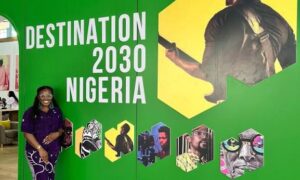
The “Destination 2030” Initiative
Under Minister Hannatu Musawa, the “Destination 2030” roadmap sets ambitious, measurable benchmarks, aiming to deliver:
- $100 billion in total GDP
- The creation of 2 to 3 million new jobs for Nigeria’s
The National Institute for Policy and Strategic Studies (NIPSS) conducted an extensive evaluation of diverse economies, including Ghana, Gambia, Angola, Botswana, Ethiopia, China, India, Singapore, Portugal, Spain, and Poland. Their findings indicate that a structured Nigerian creative sector could contribute between $250 billion and $450 billion to the economy. However, achieving this requires a fundamental cultural pivot: creative professions must be viewed with the same institutional seriousness as traditional fields like science and engineering.
The reality is Nigeria’s creative exports are already world-class. Nollywood is the world’s second-largest film industry by volume, generating roughly $4.2 billion annually. While the Afrobeats phenomenon provides an unprecedented global footprint, the economic returns to the state remain disproportionately low due to a lack of formal structure.

In addressing the structural bottleneck, in the transition to a mature Orange Economy, the following inhibitors must be addressed:
- Funding Gaps and Capital Access: Creative assets are often intangible, making them difficult to Regional benchmarks show the path forward: in Dubai, over half of surveyed creatives identified grant access as a critical enabler. Nigeria must mirror this focus on accessible capital.
- Infrastructure Deficits: A lack of world-class studios and digital hubs limits production quality.
- Weak Policy & IP Frameworks: Intellectual property theft devalues work and discourages the domestic retention of talent, leading to talent drain.
- Informality: The prevalence of the informal hustle prevents the sector from accessing institutional investment.
The Orange Economy is definitely the cornerstone of Nigeria’s post-oil identity. If human creativity is treated with the same strategic rigour once reserved for petroleum, Nigeria will build a resilient, inclusive, and infinite economic engine. The transition from extracting value from the ground to cultivating value from the mind is the hallmark of a nation successfully designing its own future.
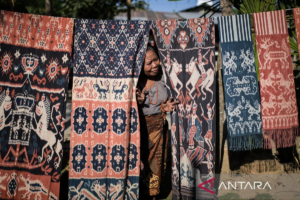
Picture Credit: ANTARA News | Free Network